
Why Burnout Prevention Starts With Role Design, Not Perks
A wellness stipend doesn't fix a role that's absorbed three people's worth of responsibility. Neither does a meditation app subscription, a step challenge, or an extra mental health day tacked onto a workload that never actually shrank. Companies keep investing in burnout prevention at the individual level while the structural causes — unclear scope, unmanageable workload, roles that quietly expanded without anyone redesigning them — stay untouched.
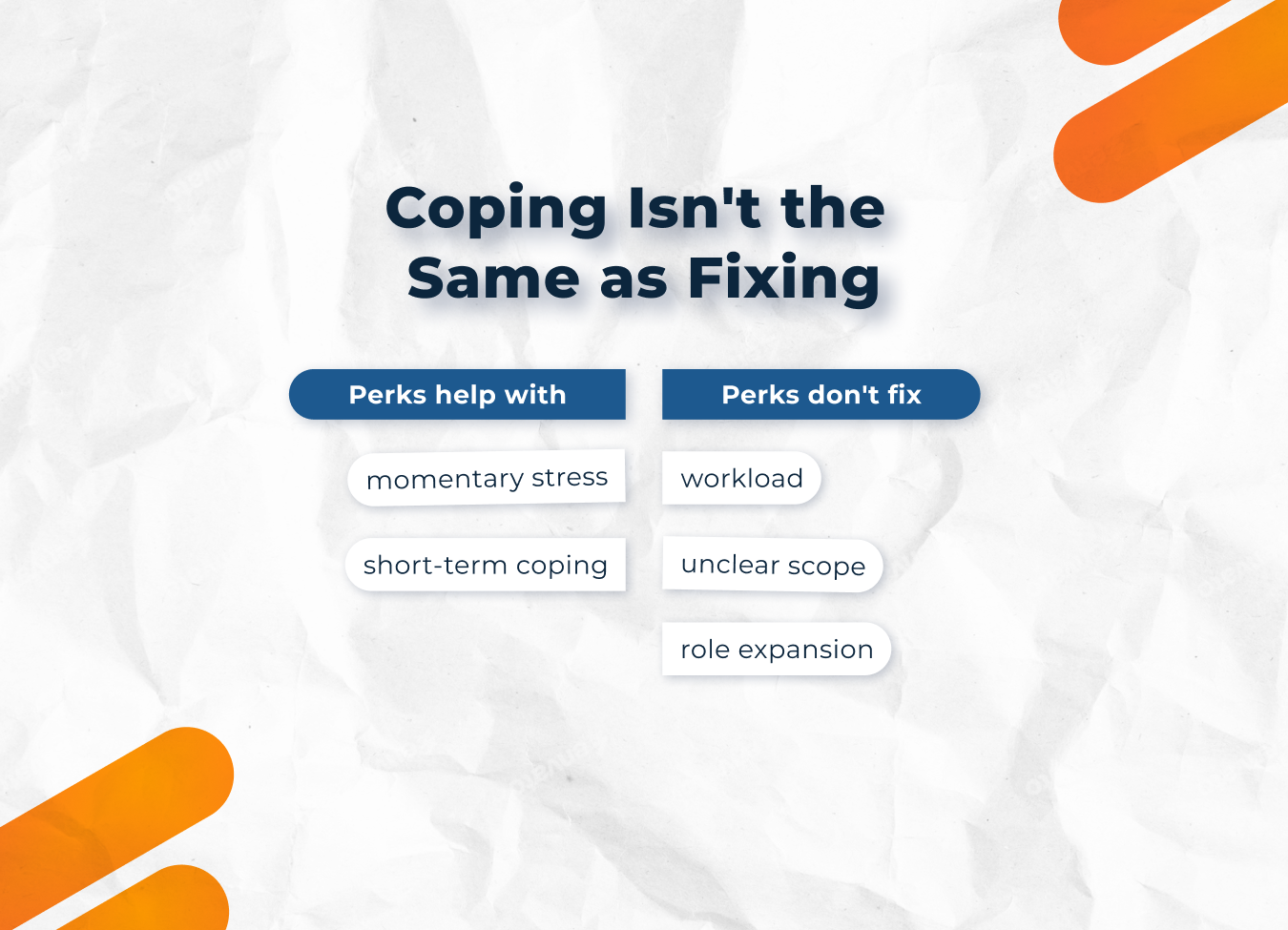
What Wellness Perks Actually Address, and What They Don't
Perks aren't worthless. They can genuinely help someone cope with stress in the moment. What they can't do is change the conditions producing that stress in the first place. A step challenge doesn't reduce a workload that exceeds what one person can reasonably do. A meditation app doesn't clarify a role whose responsibilities have drifted so far from the original job description that the employee is essentially doing two jobs without two people's worth of time.
This distinction matters because it shapes where budget and attention go. Treating burnout as a personal resilience problem, solvable with the right app or perk, quietly shifts responsibility onto the employee for a condition the role itself is creating.
The Real Levers: Workload, Role Clarity, and Scope
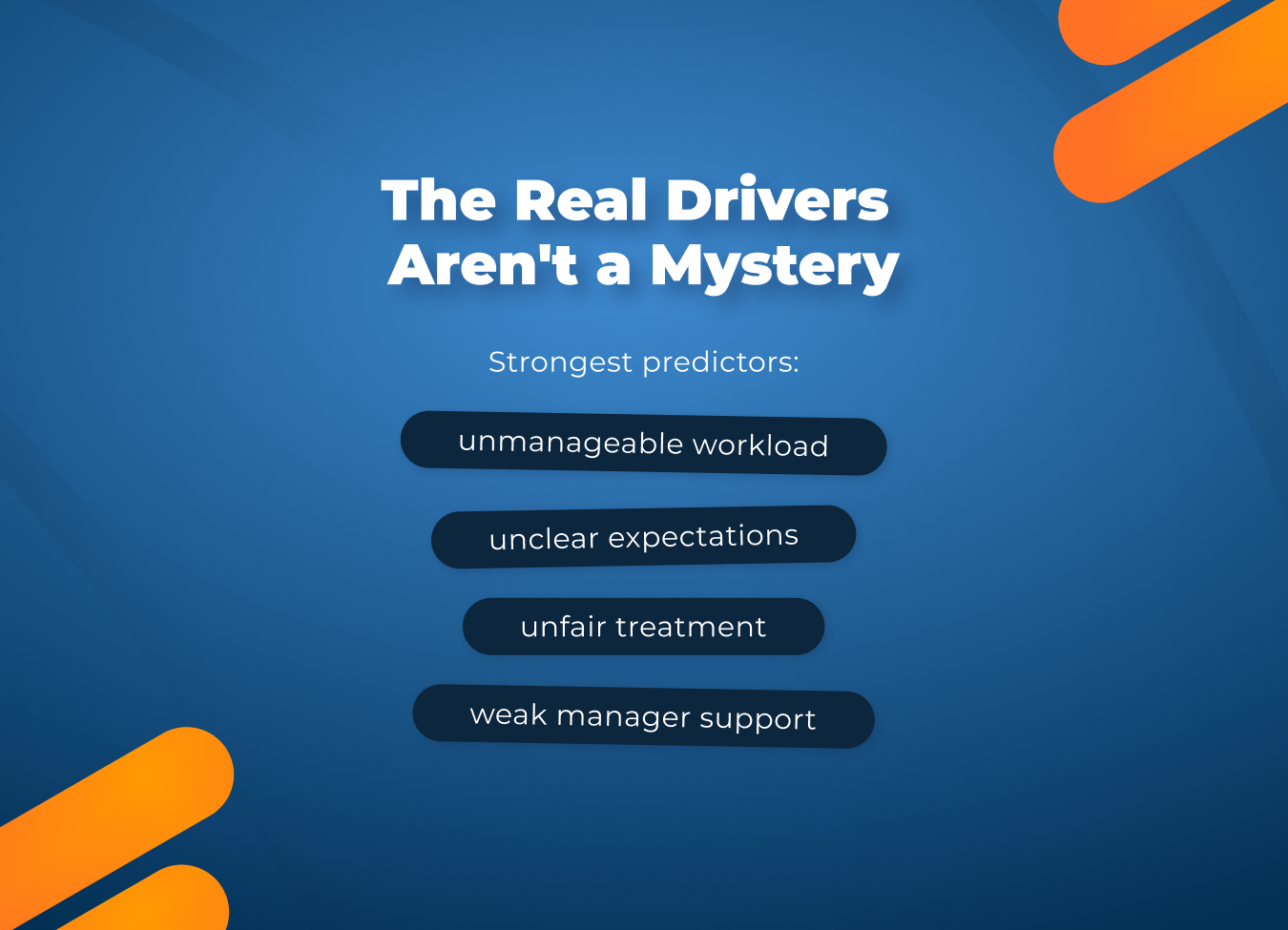
Gallup's research on the main causes of burnout identifies unfair treatment, unmanageable workload, unclear job expectations, lack of manager support, and unreasonable time pressure as the strongest predictors — and found that employees who strongly agree they're often treated unfairly are more than twice as likely to experience high burnout. Notably absent from that list: access to wellness perks.
Unclear expectations deserve particular attention on growing teams, where roles often expand informally as a company scales. SHRM's reporting on the cultural roots of burnout found that a majority of burned-out employees leave work feeling physically and emotionally drained, and a large share specifically cite unreasonably high workload as the cause — while burned-out employees also report far lower trust in their managers than engaged employees do. Burnout, in other words, tracks much more closely with how a role is structured than with how resilient the person in it happens to be.
Roles that expand without redesign are a common source of this. Our piece on 5 major retention risks and how HR can solve them covers how unclear or creeping scope shows up as a retention problem long before it shows up as a stated complaint.
Role Design as the Structural Fix
There's a more useful model than "fix the worker." MIT Sloan Management Review proposes redesigning the job itself rather than coaching people to cope with it better. Their framework points to mastery — understanding one's role, responsibilities, and how the work fits into the bigger picture — and tolerable demands — keeping effort within a range workers can reasonably sustain — as two of the clearest levers available to leaders. Roles with defined boundaries and realistic scope produce less burnout than roles left to expand indefinitely, regardless of what benefits sit on top of them.
Practically, that means auditing scope the way a company would audit a budget: what does this role actually require now, not eighteen months ago, and what has been added without anything being taken off.
What This Looks Like for Growing Teams Specifically
Growing companies are especially exposed to this pattern. As headcount lags behind workload, existing team members absorb the gap informally, and roles drift further from their original scope with each new responsibility added under pressure. This hits managers hardest, since they're often absorbing scope creep on their own plate while also managing it on their team's behalf. Our piece on the manager squeeze covers how that specific pressure builds, and what actually relieves it.
The most direct fix, in many cases, is adding the right support before scope creep becomes permanent — through a new hire, not another perk layered onto an already stretched team.
Frequently Asked Questions
Do wellness perks actually reduce burnout?
They can help with short-term stress management, but research consistently shows workload, role clarity, and manager support — not perks — are the strongest predictors of burnout.
What is role design, and how does it relate to burnout?
Role design refers to how a job's responsibilities, scope, and demands are structured. Poorly designed roles, with unclear or expanding scope, are a leading structural cause of burnout.
How can a growing company prevent burnout without slowing down?
Regularly auditing role scope against actual workload, and adding support through hiring before a role's responsibilities exceed a sustainable range, addresses the cause rather than the symptoms.
Is burnout mainly an individual or organizational issue?
Research points to organizational and structural factors, including workload and role clarity, as the primary drivers, though individual circumstances can also play a role.
Close Skills Gaps Before They Slow Growth
Perks can't redesign a role that's grown past what one person can sustainably carry. Projective Staffing helps growing companies add the right remote and direct hires before scope creep turns into burnout. Get in touch to talk through where your team could use the support.