
"Proficient in ChatGPT" shows up on resumes constantly now, and it means almost nothing. AI skills claims have become one of the most common — and least verified — lines on a resume. Most companies have no consistent way to tell the difference between someone who uses AI tools with real judgment and someone who added the phrase because every posting seems to ask for it.
Why Resumes Alone Can't Answer the Question
The volume of AI claims has outpaced the ability to check them. Listing a tool isn't the same as knowing how to use it well, and a resume line can't show the difference between someone who can write a genuinely useful prompt and someone who's used a chatbot a handful of times. The phrase has become so common that it's lost most of its filtering value — when nearly every applicant lists the same skill, it stops functioning as a signal at all.
The problem goes further than exaggeration. SHRM Labs' research on live candidate assessments found that in an analysis of nearly 20,000 interviews, more than a third of candidates showed signs of using AI tools to answer in real time, with technical roles showing the highest rate. Separately, a majority of hiring managers surveyed said they now suspect candidates of using AI during live assessments. Traditional skills tests, taken at face value, are no longer a reliable signal on their own.
The Emerging Response: Verified Skills Over Claimed Skills
The market is starting to correct for this. Reporting on LinkedIn's move toward AI skills verification points to a broader shift: rather than relying on self-reported proficiency or one-time certifications, platforms are moving toward validating skills based on actual usage patterns and demonstrated outcomes inside real tools. The underlying message for employers is the same one driving better interview design generally — a claim only means something once it's been tested.
That's consistent with the shift companies are making internally too. Our piece on the interview question most companies forgot to ask covers the same principle applied more broadly: asking a candidate to demonstrate their thinking, not just describe their background, is what actually predicts performance.
What Actually Signals Real AI Fluency
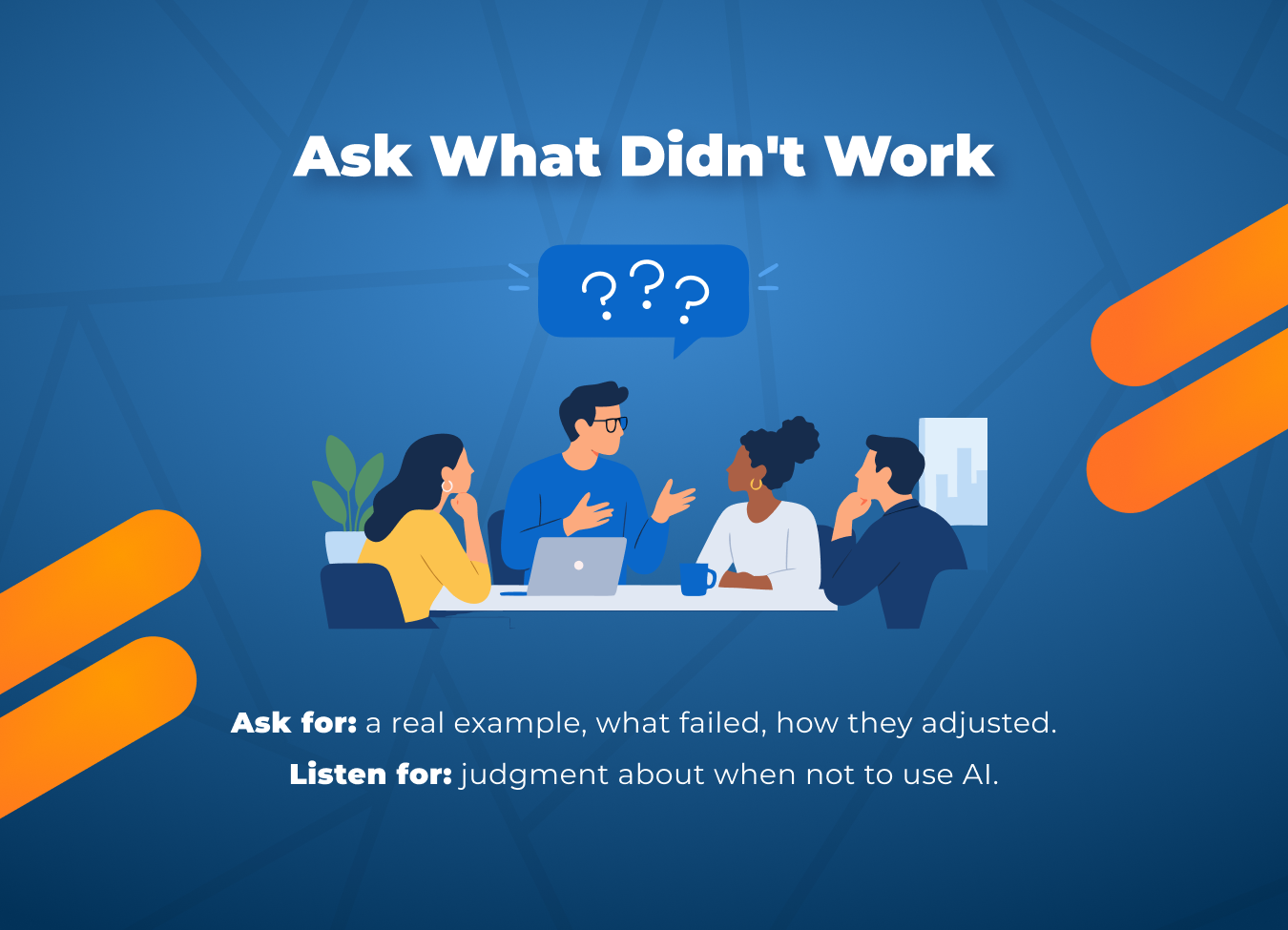
A resume line can't do this work, but a short, specific conversation can. Ask a candidate to walk through a real task they used AI for recently, including what didn't work the first time and how they adjusted. Genuine fluency shows up in the follow-up questions, not the initial answer — someone who's actually done the work can explain their reasoning; someone repeating a buzzword usually can't go past the surface.
It's also worth asking what a candidate doesn't use AI for, and why. That question tends to surface judgment more clearly than any tool-specific question does, since knowing the limits of a tool is part of using it well. A candidate who can articulate where they still rely on their own judgment, rather than the tool's output, is usually the one who understands the tool best.
This kind of evaluation takes structure; most hiring teams don't have time to build for every role. Our breakdown of what a professional recruiter really brings to your hiring strategy covers how that structured vetting gets applied consistently, AI claims included.
Frequently Asked Questions
Why can't resumes reliably show AI proficiency?
A resume line reflects what a candidate chose to write, not demonstrated ability, and doesn't distinguish between casual tool use and genuine, judgment-driven fluency.
How can employers verify a candidate's real AI skills?
Ask candidates to walk through a specific example, including what didn't work initially, and probe with follow-up questions. Genuine fluency holds up under detail; buzzwords don't.
Are AI skills assessments reliable?
Not on their own. Research shows a meaningful share of candidates use AI tools during live assessments, so assessments work best paired with structured, conversation-based verification.
Find Remote Professionals Who Fit the Way Your Team Works
Claimed skills and demonstrated skills aren't always the same thing. Projective Staffing vets every candidate through structured, human-led evaluation, so the AI proficiency on a resume holds up in practice. Get in touch to talk through your next hire.