
Managers absorb pressure from two directions at once. Leadership expects results, clear reporting, and follow-through on strategy. Their team expects clarity, support, and someone who has the bandwidth to actually listen. Most managers are trying to do both jobs with the time and support meant for one. That's the squeeze, and it's becoming one of the most consistent pressure points in growing companies.
What the Squeeze Actually Looks Like Day to Day
It rarely shows up as one dramatic moment. It shows up as a manager who's technically "available" but constantly interrupted, who spends more time compiling updates than developing the people on their team, and who ends up absorbing tasks that don't belong to their role because there's no one else to hand them to. On a growing team especially, managers are often still doing hands-on individual work on top of managing people, with no real reduction in their own workload to make room for the second job.
The result is a layer of the organization that's structurally set up to be overextended. Managers aren't just leading; they're translating strategy from leadership into something the team can act on, and translating team reality back up to leadership, often without the time or support that translation work actually requires.
Why This Matters, in Numbers
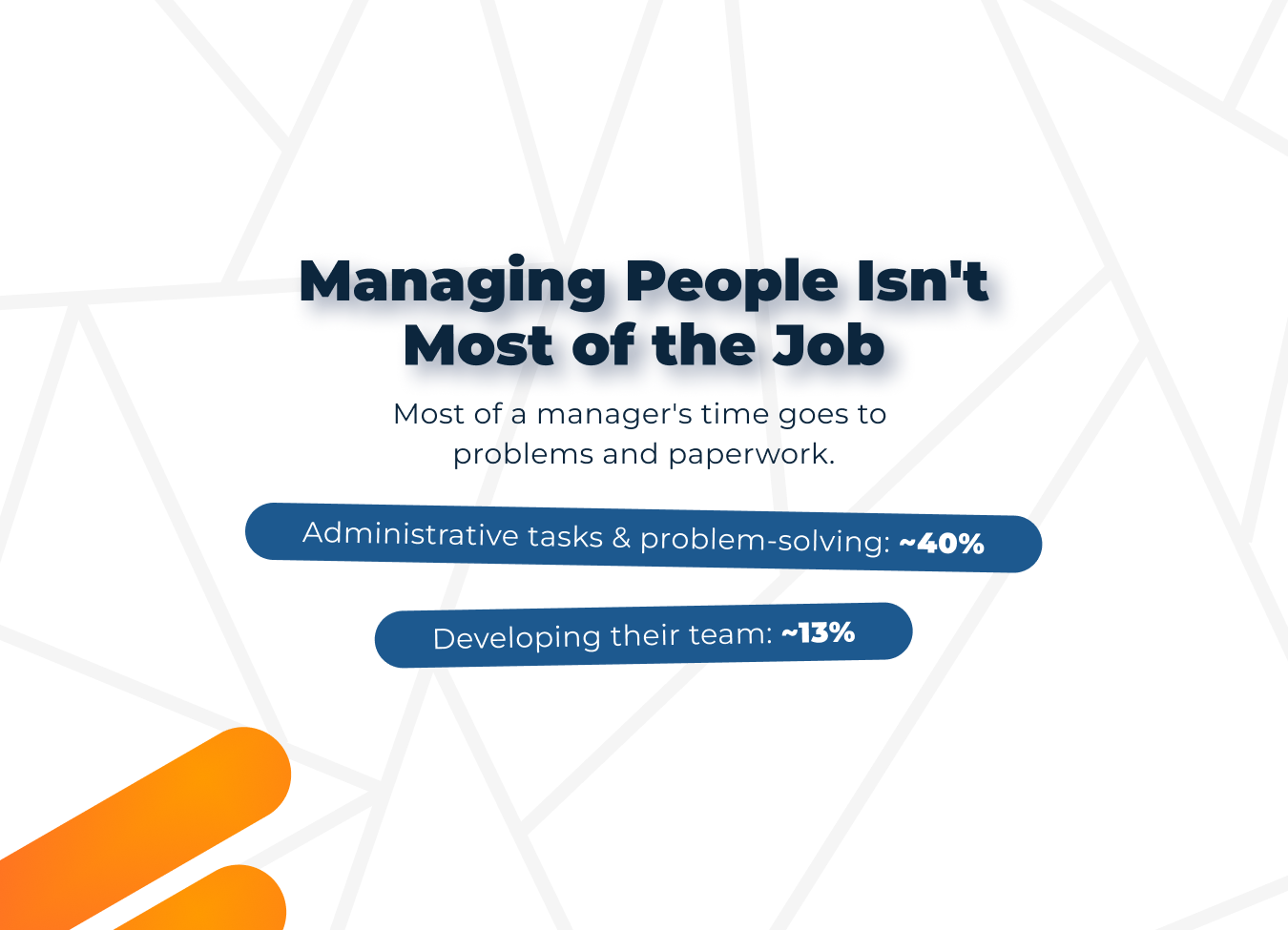
The scale of this is measurable. Deloitte's 2025 Global Human Capital Trends research found that managers spend nearly 40% of their time on solving day-to-day problems and administrative tasks, and only 13% of their time actually developing the people who report to them. The same research found that a notable share of managers report a decline in their own mental health after stepping into the role.
The capacity gap is well documented elsewhere too. SHRM's reporting on manager burnout points to research showing the average manager carries roughly half again more responsibility than they have the capacity to manage effectively. That's not a workload problem that resolves itself with a time-management workshop. It's a structural mismatch between what managers are asked to hold and what they're actually equipped to hold.
This mismatch compounds when hiring goes wrong. A mis-hire or an early departure doesn't just create a vacancy — it adds directly to the manager's workload while they cover the gap and manage the fallout. Our piece on reducing the risk of early termination covers how avoidable turnover compounds pressure on the people managing through it.
What Sustainable Manager Workload Actually Requires
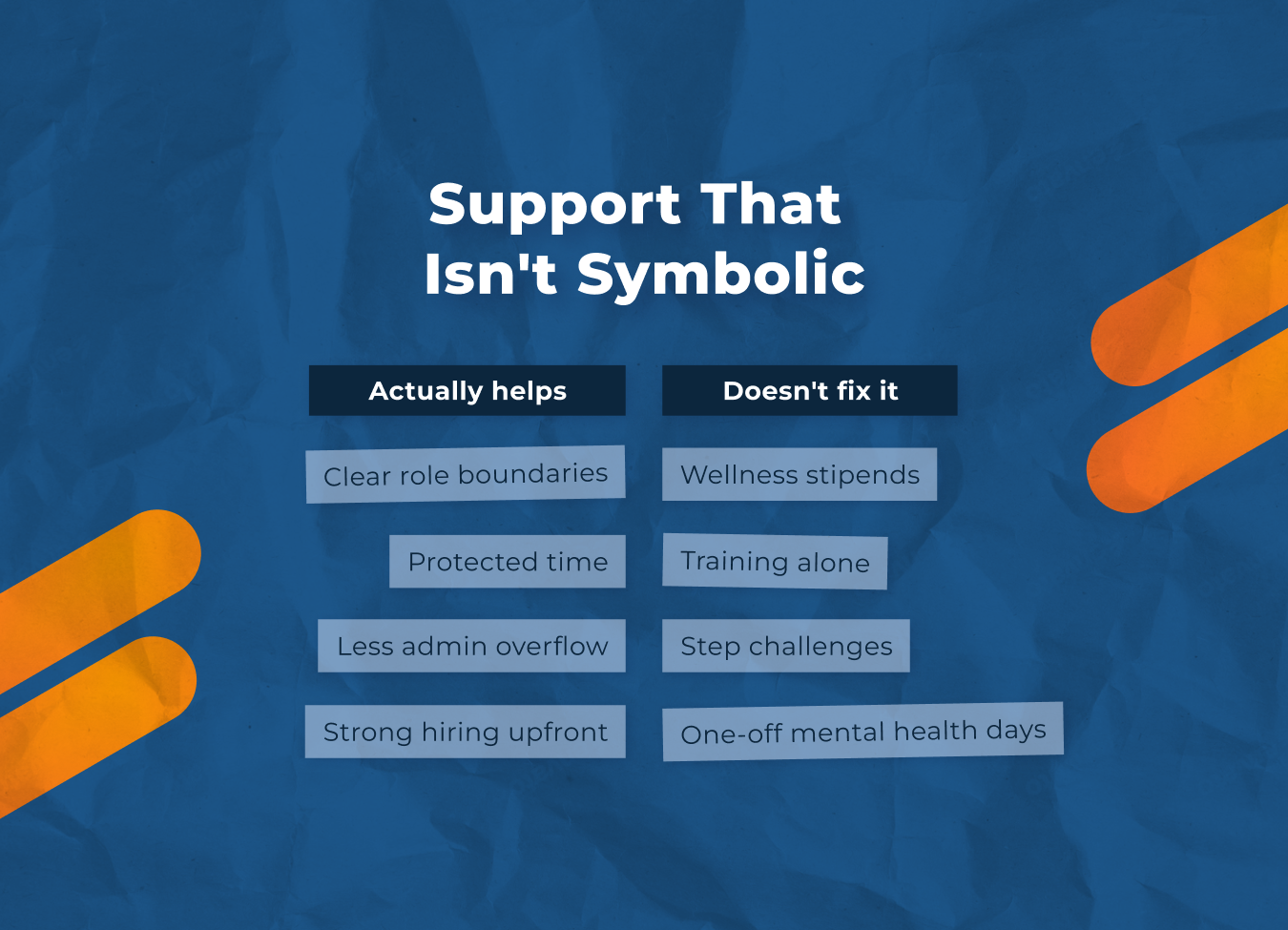
Perks and wellness stipends don't fix a structural workload problem. What actually helps is more concrete: clearer role boundaries so managers aren't quietly absorbing work that belongs elsewhere, protected time that isn't the first thing sacrificed when priorities shift, and organizational support. Microsoft's Work Trend Index has consistently found that active manager support from the organization above them, not just tools or training, is one of the strongest predictors of whether a team actually adapts well to change.
That support has to be structural, not symbolic. Redistributing administrative and coordination work that doesn't require a manager's judgment is one of the most direct ways to protect the time managers need for the parts of the job only they can do.
Where Hiring Decisions Reduce or Add to the Squeeze
Hiring is one of the most overlooked levers here. Every role filled with the right person, vetted thoroughly and set up to succeed, is one less thing pulling a manager's attention toward damage control instead of development. Our look at why your talent retention strategy should begin at recruitment covers how strong hiring upfront reduces the ongoing management burden that weak hiring quietly creates.
Frequently Asked Questions
What causes the "manager squeeze"?
It comes from managers absorbing pressure from both leadership above and team needs below, often without a corresponding reduction in their own individual workload to make room for people management.
Does more training fix manager burnout?
Not on its own. Research points to workload and structural support, not skill gaps, as the primary driver, so training alone rarely resolves the underlying capacity mismatch.
How does hiring quality affect manager workload?
A weak or mismatched hire adds direct, ongoing work for the manager who has to cover gaps and manage underperformance, while a well-vetted hire reduces that burden from day one.
Add the Right Support Before Work Becomes Reactive
Managers can't do their best work while quietly absorbing everyone else's overflow. Projective Staffing helps growing companies bring in the right remote support and direct hires so managers spend less time firefighting and more time leading. Get in touch to talk through where your team could use the support.