
Running a Mid-Year Skills Gap Analysis: A 2026 Framework for 2027 Goals
A skills gap analysis helps growing companies understand whether their current team capabilities match the goals they need to reach next. By mid-year, leaders usually have enough performance data to see where teams are strong, where work is slowing down, and which skills may be missing before 2027 planning begins. The goal is not to create another HR exercise. It is to identify the capabilities your company needs to grow with more clarity, speed, and confidence.
Why Mid-Year Is the Right Time for a Skills Gap Analysis
A skills gap analysis works best when it is tied to business timing. Waiting until year-end can make the process reactive because budget, hiring, and workforce planning decisions are already under pressure.
Mid-year gives leaders a better window. There is enough data from the first half of the year, but still enough time to adjust hiring, training, role design, and staffing plans before Q4.
Employers expect 39% of workers’ core skills to change by 2030. For companies planning toward 2027, skills planning cannot wait until a role becomes urgent.
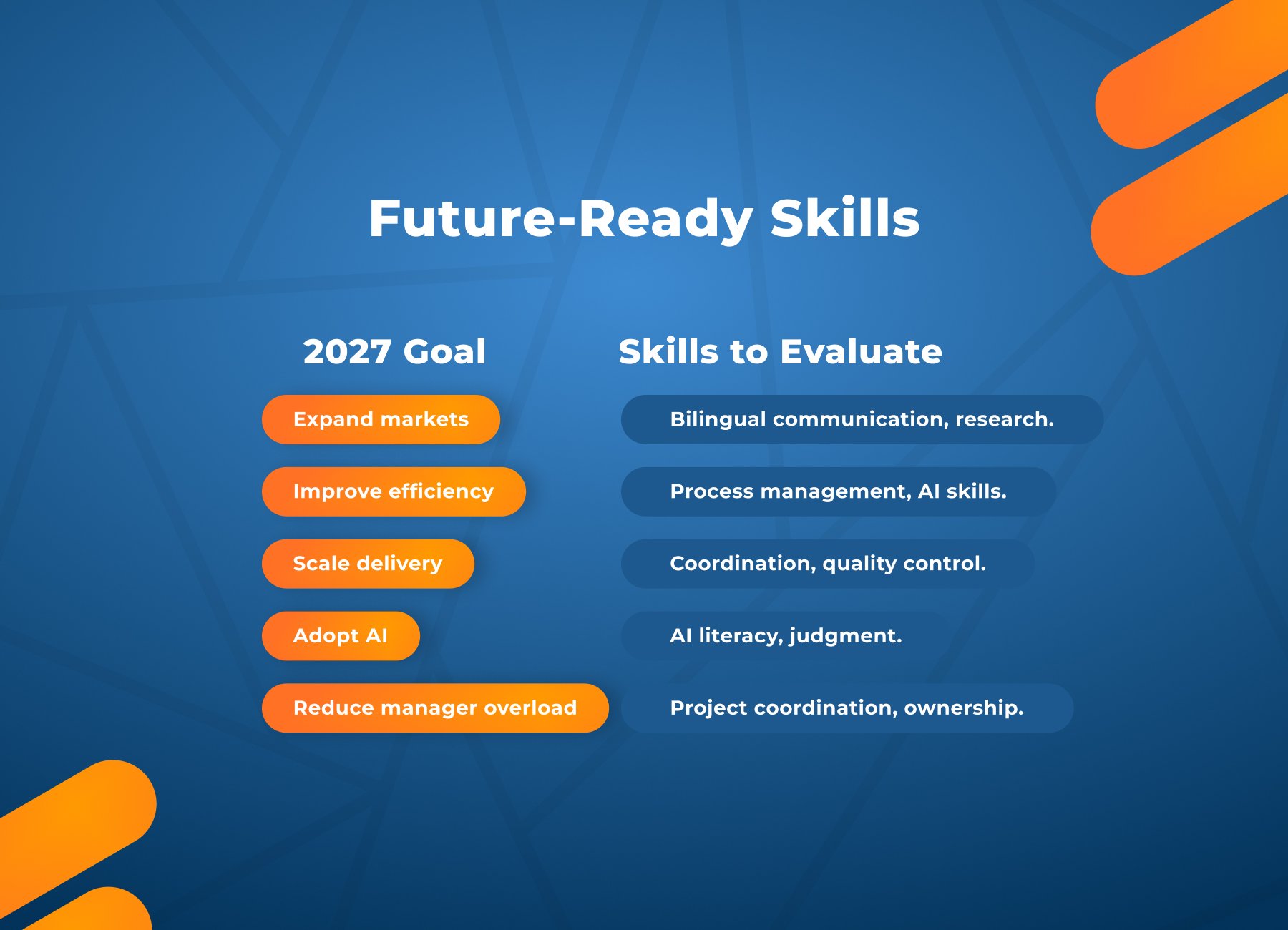
Start With 2027 Business Goals
A useful skills gap analysis starts with strategy, not job titles.
Before reviewing your team, define what the business needs to accomplish by 2027. This keeps the process practical. You are not asking, “What skills does everyone have?” You are asking, “What capabilities will we need to execute the next stage of growth?”
For broader planning context, this connects closely to HR trends for 2026.
Step 1: Map Current Team Capabilities
The first step is to document the skills already available inside the company.
Review current roles, manager feedback, project performance, recurring bottlenecks, tool usage, customer feedback, and work that depends too heavily on one person.
SHRM’s future-ready workforce framework recommends starting with a clear view of current roles, skills, strengths, and gaps before deciding what the organization needs next.
This does not need to become a complicated scoring exercise. A simple skills inventory can show where your team is strong and where capacity is fragile.
Step 2: Identify Future Skill Demand
Next, compare current capabilities with the skills your company will need in 2027.
For many growing companies, future skill demand falls into five areas:
Technical skills: AI tools, data management, systems knowledge.
Operational skills: process improvement, documentation, reporting.
Communication skills: writing, client updates, cross-functional communication.
Leadership skills: ownership, decision-making, escalation, coaching.
Adaptability skills: learning, resilience, problem-solving, change readiness.
This is different from a recruiter-facing soft-skills list. A skills gap analysis looks at whether the business has the right mix of capabilities to meet future goals.
Still, the top soft skills can help leaders decide which human capabilities should be assessed.
Step 3: Prioritize the Gaps That Matter Most
Not every missing skill needs immediate action. Focus on the gaps that affect growth, customer experience, quality, revenue, or manager capacity.
Ask:
Which missing skills are already slowing work down?
Which gaps create too much dependence on one person?
Which skills will become more important by 2027?
Which skills require new talent?
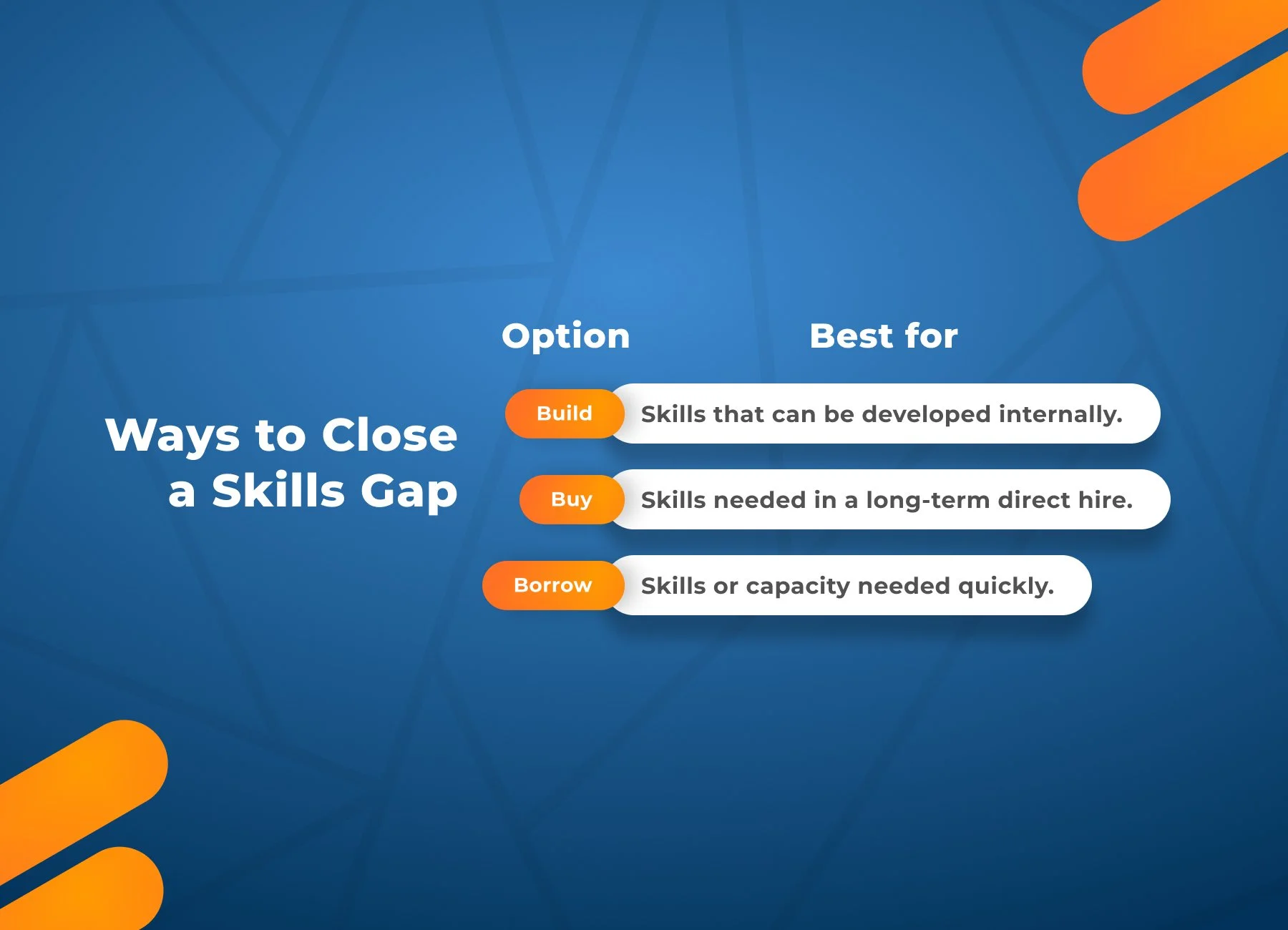
Step 4: Choose Build, Buy, or Borrow
Once the gaps are clear, decide how to close them. Some gaps can be solved through upskilling. Others require new roles, better onboarding, or external support.
McKinsey found that many companies are increasing AI investment, while few describe themselves as mature in AI deployment. That gap shows why companies may need both training and new support roles to turn technology into practical workflows.
Step 5: Turn the Analysis Into a Hiring Plan
A skills gap analysis should lead to action.
Your plan should include priority roles, required skills, timeline, hiring model, manager ownership, onboarding needs, and success metrics.
For example, a company preparing for 2027 growth may not need another senior manager yet. It may need remote operations support, customer support, or administrative capacity.
Frequently Asked Questions
What is a skills gap analysis?
A skills gap analysis compares the skills your company has today with the skills it needs to meet future business goals.
Why run a skills gap analysis in 2026?
It helps companies prepare for 2027 goals before hiring, training, or capacity problems become urgent.
How can companies close skills gaps?
Companies can close skills gaps through training, direct hiring, remote staffing, onboarding, and clearer role design.
Build the Skills Your 2027 Goals Will Require
A mid-year skills gap analysis gives growing companies a clearer view of what they need before pressure builds. If your company needs to close capability gaps before 2027, Projective Staffing can help you find remote professionals with the skills, communication, and workflow readiness your team needs. Schedule a consultation.