
AI-Enabled Teams Still Need Human Accountability
AI-enabled teams are becoming a priority for growing companies, but AI does not remove the need for human accountability. It changes where accountability matters most. As companies use AI to automate repetitive tasks, summarize information, support recruiting, and improve workflows, leaders still need people who can evaluate output, make decisions, communicate clearly, and own results. The strongest AI-enabled workforce strategy is not built around replacing people. It is built around pairing better tools with the human skills, roles, and systems that make AI useful.
AI Is Now a Workforce Strategy, Not Just a Technology Decision
AI adoption is no longer only an IT conversation. It is becoming a leadership, operations, hiring, and workforce planning issue.
SHRM found that 89% of CEOs expect AI to redefine how their organizations create and capture value. The same report found that many CEOs also expect AI to reshape the workforce by creating new roles, phasing out repetitive work, transforming organizational structures, and increasing the need for upskilling and reskilling.
For growing companies, that means AI should not be treated as a side project. It should be connected to hiring, team design, role clarity, onboarding, and performance expectations.
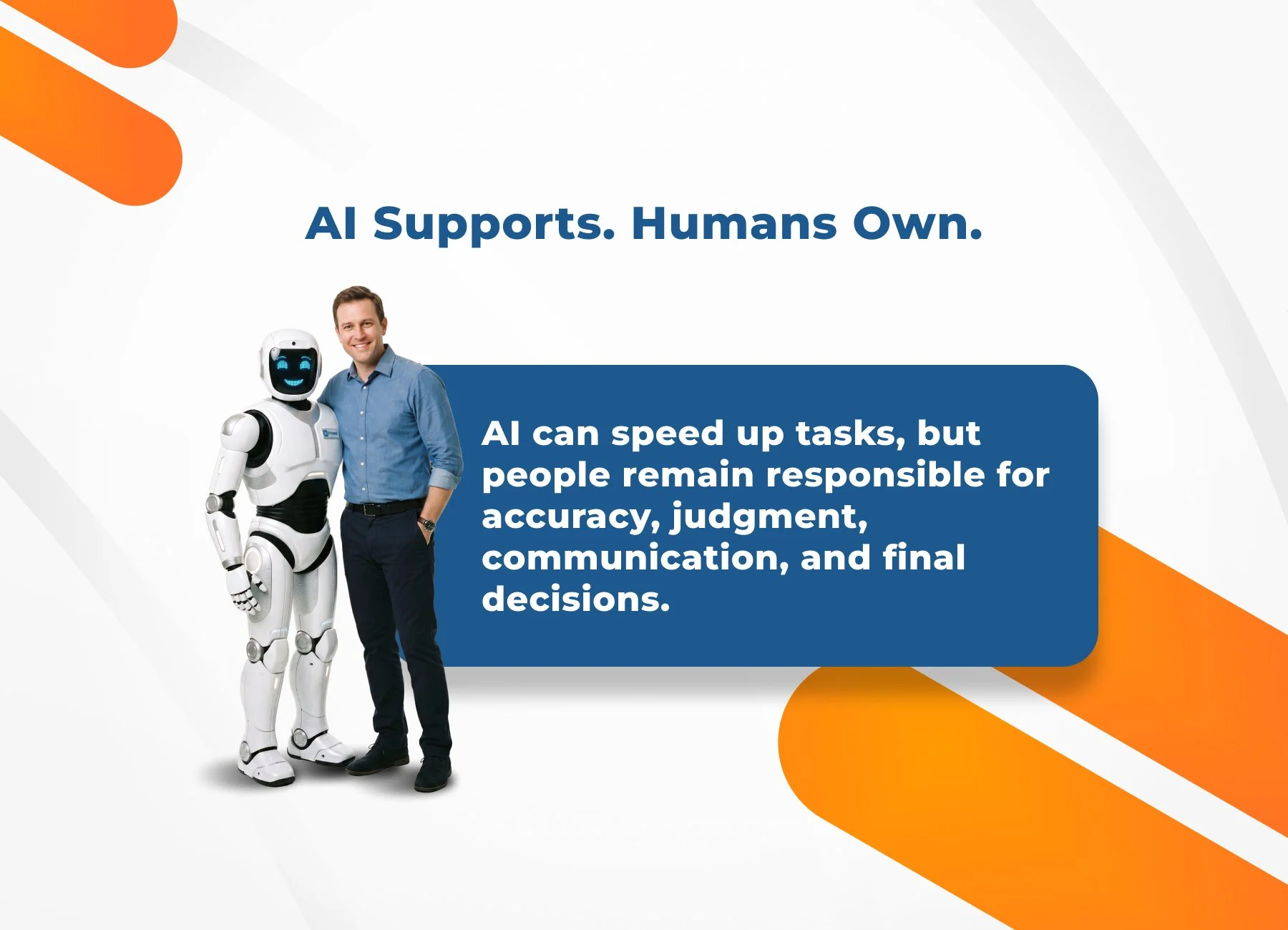
AI Creates Speed, But People Create Accountability
AI can help teams move faster. It can summarize meetings, draft documents, analyze information, support customer communication, and automate recurring workflows.
But speed does not automatically create better decisions.
McKinsey’s AI in the workplace report found that 92% of companies plan to increase AI investments over the next three years, while only 1% of leaders say their companies are mature in AI deployment. That gap shows the difference between buying AI tools and building AI-ready teams.
Human accountability matters because someone still needs to verify quality, interpret context, protect customer trust, and decide when AI output is ready to use.
AI-Ready Roles Require More Than Technical Skills
An AI-ready professional does not need to be an engineer in every case. Many AI-enabled roles require practical judgment, adaptability, communication, and process discipline.
For example, a remote operations assistant using AI to organize reports still needs to understand priorities. A customer support professional using AI-assisted drafts still needs to recognize tone and escalation risk. A recruiter using AI to summarize candidates still needs to assess fit beyond keywords.
That is why soft skills remain important. AI can make tasks faster, but human skills determine whether the output is reliable.
AI Is Changing Candidate Evaluation, Too
AI is also changing how companies evaluate candidates. Hiring teams are using AI to review resumes, identify skills, summarize candidate information, and support skills-based hiring.
LinkedIn’s Future of Recruiting 2025 found that more than nine out of ten talent acquisition professionals believe accurately assessing candidate skills is crucial for improving quality of hire. LinkedIn also notes that AI can help recruiters analyze resumes and support skills assessment, giving recruiters more time to focus on strategic evaluation.
Still, AI should not be the final judge of fit. Companies need human evaluation to assess communication, ownership, problem-solving, judgment, and the ability to work inside the company’s actual workflow.
That is why hiring beyond resumes matters even more in AI-enabled hiring.
AI-Enabled Teams Need Clear Human Handoffs
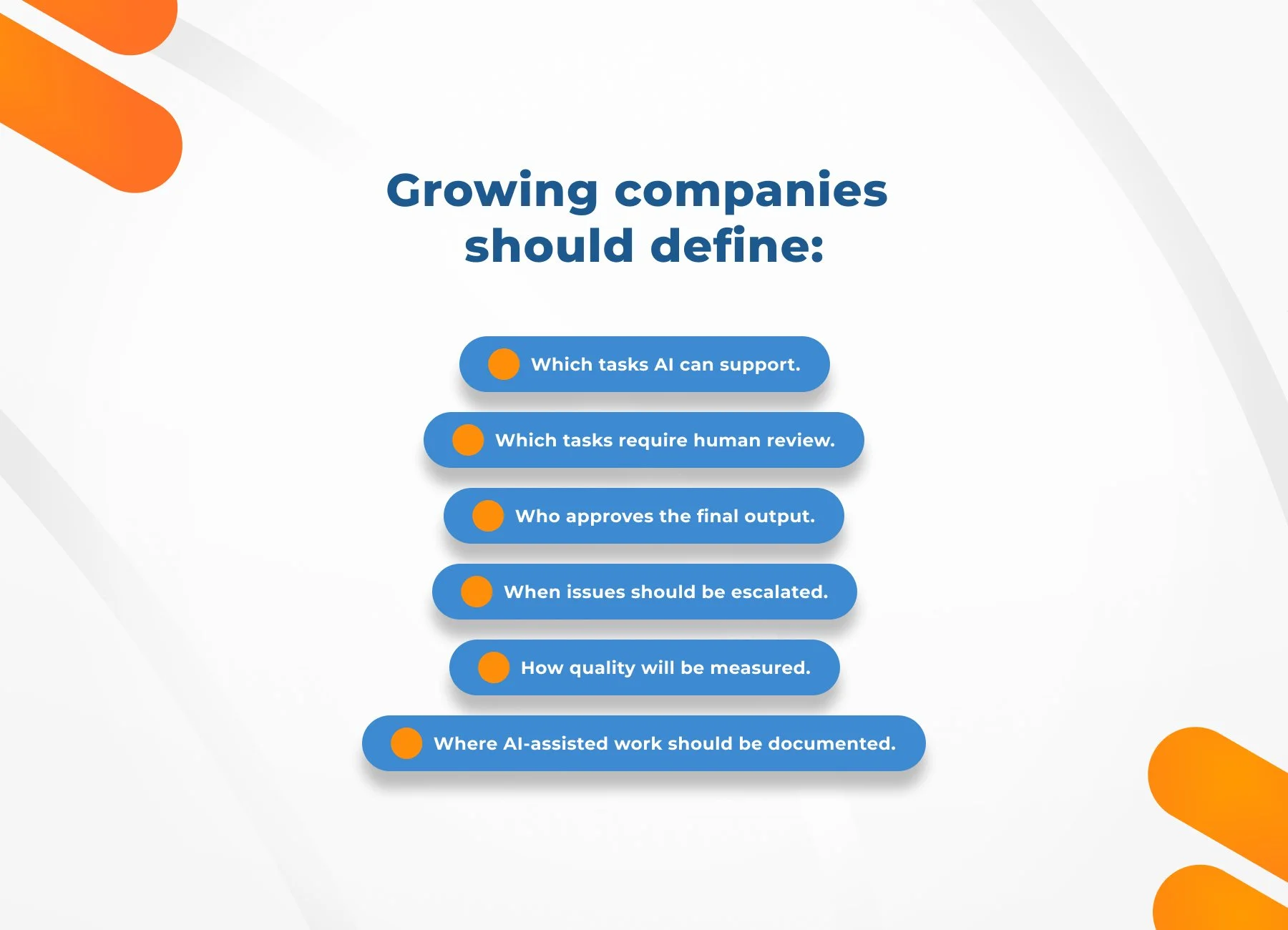
One of the biggest risks in AI-enabled teams is unclear ownership. If AI produces the first draft, who checks it? If an AI tool flags a customer issue, who decides what happens next? If an AI summary misses context, who is responsible for correcting it?
Microsoft’s 2026 Work Trend Index highlights the importance of documented agent workflows, human handoffs, and quality standards. Microsoft also notes that as AI agents execute more work, the need for human evaluation becomes more important because risk can compound when poor output scales.
How Projective Staffing Helps Build AI-Enabled Teams
Projective Staffing helps companies build remote teams that can work effectively in AI-enabled environments. Through remote staffing, we support sourcing, vetting, onboarding coordination, and payment, helping companies add capacity without unnecessary complexity.
We focus on remote professionals who can bring more than task experience. That includes communication discipline, autonomy, adaptability, workflow readiness, and accountability.
For companies thinking beyond one role, long-term staffing partnerships can create consistency as AI adoption changes team needs over time.
Frequently Asked Questions
What are AI-enabled teams?
AI-enabled teams use AI tools to support workflows, communication, analysis, and decision-making while keeping people accountable for quality and outcomes.
Why do AI-enabled teams still need human accountability?
AI can generate output, but people still need to verify accuracy, interpret context, manage risk, and make final decisions.
What roles support AI implementation?
Operations support, documentation support, data cleanup, quality assurance, and customer communication can all help AI adoption work better.
How should companies hire for AI-ready roles?
Companies should look for adaptability, communication, judgment, process discipline, and the ability to use AI responsibly inside real workflows.
Build AI-Enabled Teams With the Right Human Support
AI can help companies move faster, but it does not replace the human accountability that makes work reliable. The companies that benefit most from AI will be the ones that pair technology with clear ownership, strong communication, and the right support roles.
If your company is building an AI-enabled team, Projective Staffing can help you find pre-vetted remote professionals who are ready to support your workflows, adapt to new tools, and keep human judgment at the center of execution. Schedule a consultation.