
Medical Staffing Challenges in 2026: How Healthcare Teams Are Adapting and Scaling Smarter
US healthcare in 2026 is entering a new phase, one defined less by shortages and more by intentional workforce design. When leaders explore medical staffing challenges, they’re often looking for clarity: how to support care delivery, reduce operational strain, and build teams that can scale without compromising quality. The conversation is no longer about whether healthcare staffing needs to change, but how forward-thinking organizations are adapting. This article explores what’s shifting in medical staffing, where remote staffing adds real value, and how modern healthcare teams are strengthening their operations with smarter role alignment.
Why Medical Staffing Is Evolving
Healthcare has always demanded precision, accountability, and trust. What has changed is the operational complexity surrounding care delivery, as innovation continues to reshape roles, workflows, and care models across the healthcare ecosystem.
As a result, clinical excellence increasingly relies on strong administrative, coordination, and support teams working seamlessly behind the scenes to enable efficient, high-quality care.
Medical organizations today are balancing:
Higher patient volumes and care coordination needs.
Increased regulatory and documentation requirements.
A growing emphasis on clinician efficiency and focus.
These realities are encouraging leaders to rethink how roles are structured, not to replace traditional hiring, but to complement it with more flexible staffing models.
The Growing Importance of Support Roles in Healthcare
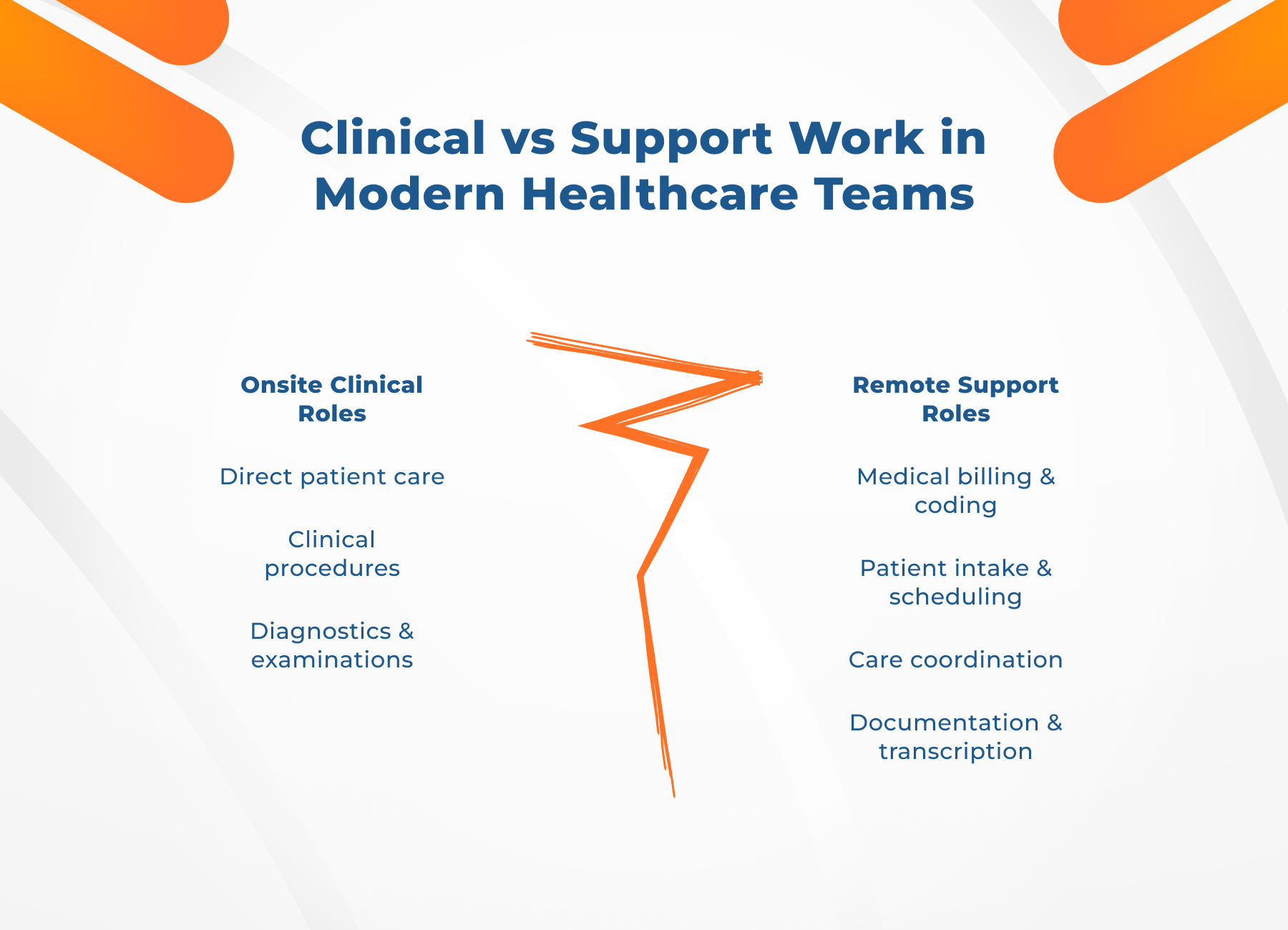
One of the most important shifts in medical staffing is the recognition that not all healthcare work needs to be done onsite. As care models modernize, many organizations are separating clinical responsibilities from operational and administrative functions.
Support roles such as billing, intake, scheduling, care coordination, and documentation play a critical role in patient experience and financial performance. When these functions are well-staffed and aligned, clinical teams are able to focus more fully on care.
This shift isn’t about reducing standards—it’s about deploying the right talent in the right roles, with a more intentional approach to health workforce skills mix and role distribution.
Where Remote Staffing Works Best in Medical Organizations
Remote staffing is proving especially effective for medical roles that require accuracy, process discipline, and communication rather than physical presence.
Roles well-suited for remote medical staffing include:
Medical billing and coding.
Patient intake and scheduling.
Care coordination.
Telehealth administrative and technical support.
Medical transcriptionists.
These roles benefit from focused, dedicated professionals who can work within established workflows and compliance requirements, regardless of location.
How Projective Staffing Supports Modern Medical Teams
We help medical organizations build high-quality remote support teams designed for healthcare environments. The focus is on alignment, readiness, and a long-term partnership, not transactional hiring.
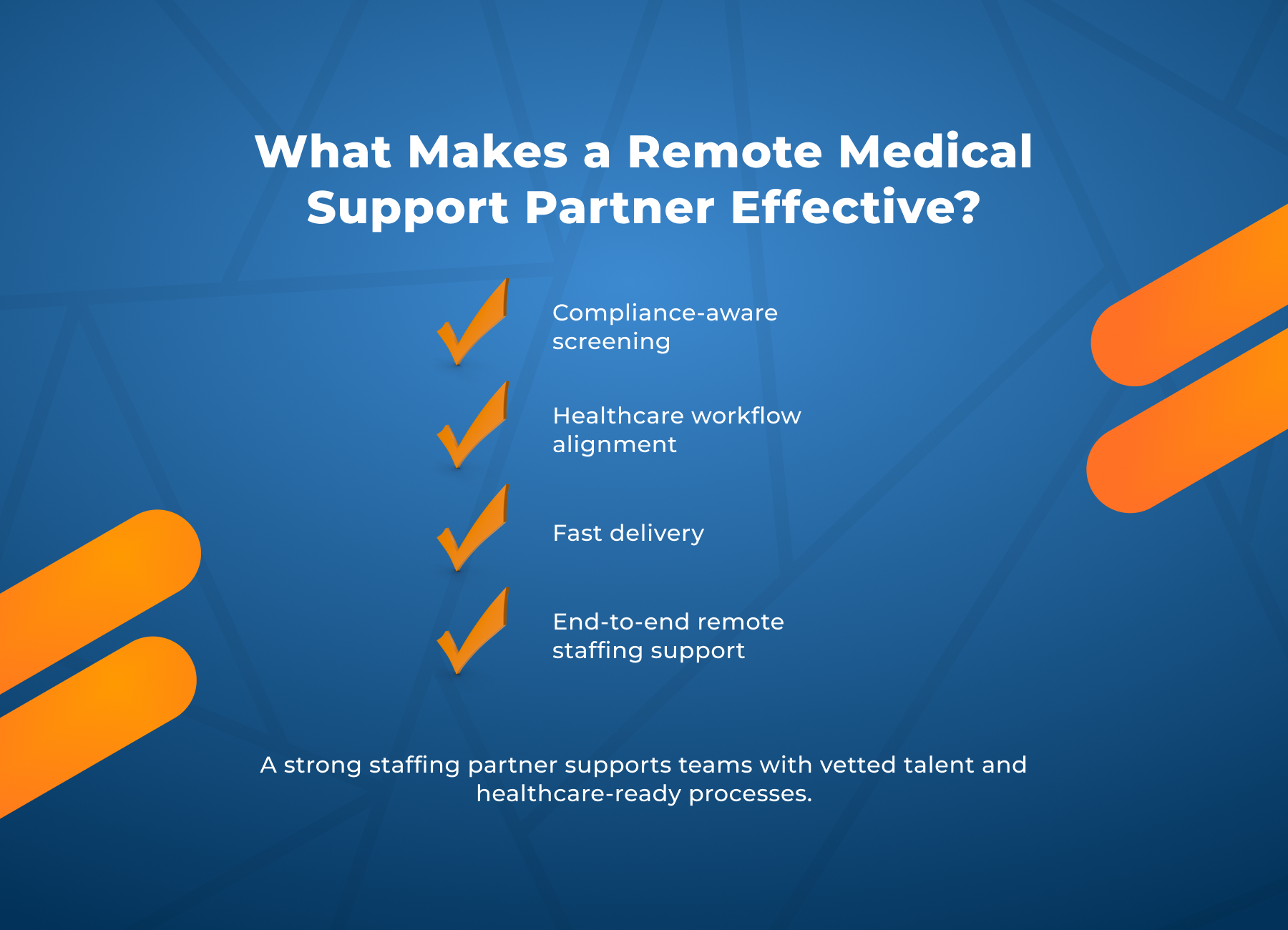
What makes Projective Staffing a strong partner:
Pre-vetted remote medical professionals delivered in 3–5 days.
Screening that accounts for compliance awareness, communication, and workflow fit.
Experience supporting medical and healthcare-adjacent teams globally.
End-to-end remote staffing support, from sourcing and vetting to onboarding coordination and payroll.
This approach allows medical teams to scale support functions confidently, without adding unnecessary complexity or risk.
Frequently Asked Questions
What medical roles are best suited for remote staffing?
Non-clinical and support roles such as billing, coding, scheduling, care coordination, and telehealth support are strong candidates when compliance requirements are clearly defined.
How does remote staffing support clinical teams?
By shifting administrative and coordination work to dedicated support professionals, clinicians can focus more on patient care.
How quickly can remote medical professionals be added to a team?
We deliver pre-vetted candidates in 3–5 days, helping teams move efficiently without sacrificing quality.
A Smarter Way to Build Medical Teams
Medical staffing in 2026 isn’t about replacing traditional hiring, it’s about designing teams that work better together. By applying remote staffing, healthcare organizations can strengthen operations, support clinicians, and build more adaptable care environments.
For medical teams looking to scale support functions with confidence and clarity, Projective Staffing offers a practical, proven approach to remote staffing, built for the realities of modern healthcare. Schedule a consultation.