
How Law Firms Are Rethinking Legal Staffing in 2026
Legal staffing in 2026 is being shaped by thoughtful reassessment rather than disruption. Managing partners, firm administrators, and legal operations leaders, are looking for ways to build high-performing teams, protect quality, manage costs, and adapt to evolving client expectations, without compromising trust. The core practice of law remains premium and relationship-driven. What’s changing is how legal teams structure support, allocate work, and build capacity. This article explores the key staffing trends influencing law firms today, the growing role of remote legal support, and why precision staffing is becoming essential.
Why Legal Staffing Is Being Reconsidered
Law firms have always operated within a framework of accountability, confidentiality, and expertise. Those fundamentals haven’t changed. What has changed is the business context around legal work.
Firms are navigating:
Increased cost sensitivity from clients.
Greater scrutiny of billable hours.
Rising expectations around turnaround time and responsiveness.
These pressures are prompting leaders to evaluate whether traditional, fully local staffing models still serve the firm’s long-term interests, especially for non-attorney and support functions.
Cost Pressure and the Reality of the Billable Hour
The billable hour remains central to many firms, but it is no longer immune to scrutiny. Clients are more informed, more selective, and more focused on value.
As a result:
Time spent by attorneys on administrative or repetitive tasks is harder to justify.
Inefficient staffing structures directly affect margins.
Support capacity must flex with workload without inflating overhead.
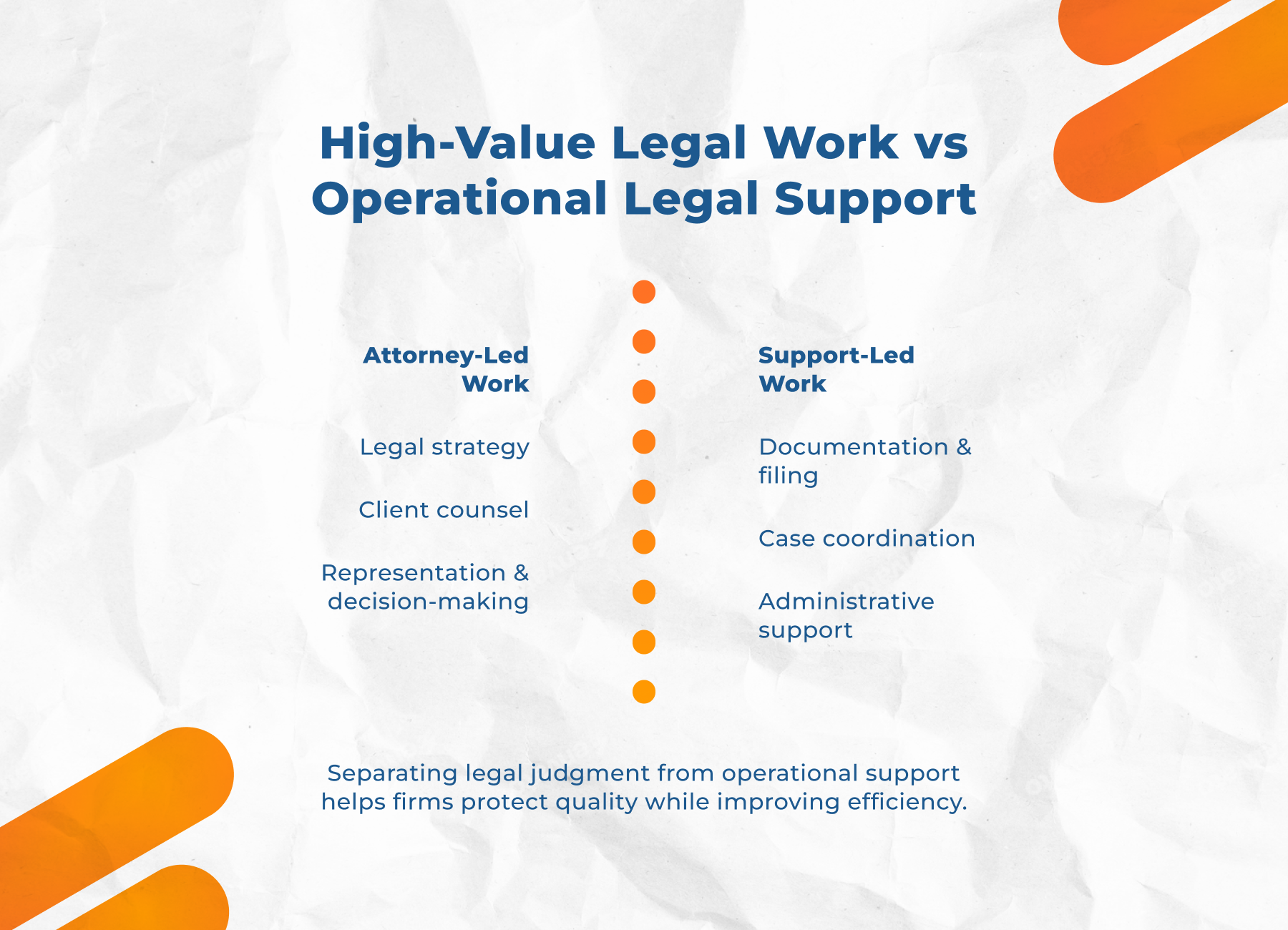
This has led firms to separate high-value legal judgment from operational legal work, ensuring each is handled by the right level of expertise.
The Rise of Remote Legal Support Roles
This shift is not about outsourcing legal judgment or lowering standards. It’s about aligning work with the appropriate role so legal teams can operate more efficiently without compromising quality.
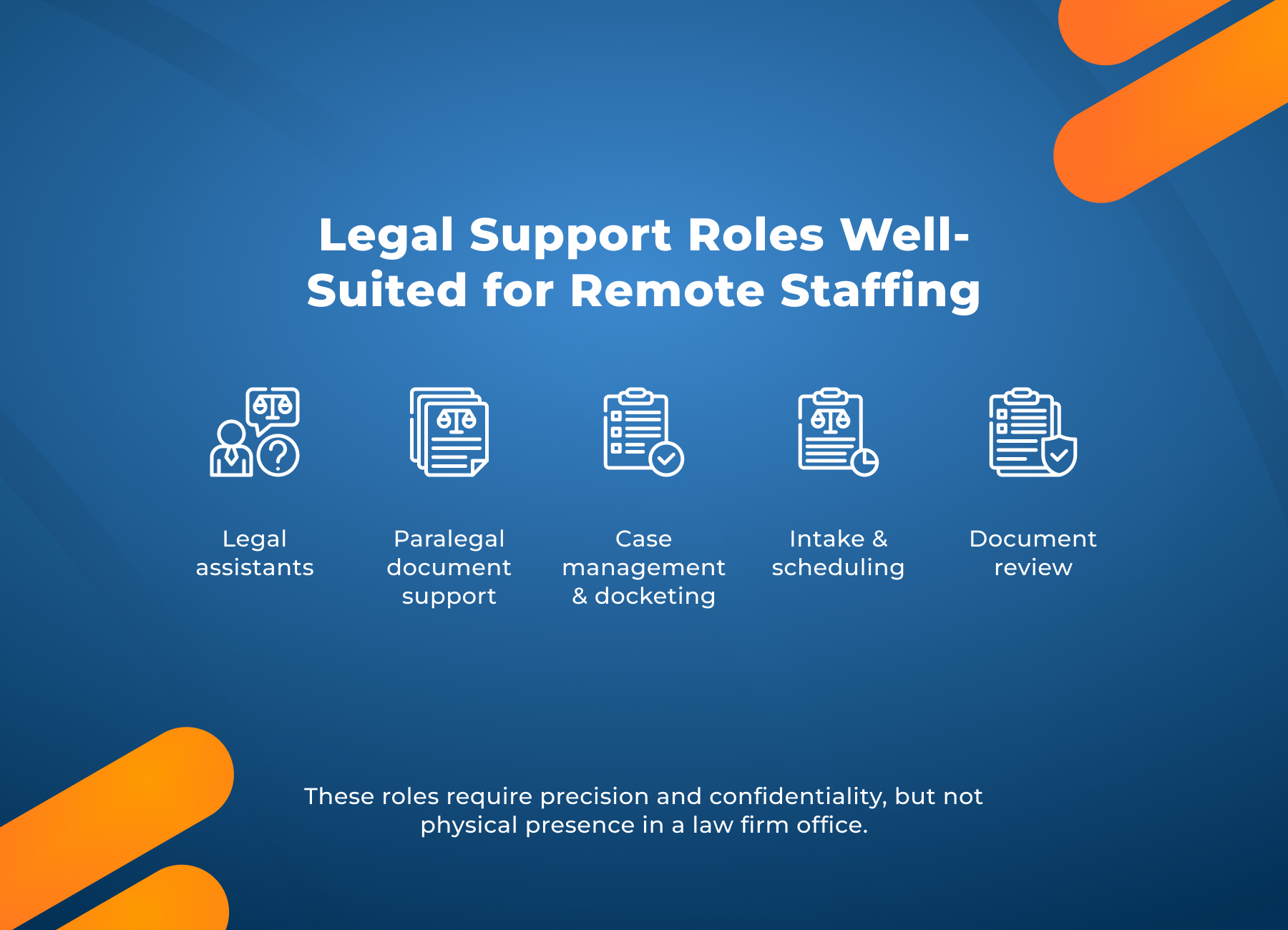
Legal roles well-suited for remote staffing include:
Legal assistants and administrative support.
Paralegal support for document preparation and organization.
Case management and docketing.
Intake, scheduling, and client coordination.
Document review and filing support.
These functions require precision, confidentiality, and reliability, but not physical presence in a firm’s office. When candidates are properly vetted and workflows are clearly defined, remote legal professionals can integrate seamlessly into existing teams. Crucially, licensed practice, legal strategy, and client counsel remain firmly within the firm.
Remote staffing is designed to support legal teams, not replace them. As remote work has become an accepted operating model across many legal environments, firms are increasingly applying it thoughtfully to support and operational roles—while maintaining strict standards around compliance, communication, and confidentiality.
Why General Recruiters Fall Short in Legal Hiring
Legal hiring requires a deeper understanding of context, risk, and workflow than most general recruiters are equipped to provide. Evaluating legal support talent goes beyond matching resumes to job descriptions, it requires insight into how legal teams operate, how confidentiality is maintained, and how work quality is assessed in practice.
This often leads to:
Candidates who understand tasks but not legal context.
Misalignment around confidentiality and compliance.
Increased risk of early turnover or performance gaps.
In legal environments, a poor hire carries more than a productivity cost, it can affect reputation, client trust, and internal morale. That’s why precision matters more than volume in legal staffing.
How Projective Staffing Supports Modern Legal Teams
Projective Staffing works with law firms and legal departments that value accuracy, discretion, and long-term alignment. Our focus is remote staffing for legal support roles where trust and reliability matter most.
What differentiates Projective Staffing:
Pre-vetted remote legal support professionals delivered in 3–5 days.
Screening that evaluates legal workflow familiarity, confidentiality awareness, and communication standards.
Experience supporting legal teams across multiple jurisdictions and practice areas.
End-to-end remote staffing support, from sourcing and vetting to onboarding coordination, payroll, and ongoing management.
This allows legal teams to scale support capacity confidently while maintaining the standards clients expect.
Frequently Asked Questions
What are the biggest legal staffing trends in 2026?
Firms are prioritizing efficiency, role clarity, and precision hiring, with increased use of remote staffing for legal support roles.
Which legal roles can be supported remotely?
Legal assistants, paralegal support, document review, case management, and administrative functions are commonly supported through remote staffing.
Why is legal hiring different from other industries?
Legal work involves confidentiality, compliance, and reputational risk. Hiring requires domain understanding and careful alignment.
How quickly can remote legal support be added?
With Projective Staffing, pre-vetted candidates can be delivered in 3–5 days, allowing firms to respond quickly to workload changes.
A Smarter Approach to Legal Staffing
Legal staffing in 2026 is not about replacing traditional models, it’s about refining them. By using remote staffing strategically for support roles, law firms can protect margins, maintain quality, and build teams that adapt to changing demands.
For firms looking to strengthen operations without sacrificing trust or control, Projective Staffing offers a precision-driven remote staffing approach designed for the realities of modern legal practice. Schedule a consultation today.