
How to Hire the Right Remote Professional in 2026: A Compatibility-First Framework
Hiring remotely in 2026 is no longer about access, it’s about alignment. If you’re searching for how to hire the right remote talent, the real challenge isn’t finding qualified profiles; it’s avoiding mismatches that slow teams down and increase churn. This guide reframes remote hiring as a compatibility decision, not a resume exercise, where recruiting for cultural fit means aligning values, ways of working, and expectations. You’ll learn a practical “Perfect Match” framework to assess fit across skills, time zones, communication, autonomy, and growth.
Why Most Remote Hiring Advice Falls Short
Most advice focuses on work culture, tools, or productivity after onboarding. That guidance can help, but it comes too late. When expectations aren’t clear and alignment isn’t established early, remote onboarding becomes significantly harder.
The most expensive mistakes happen upstream, when teams prioritize speed or credentials over fit. The result is capable remote hires who struggle to collaborate, miss expectations, or disengage within months. The solution isn’t more perks or meetings, it’s having a retention strategy that begins at recruitment.
Hiring for Compatibility, Not Just Capability
Capability answers: can they do the work?
Compatibility answers: will this work here, now, and long term?
That’s why high-performing organizations assess alignment across a few non-negotiables before extending an offer.
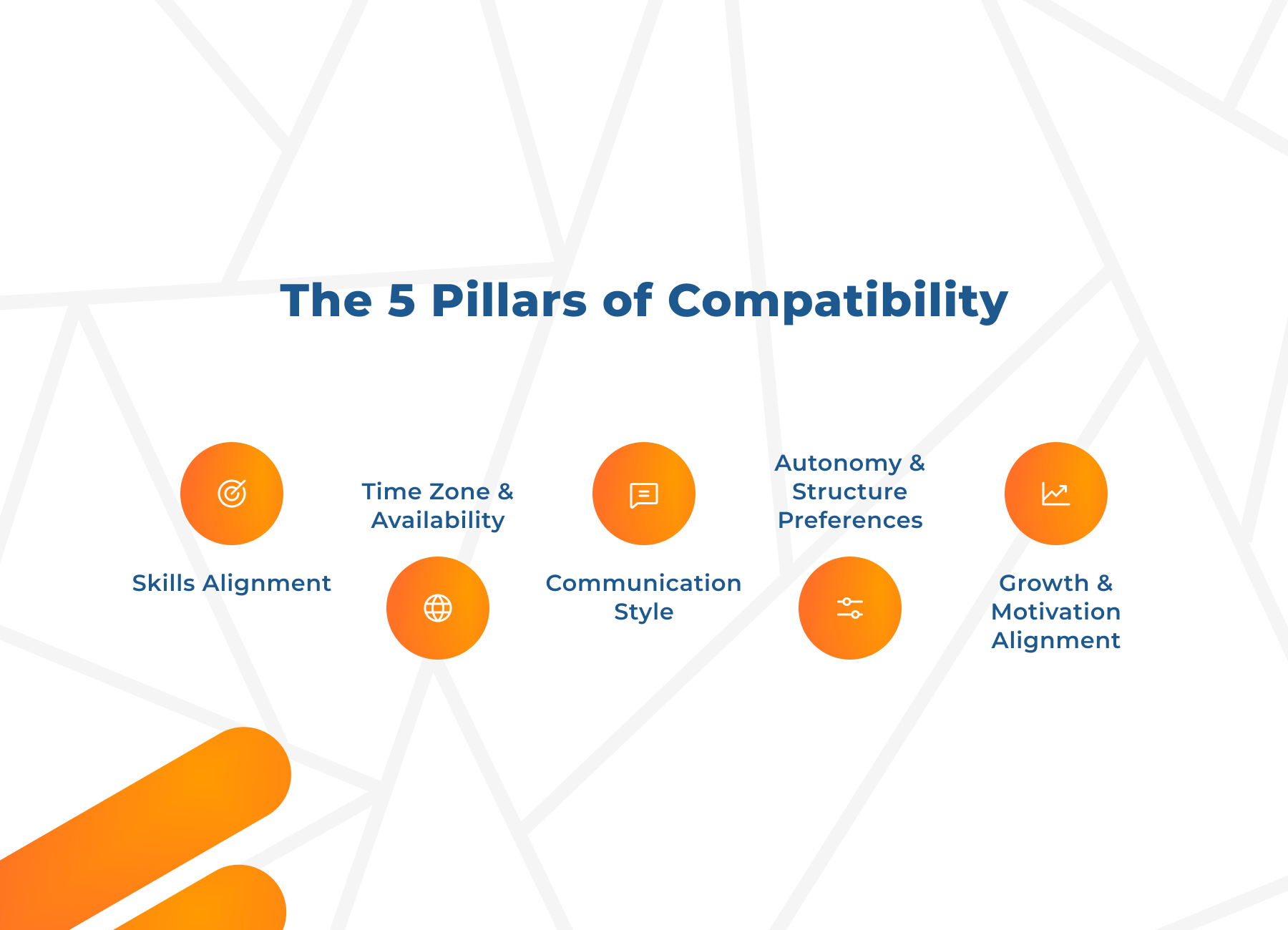
The “Perfect Match” Framework for Remote Hiring
1. Skills Alignment (Baseline, Not the Differentiator)
Skills are table stakes. In 2026, many remote professionals can meet technical requirements. What matters is applied skill, how someone solves problems, prioritizes tasks, and collaborates under real constraints.
2. Time Zone & Availability Compatibility
Overlap isn’t collaboration. Teams need clarity on when decisions happen, how fast responses are expected, and whether the work is async-first or meeting-heavy.
3. Communication Style Fit
Written-first vs. verbal-first, proactive updates vs. reactive responses—these differences compound quickly in remote environments.
4. Autonomy & Structure Preferences
Some remote hires excel with ownership and minimal oversight; others perform best with clear processes and checkpoints.
5. Growth & Motivation Alignment
Short-term role fillers and long-term contributors behave differently in remote settings, largely because of expectation clarity. When growth paths, ownership, and scope are defined early, remote professionals understand how their work connects to both personal goals and team outcomes.
Clear, aligned expectations build trust and reduce early disengagement by giving both sides a shared definition of success.
How to Apply the Framework in Real Hiring Decisions
Define non-negotiables per role (overlap hours, decision cadence, autonomy level).
Design interviews to test alignment, not trivia (scenario-based questions, async tasks).
Compare candidates on fit dimensions, not just scores or credentials.
Why Projective Staffing Is Built for Better Remote Matches
Remote staffing works best when vetting goes beyond skills. Projective Staffing is designed to deliver ready-to-work matches, fast.
What’s different:
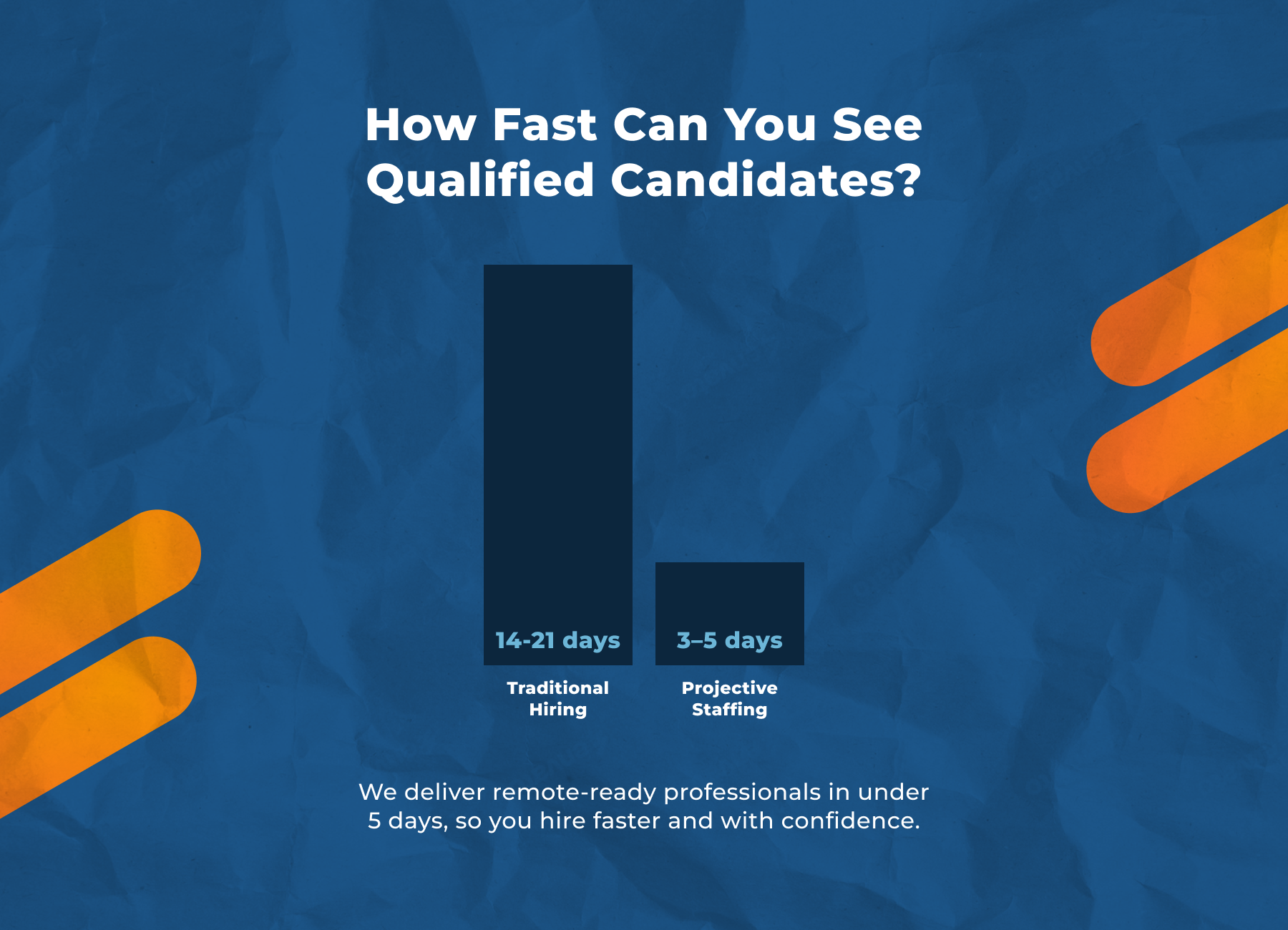
Pre-vetted remote professionals delivered in 3–5 days.
Evaluation across communication style, time zone alignment, autonomy readiness, and long-term intent.
End-to-end support through sourcing, vetting, onboarding coordination, and ongoing payroll/compliance.
Frequently Asked Questions
What defines the “right” remote hire?
The right remote hire aligns with your team’s skills needs and operating model—time zone expectations, communication norms, autonomy, and growth trajectory.
Why do qualified remote hires still fail?
Most failures stem from misaligned expectations, not capability. Compatibility gaps surface after onboarding when it’s costliest to correct.
Is alignment more important than skills for remote roles?
Skills are essential, but alignment predicts sustainability. Teams need both to perform over time.
How fast can vetted remote talent be delivered?
We deliver pre-vetted candidates in 3–5 days, reducing time-to-quality without cutting corners.
A Clearer Way to Hire Remotely
Remote hiring success in 2026 comes from clarity before speed. When teams evaluate compatibility alongside capability, they reduce risk, improve collaboration, and build momentum from day one. If you’re ready to apply a compatibility-first approach, and want support delivering vetted matches quickly, we can help you hire with confidence, not guesswork. Schedule a consultation.