
Why Younger CEOs Are Driving the Next Remote Work Shift
Remote work is not fading evenly across the business world. In fact, one of the clearest patterns in 2026 is generational: professionals at companies founded after 2015 work from home nearly twice as often as those at firms started before 1990, and firms led by CEOs under 30 report higher average work-from-home rates than those led by CEOs 60 and older. That does not mean every younger leader is remote-first or every older company is office-first. It does mean newer companies and younger CEOs are often building around different assumptions about productivity, access to talent, and how work should be measured.
Younger CEOs Are Not Just More Flexible. They Are Building Differently.
The shift is not only about age. It is also about operating models. Many younger leaders built companies when collaboration tools, distributed workflows, and remote hiring were already normal. That means they are often less tied to office-first routines and more likely to evaluate performance through outcomes, delivery, and speed rather than physical presence. Younger firms are structurally and culturally better suited to remote work, while older firms often face higher switching costs because long-standing routines were built around the office.
That makes remote work less of a perk and more of a deliberate design choice. As a result, many founders now think in terms of how startups can scale with remote teams, rather than questioning whether remote work is acceptable at all.
What the Data Actually Shows
The strongest takeaway from the research is not that remote work is “coming back.” It is that remote flexibility is more common where leadership and company structure were formed in a digital-first era.
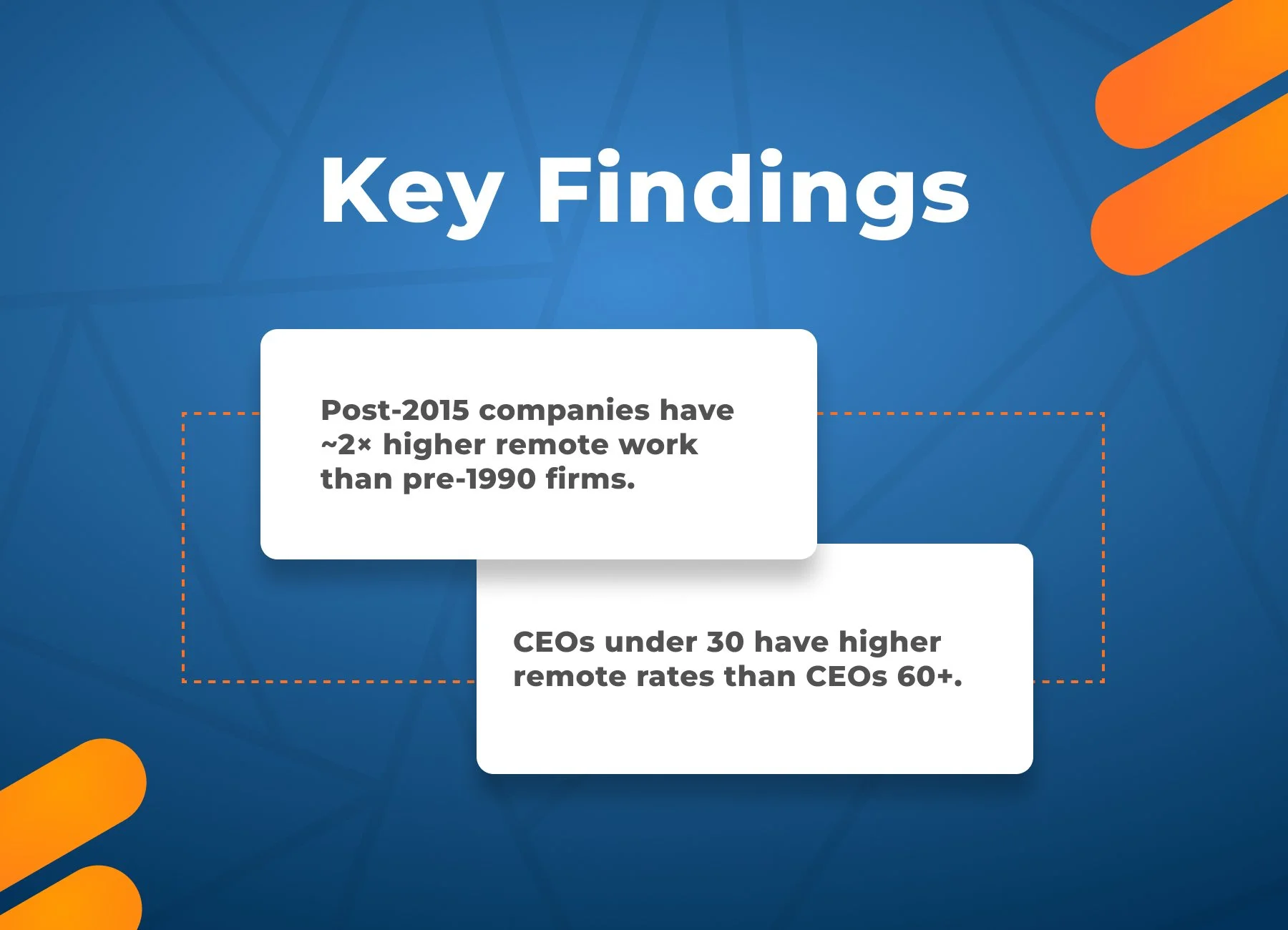
The younger the company and the younger the CEO, the higher the likelihood that remote work remains part of the operating model.
Why Younger CEOs Often Favor Remote Work
Many younger leaders built or joined companies during a period when hybrid and remote collaboration were already part of normal business operations. As a result, they are often more comfortable with:
Hiring across geographies.
Managing through deliverables instead of desk time.
Using digital systems as the default.
Designing teams around flexibility and output.
That does not automatically make them better leaders. But it does make them more likely to see remote work as compatible with performance. Many founders have mentioned that they measure contribution through delivery and results, while also using periodic in-person gatherings to maintain connection and cohesion.
The Business Implication for Growing Companies
For growing businesses, this trend matters because it shifts the hiring advantage. If newer companies and younger CEOs are more comfortable with remote work, they often gain:
Access to wider talent markets.
Less dependence on local hiring conditions.
More flexibility in role design.
Faster hiring for support and execution roles.
Remote Work Still Depends on Leadership Quality
It would be a mistake to read this trend as proof that younger CEOs simply “get it” and older ones do not. The more useful takeaway is that remote work tends to perform better when leadership systems are designed for it from the start.
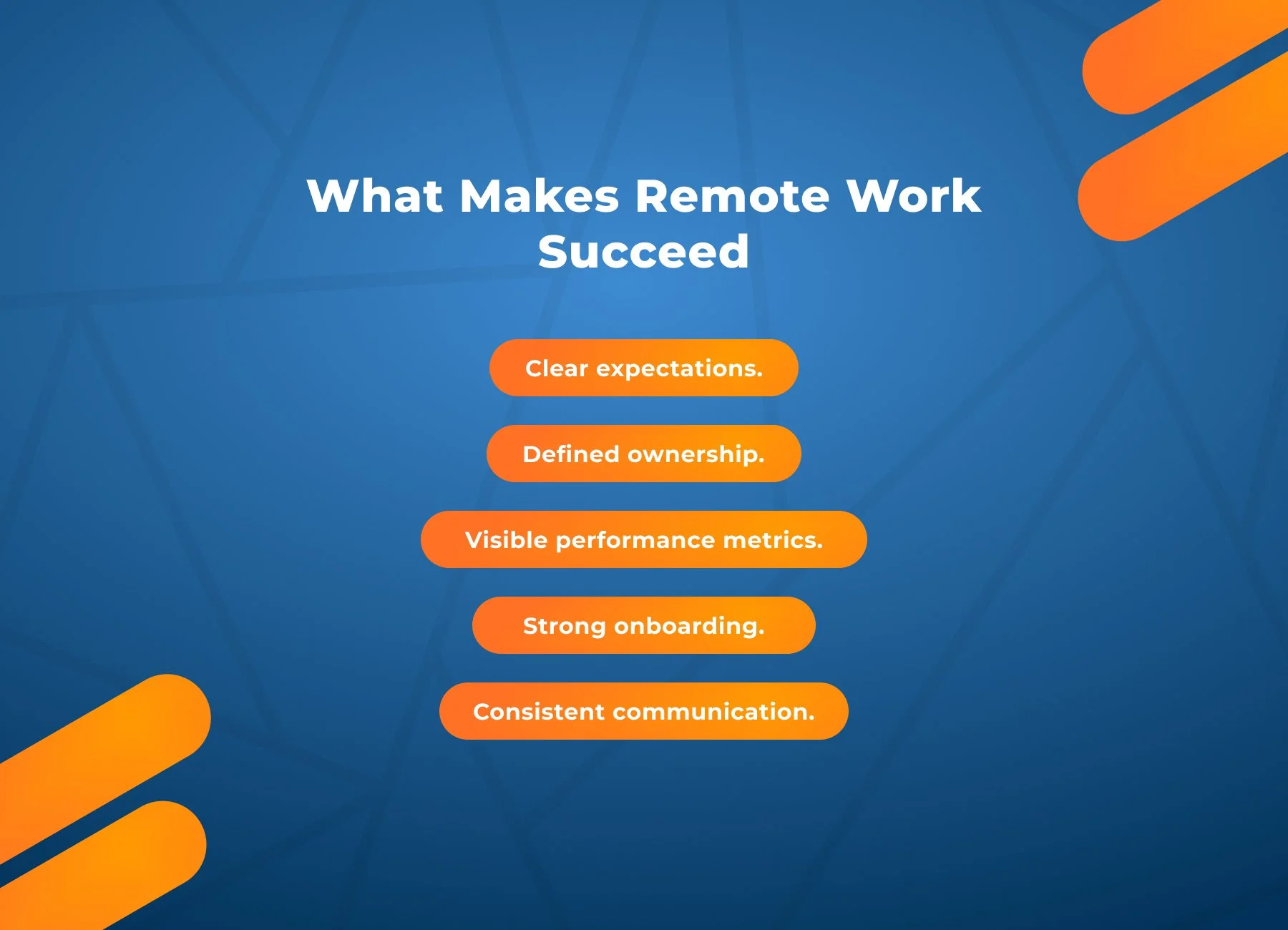
In other words, remote work succeeds when leaders know how to manage remote teams effectively. Age may influence comfort with the model, but execution still determines whether the model works.
How Projective Staffing Helps
We help growing companies build remote teams that match how modern businesses actually operate. For leaders who want speed, flexibility, and end-to-end support, remote staffing reduces friction across sourcing, vetting, onboarding coordination, and payment. For companies that want full ownership of the hire, targeted headhunting supports more precise recruiting for specialized roles.
Frequently Asked Questions
Why do younger CEOs tend to favor remote work?
Because many younger leaders built their careers and companies in digital-first environments, making them more comfortable with distributed workflows and outcome-based management.
Does this mean remote work will keep growing?
The study suggests remote work could expand as younger companies grow and older office-first leaders retire, although growth will still vary by role and industry.
What does this mean for employers?
It means remote work is increasingly part of a competitive hiring strategy, especially for companies that want access to broader talent pools and more flexible operating models.
A Generational Shift With Real Hiring Changes
The bigger message is not that remote work belongs to one generation. It is that leadership assumptions are changing.
If your company is building remote capacity and wants support aligning hiring strategy with how modern teams work, Projective Staffing can help you do it with more structure and less drag. Schedule a consultation.