
When Is the Right Time to Expand Your Remote Team?
Expanding a remote team is not just a headcount decision. It is a timing decision. The right moment is rarely when the business feels calm, but it also should not be the moment when everything is already breaking. If you are asking when to expand your remote team, the answer usually shows up in a few clear signals: execution is slowing, leaders are stretched too thin, demand is becoming more consistent, and existing systems can no longer absorb the workload. This is why remote expansion works best when it is planned around business momentum, not just hiring urgency.
Why Remote Team Expansion Is a Growth Decision
Remote work is no longer an experiment, it’s a core part of how modern businesses operate. For growing companies, the question is no longer should they hire remotely, but when remote expansion will create the most value.
That decision comes down to timing. The right moment is when adding capacity can immediately reduce pressure, increase execution speed, or unlock new opportunities for growth.
3 Signs It May Be Time to Expand Your Remote Team
1. Work Is Increasing and Execution Is Slowing
A heavier workload on its own is not the signal. The stronger signal is when execution starts to suffer. If deliverables are slipping, timelines are stretching, or your team is spending more time coordinating than completing, the business is no longer absorbing demand efficiently.
Increased workload and business growth are clear indicators that a company may be ready to hire. The point is not simply that there is more work. It is that existing capacity is no longer enough to keep quality and speed where they need to be.
2. Your Best People Are Covering Too Much Ground
In early growth stages, strong teams often stretch across multiple functions. That flexibility can be helpful at first, but over time it becomes expensive.
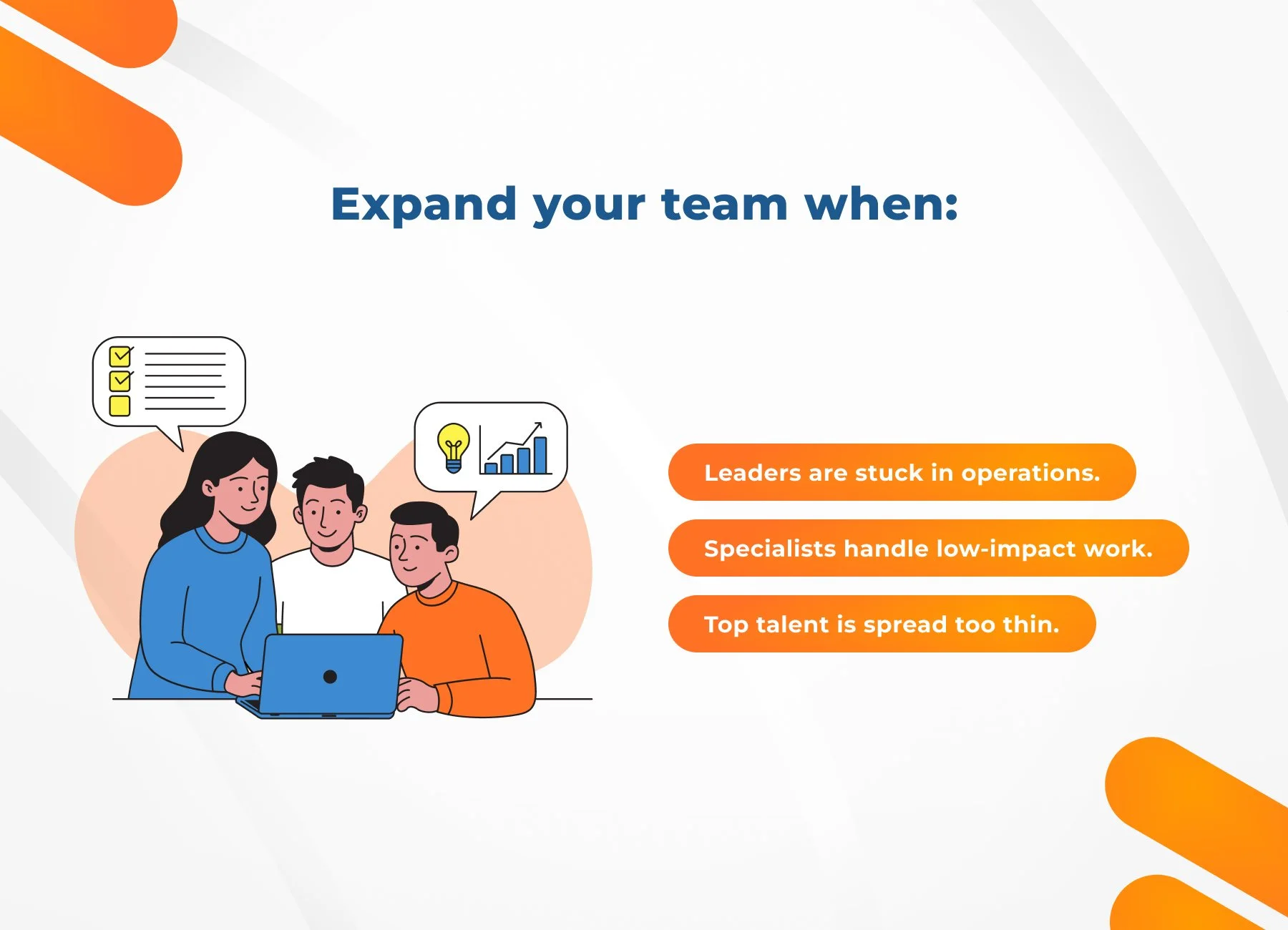
This is where adding execution-focused roles can create immediate relief. More importantly, it signals a growth transition, when demand is no longer the challenge, but the team’s ability to keep up with it.
3. Overtime and Workarounds Are Becoming the Default
Overtime can help in short bursts, but when it becomes part of the normal operating model, it starts to weaken both productivity and retention.
Remote expansion can be a smarter response than waiting until burnout becomes visible. If your team is regularly working around structural gaps rather than fixing them, that is usually a sign the business needs more dedicated capacity.
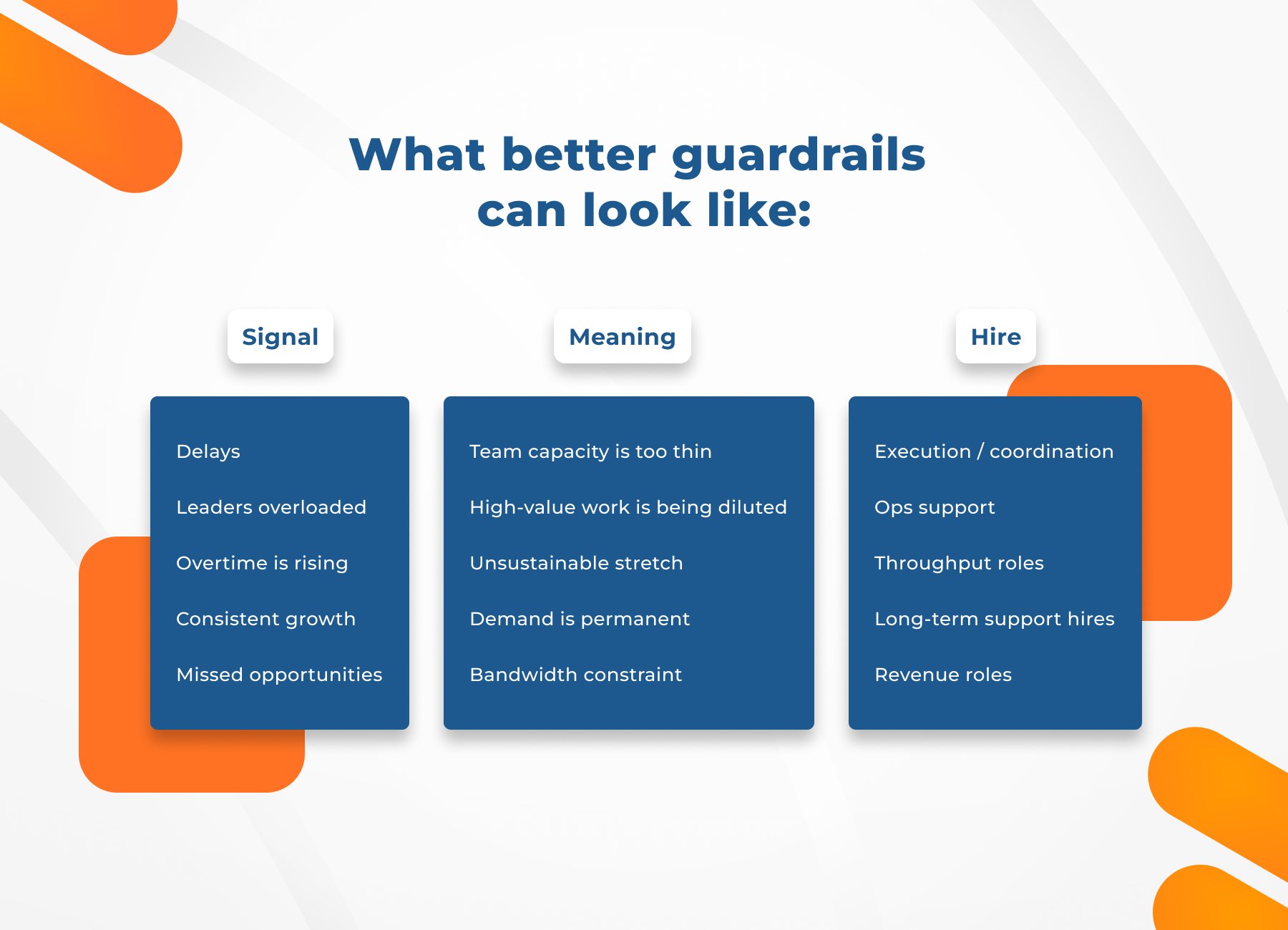
What to Expand First
Not every expansion hire should be strategic leadership. In many cases, the first remote additions should stabilize the operation before the company adds more complexity.
Hiring Remote Talent Requires a Different Filter
Timing matters, but so does fit. Not everyone who can do the work is automatically a strong remote hire. In addition to technical skill, remote candidates need independence, communication discipline, motivation, and the ability to work proactively without constant direction.
Why Remote Expansion Can Be Easier Than Local Expansion
Remote teams give growing companies more control over how they scale. Instead of waiting for the local labor market to solve a capacity problem, businesses can widen the search, define the role more clearly, and add support where it is needed most.
For businesses ready to expand their talent reach without adding unnecessary friction, building a remote team globally becomes a far more practical strategy than relying on a single geographic market.
How Projective Staffing Helps
The right time to expand your remote team is only half the question. The other half is how to do it without slowing the business down. Projective Staffing helps companies scale remote teams with more structure and less drag through:
Remote staffing, with end-to-end support across sourcing, vetting, onboarding coordination, and payment.
Pre-vetted remote professionals, screened for communication, autonomy, and team fit.
Frequently Asked Questions
When is the right time to expand a remote team?
Usually when work is consistently slowing, leaders are overloaded, or growth is becoming harder to sustain with the current team.
Is it better to hire before demand peaks?
Yes, if you can already see stable signals such as rising workload, repeated delays, or sustained overtime. Waiting until the team is underwater usually leads to reactive hiring.
What roles should companies add first?
Typically the roles that remove bottlenecks and protect leadership focus, such as coordination, operations, support, or other execution-heavy functions.
Expand Before Pressure Becomes the Strategy
The best companies do not expand their remote teams because they are overwhelmed. They expand because they can see the pressure building early and respond before it turns into missed opportunities, burnout, or stalled growth.
If your team is starting to hit those signals, Projective Staffing can help you expand with more clarity, better timing, and the right level of support for the role. Schedule a consultation.