
Why Some Companies Are Building Talent Pipelines Before They Need Them
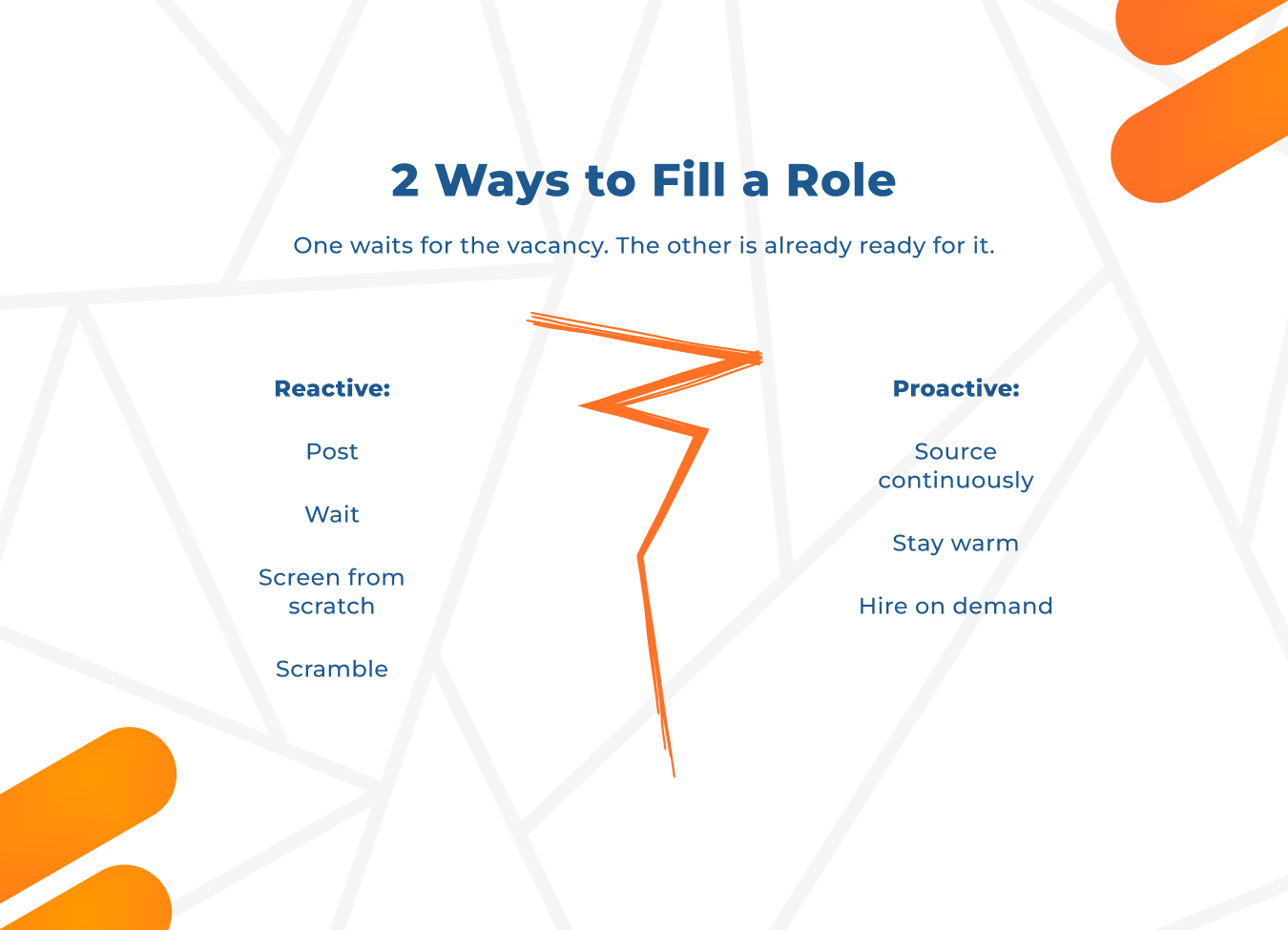
Most hiring follows the same pattern: a role opens, someone realizes it's urgent, and the process starts from a dead stop. Post the job, wait for applications, screen from scratch, interview, hope the timeline holds. Some companies have quietly broken that pattern. They're not hiring faster because they've found a shortcut — they're hiring faster because they never stopped sourcing in the first place.
What Reactive Hiring Actually Costs
Reactive hiring feels normal because most companies have only ever hired this way. But the costs compound quietly. According to SHRM's research on workforce planning, a large share of CHROs now cite workforce planning as their top talent-management priority, specifically because proactive planning reduces hiring costs and strengthens succession pipelines compared to filling roles reactively.
Cost-per-hire data reinforces the same point. SHRM's benchmarking data points to average cost-per-hire climbing well into the thousands of dollars per role, before factoring in lost productivity from the vacancy itself, manager time spent screening, and the risk of a rushed hire that doesn't work out. None of that shows up on a job posting, but all of it shows up on a budget.
Companies that consistently hire under pressure often don't realize the pattern is a pattern. Our piece on signs you're ready to grow your team and what to do next covers how to catch growth-driven hiring needs before they become emergencies.
What Proactive Pipelines Look Like in Practice
A talent pipeline isn't a stockpile of resumes. It's an ongoing relationship with qualified candidates, maintained whether or not a role is currently open. That means sourcing continuously instead of only when a requisition opens, staying in touch with strong candidates who weren't right for a past role but could be right for a future one, and keeping a warm network in the specific functions a company tends to hire for repeatedly.
The advantage shows up the moment a role actually opens. Instead of starting a search from zero, a company with an active pipeline already knows who to call. Screening moves faster because the initial vetting has already happened. Time-to-hire shrinks not because the process got rushed, but because the groundwork was already done.
Why This Is Infrastructure, Not a Project
The companies that do this well don't treat it as a one-time initiative. They treat recruiting the way they treat any other core business function — something that runs continuously, gets maintained, and scales with the business rather than reacting to it. That shift in mindset is often the real difference between companies that hire well and companies that hire under pressure.
Building that kind of infrastructure internally takes dedicated time and relationships that most internal teams can't maintain alongside their day-to-day hiring load. This is where a long-term staffing partnership changes the equation. Our overview of long-term staffing partnerships covers how an ongoing relationship with a staffing partner functions as exactly this kind of infrastructure, rather than a one-off transaction each time a role opens.
Where Remote Staffing and Headhunting Each Fit
Pipeline strategy looks different depending on the type of role. For remote support functions, having a partner who already sources and vets candidates continuously means pre-vetted professionals can be presented in days, not weeks, because the sourcing work never stopped. For direct hires — leadership roles, specialized positions, permanent seats on a client's own payroll — headhunting benefits just as much from an ongoing relationship, since a recruiter who already understands a company's standards and culture moves faster and more accurately than one starting a search cold.
Frequently Asked Questions
What is a talent pipeline?
An ongoing pool of qualified, pre-vetted candidates a company maintains relationships with, whether or not a specific role is currently open, so hiring doesn't start from scratch each time.
How is proactive hiring different from reactive hiring?
Reactive hiring begins sourcing only after a role opens. Proactive hiring maintains an active pipeline continuously, which shortens time-to-hire when a role does open.
Does building a talent pipeline take more resources than reactive hiring?
It takes consistent effort rather than more effort overall. The cost is spread out over time instead of concentrated into urgent, reactive hiring spikes, which is often less expensive in total.
Can a staffing partner help build a talent pipeline?
Yes. A staffing partner that sources continuously across roles and industries functions as an extension of a company's own pipeline, keeping qualified candidates warm even between hiring needs.
Find Remote Professionals Who Fit the Way Your Team Works
Hiring doesn't have to start from zero every time a role opens. Projective Staffing sources and vets talent continuously, so pre-vetted remote professionals are ready when you need them, not weeks after. Looking for new talent? Schedule a consultation.