
The Cost of a Bad Hire on a Lean Team
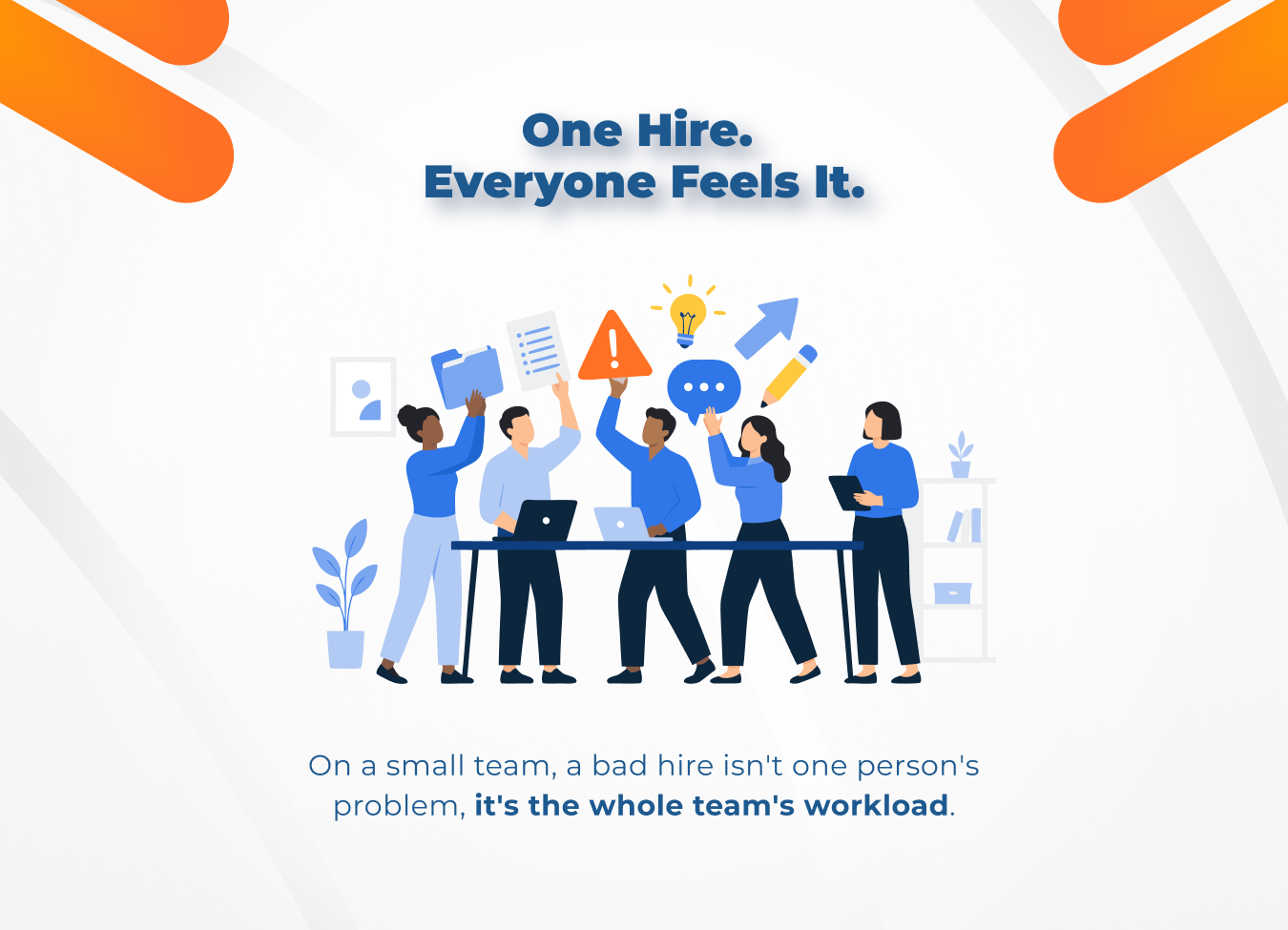
On a team of eight, one bad hire isn't one-eighth of a problem. It's the person everyone else has to work around, cover for, and eventually replace — usually while still doing their own job. Large companies can absorb a mis-hire inside a bigger structure. Lean teams don't have that cushion. One wrong hire touches nearly everyone.
What a Bad Hire Actually Costs, in Numbers
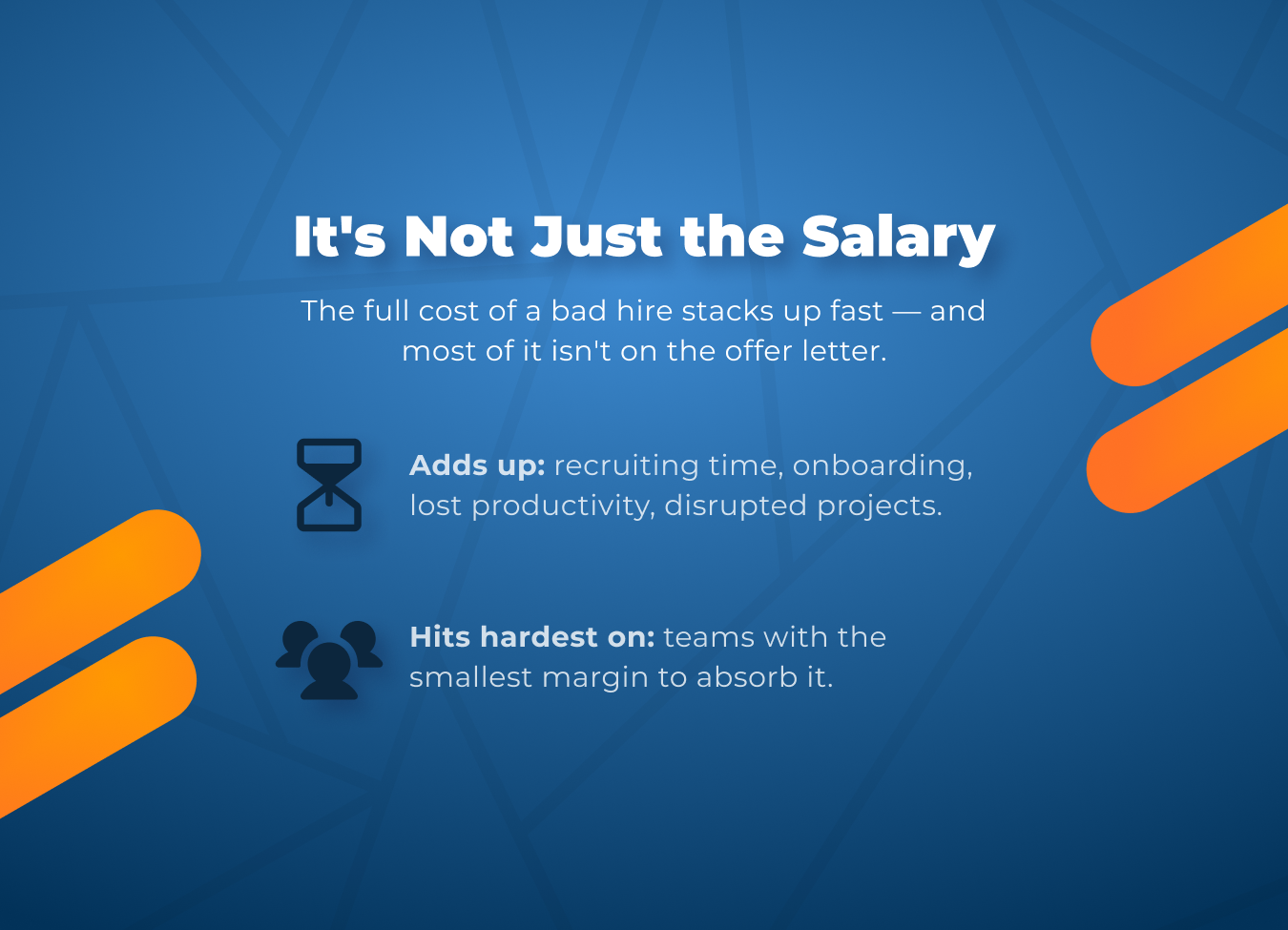
The financial exposure is bigger than most leaders expect. According to SHRM's reporting on hiring mistakes, the full cost of recruiting, hiring, and onboarding a single employee can reach into the hundreds of thousands of dollars once replacement costs, disrupted projects, and lost productivity are factored in — and that estimate doesn't account for the toll on the manager who has to manage the fallout.
For a lean team, that number isn't an abstraction. A six-figure loss on a 10-person team isn't a rounding error the way it might be on a 500-person team; it can consume a meaningful share of the department's entire budget for the year. Growing companies that hire under pressure are especially exposed to this. Our piece on signs you're ready to grow your team and what to do next covers how to avoid the rushed hiring decisions that make a bad fit more likely in the first place.
The Workload and Bandwidth Strain on Managers
The financial cost is only part of the picture. On a small team, a manager is often already stretched across hiring, coaching, and hands-on work. A bad hire adds a new, ongoing task to that list: managing someone who isn't performing, while the rest of the team quietly absorbs the gap.
Team size research backs this up directly. Gallup's research on span of control has found that as individual contributor workload increases, manager engagement and effectiveness decline — and a bad hire increases that workload in exactly the way this research warns against, since managing an underperforming employee takes disproportionately more time than managing a strong one. On a lean team, there's no buffer layer to absorb that extra load. It lands directly on the manager and the people around them.
The Morale Cost That Doesn't Show Up on a Balance Sheet
Morale damage is real, and it's more common than most leaders assume. SHRM's survey of CFOs on hiring mistakes found that the vast majority of finance leaders said a poor hiring decision affects team morale at least somewhat, with more than a third saying the effect is significant. On a lean team, where relationships are closer and workloads are more visible to everyone, that effect isn't diluted across departments — it's felt directly by the small group of people covering the gap.
That's often the part leaders underestimate going in. A bad hire doesn't just cost money and time; it costs the trust and energy of the people who now have to do extra work to make up for it.
How Lean Teams Can Reduce the Risk Without Slowing Down Hiring
The instinct on a small team is often to hire fast, because every open seat is felt immediately. But speed and rigor aren't opposites. What actually reduces risk is a structured, consistent vetting process applied every time — not a slower process, a sharper one.
This is where a recruiting partner adds real value for a lean team specifically. Building and running consistent screening, reference checks, and structured interviews for every hire takes time most small teams don't have to spare. Our breakdown of what a professional recruiter really brings to your hiring strategy covers how that structure gets built without adding to an already stretched team's workload.
Frequently Asked Questions
Why does a bad hire affect a small team more than a large one?
A large organization can absorb a mis-hire across many departments and managers. On a lean team, the same mistake concentrates on a small group of people who have to cover the workload and manage the fallout directly.
How much does a bad hire typically cost?
Estimates vary by role and industry, but the full cost — including recruiting, onboarding, lost productivity, and disruption — can reach well into six figures for a single hire once every factor is included.
Does hiring faster increase the risk of a bad hire?
Not necessarily, but rushed hiring without a consistent, structured vetting process does. Speed and thorough screening aren't mutually exclusive when the process itself is built well.
Can a staffing partner reduce hiring risk for a small team?
Yes. A staffing partner that applies consistent, structured vetting to every candidate reduces the risk of a mis-hire without requiring a lean team to build that process internally.
Build a Hiring Process That Supports Growth
On a lean team, there's no room to absorb a hiring mistake quietly. Projective Staffing applies structured, consistent vetting to every candidate we present, so growing companies can hire with confidence instead of crossing their fingers. Get in touch to talk through your next hire.