
Why Remote Work Is Good for Business: Productivity, Talent, and Growth
Remote work is no longer a perk. It is a business decision. For companies focused on growth, efficiency, and access to stronger talent, the question is no longer whether remote work is viable. It is whether leaders are using it strategically. When implemented with the right structure, remote work helps businesses reduce overhead, expand access to talent, improve retention, and build more resilient teams.
Remote Work Expands Access to Better Talent
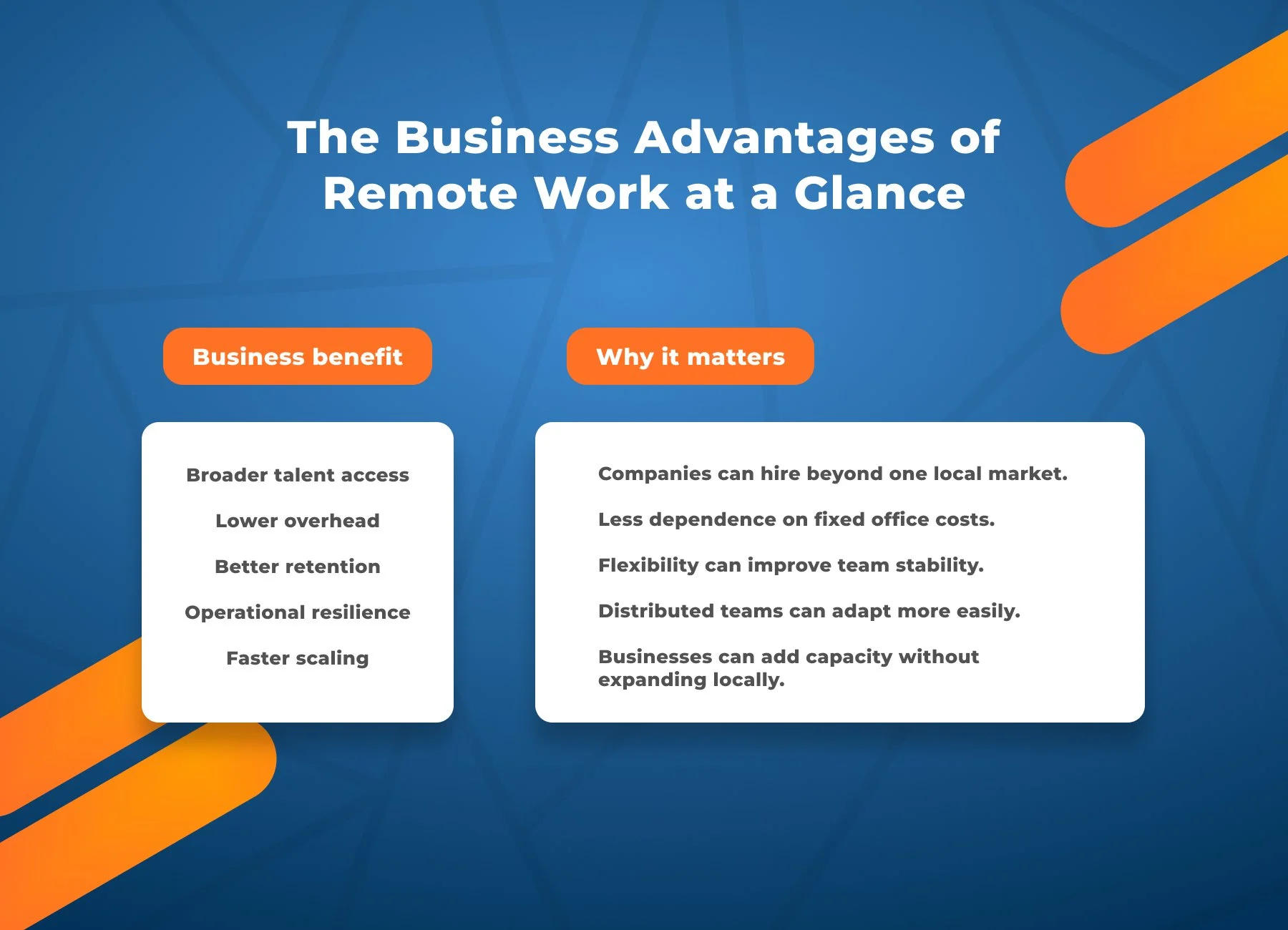
One of the clearest business advantages of remote work is reach. Companies are no longer limited to candidates within commuting distance of one office. That changes the quality of the hiring pool immediately.
When businesses can recruit beyond one geography, they gain access to stronger skill alignment, more diverse experience, and greater flexibility in how teams are built. This is one reason remote work continues to make strong business sense particularly for companies that need to hire quickly without sacrificing talent quality.
It Reduces Overhead Without Reducing Opportunity
Remote work is often framed as a cultural shift, but the business case is operational. Fewer fixed office costs, more flexible workforce planning, and better allocation of budget all improve how companies scale.
This does not mean companies must eliminate offices. It means they gain more flexibility in how they operate. With fewer location-based costs, leaders can invest more intentionally in talent, systems, and growth. Research on remote jobs and the company bottom line reinforces that flexible work models can also strengthen financial performance. This is especially relevant for growth-stage teams evaluating the ROI of workplace flexibility.
Remote Work Improves Retention and Team Stability
Companies do not benefit from remote work simply because people like it. They benefit because flexibility often leads to stronger retention, greater engagement, and more sustainable performance when expectations are clear.
Team members who have flexibility in how they work are often more likely to stay, particularly when remote work is supported by strong systems rather than left to chance. That is also why remote staffing success depends on keeping teams engaged long term.
It Creates More Resilient Business Operations
A strong remote work model is also a resilience strategy. Distributed teams are often better positioned to keep work moving when local disruptions, office limitations, or shifting priorities affect normal operations.
This matters because continuity is not just about crisis planning anymore. It is about designing a business that can adapt faster. The benefits of remote work for businesses consistently frame remote work as part of a more efficient and modern operating model. Businesses that already know how to work across locations tend to respond faster when conditions change.
The Real Business Advantage Is Leadership, Not Location
Remote work delivers the strongest business results when leaders stop treating it as an experiment and start treating it as an operating model. The advantage does not come from sending people home. It comes from building teams with clear expectations, strong communication, defined ownership, and measurable outcomes.
Companies that succeed remotely usually invest in management structure just as much as hiring. They document workflows, clarify responsibilities, and make onboarding intentional. If those systems are weak, remote work exposes the problem faster. If they are strong, remote work becomes a multiplier.
How Projective Staffing Helps
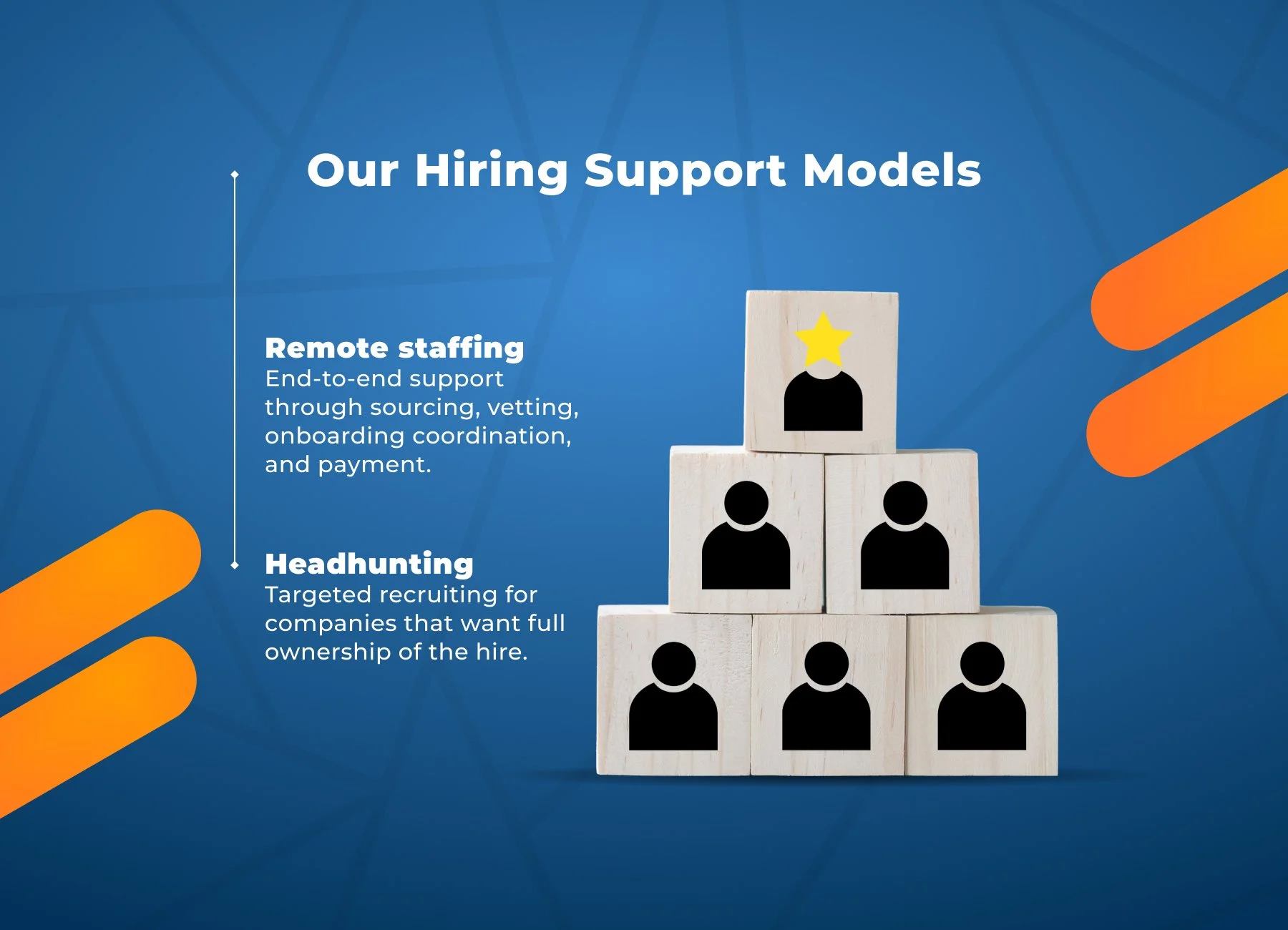
We support organizations that want to scale remote teams with more structure, less friction, and better long-term alignment.
Frequently Asked Questions
Is remote work really good for business?
Yes, when structured properly. Remote work can expand access to talent, reduce overhead, improve retention, and create more resilient business operations.
Why do businesses still invest in remote teams?
Because remote work can support business goals beyond flexibility, including hiring reach, cost efficiency, continuity, and retention.
What makes remote work successful for a business?
Clear management, strong communication, defined ownership, and structured onboarding make the biggest difference. Remote work succeeds when it is operationalized, not improvised.
Build a Remote Team That Supports Business Growth
If your company is growing and needs remote talent that can contribute quickly and align with how your business operates, Projective Staffing can help you build a team with the structure, speed, and support needed to scale well.
Schedule a consultation to explore the right remote hiring model for your team.