
The Leadership Skills Remote Teams Require in 2026
If you’re looking for leadership skills for remote managers, the biggest shift in 2026 is this: remote teams don’t need more oversight, they need clearer systems. The strongest managers create accountability without micromanagement, communicate with precision, build trust through consistency, and track performance asynchronously without surveillance. They also treat onboarding as a leadership responsibility, not a checklist. This guide breaks down the leadership skills remote teams require.
Why Remote Leadership Is a Different Skill Set in 2026
Strong leaders rely on the same foundational principles that define effective leadership in any setting—clear direction, accountability, and sound decision-making. As outlined in broader discussions on leadership skills that make a good leader, those fundamentals don’t disappear in remote environments—they become more visible.
In distributed teams, weak systems surface quickly. In-office teams can compensate for unclear priorities with quick hallway clarifications. Remote teams can’t. If expectations aren’t written, reinforced, and operationalized, execution slows—which is why understanding how to manage remote teams effectively is no longer optional for growing organizations.
Skill 1: Accountability Without Micromanagement
Remote managers build accountability by defining three things early: the outcome, the owner, and the deadline. Then they create lightweight visibility so progress stays clear without constant checking. Strong decision-making and ownership clarity are key leadership skills required in 2026, but in remote environments, they must be systemized.
Example: Instead of “Send me updates daily,” use “By Friday, deliver X; post progress on Tuesday and Thursday in the team channel.” That replaces anxiety-driven check-ins with a predictable rhythm.
Skill 2: Communication Clarity That Reduces Friction
Communication breakdown remains one of the most common remote leadership challenges, especially when tone, expectations, and feedback rhythms are unclear. Research on essential skills for remote leadership consistently emphasizes clarity, trust, and structured feedback as performance drivers.
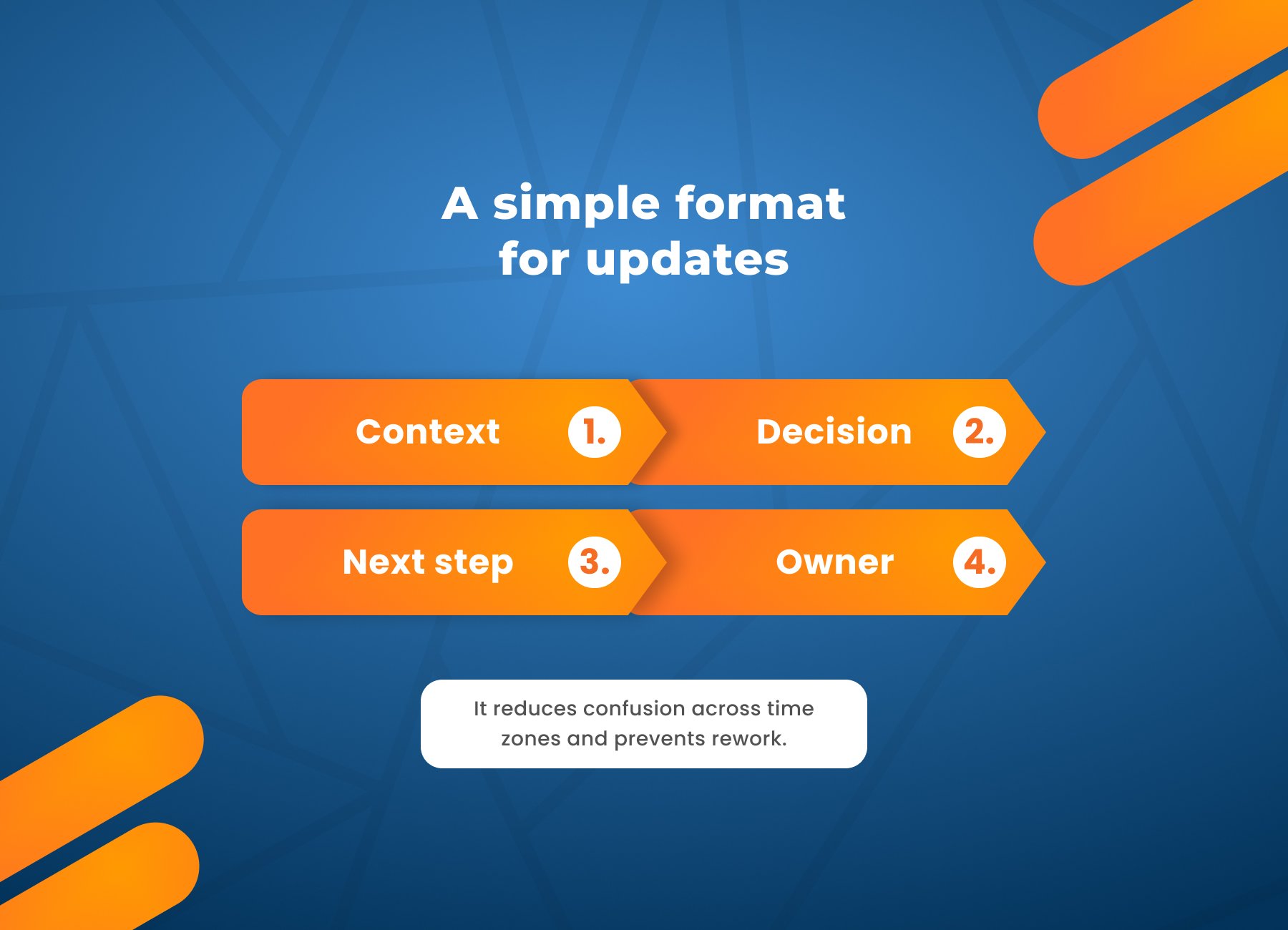
In 2026, communication clarity means written-first norms, explicit expectations, and fewer interpretation gaps. Strong remote managers define how decisions are documented, response-time standards, and when real-time meetings are truly necessary.
Skill 3: Trust-Building Through Consistency
Trust isn’t a vibe. It’s a pattern.
Remote professionals build confidence when leaders are predictable: consistent feedback, consistent standards, consistent decision-making. When managers shift priorities without explanation or apply uneven expectations, teams disengage even if the work is interesting.
Example: Weekly priorities are set the same way every Monday. Feedback happens on a set cadence. Escalations follow a known path. That consistency turns autonomy into performance—one of the defining traits in what high-performing remote teams have in common.
Skill 4: Asynchronous Performance Tracking Without Surveillance
The goal isn’t to watch people work. The goal is to make progress visible.
Asynchronous performance tracking helps teams move faster with fewer meetings. Remote managers use outcome-based metrics, milestone tracking, and shared dashboards so everyone can see what’s on track, what’s blocked, and what needs decisions.
Example: If the team runs on milestones and visible dependencies, managers stop relying on “Are you online?” signals. Trust increases because progress is measurable.
Skill 5: Structured Remote Onboarding as a Leadership Responsibility
Remote onboarding is a leadership system, not an HR handoff.
Managers set the tone for performance and retention by clarifying role outcomes early, creating a 30/60/90-day plan, and establishing feedback loops in the first two weeks. Without structure, new hires spend their first month guessing priorities and hesitating to ask questions.
Example: A strong remote onboarding plan includes a stakeholder map, workflow documentation, success metrics, and early “quality checks” (not just status updates). That reduces ramp time and prevents silent misalignment.
How Projective Staffing Supports Remote Teams Beyond the Hire
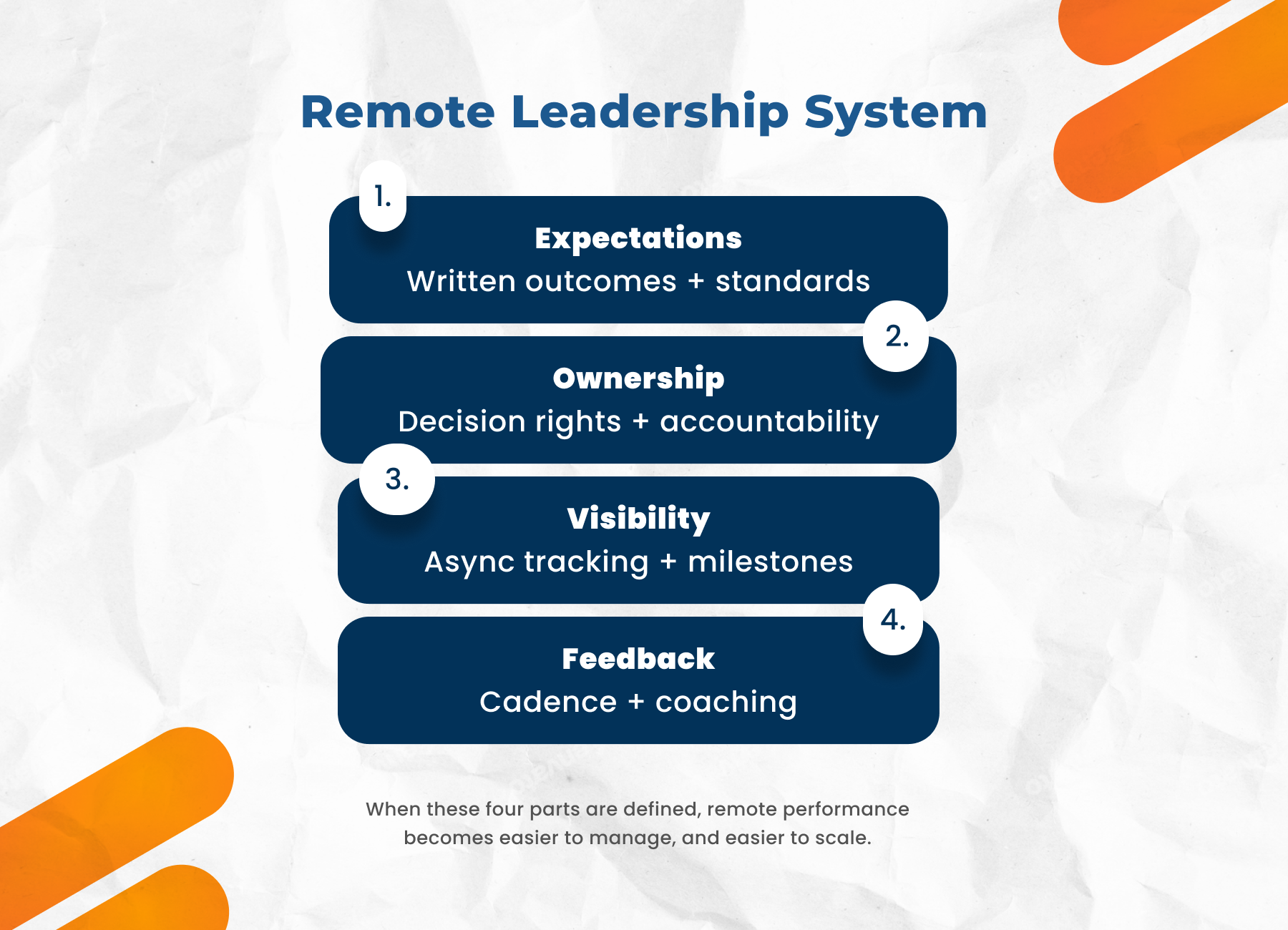
Remote staffing works best when leadership systems are clear. When expectations, ownership, and performance visibility are defined, remote professionals integrate faster and contribute sooner.
Projective Staffing supports remote team growth by delivering pre-vetted professionals in 3–5 days, with evaluation that goes beyond skills to include communication readiness, autonomy, and workflow fit. Many teams also work with Projective Staffing as they scale support and execution roles without adding operational drag.
Frequently Asked Questions
What are the most important leadership skills for remote managers in 2026?
Clear expectations, defined ownership, trust-building consistency, asynchronous performance visibility, and structured onboarding leadership.
How do you hold people accountable remotely without micromanaging?
Agree on outcomes, owners, deadlines, and a predictable cadence for async updates. Track milestones and results, not online time.
How should remote performance be measured?
Use output-based metrics tied to role outcomes, milestone completion, and quality indicators. Keep visibility systems lightweight and transparent.
Build a Remote Team That Performs From Day One
Remote teams succeed when leadership is clear, and the right people are matched to the right roles. If you’re scaling in 2026 and want hiring support that prioritizes long-term performance, schedule a free consultation.