
Why Mental Health Is Becoming a Leadership Issue in 2026
Mental health at work is no longer only an HR benefit or wellness topic. In 2026, it is a leadership issue because managers directly shape workload, communication, stress levels, and whether people feel supported or overwhelmed. The companies that take workplace mental health seriously are not just offering perks. They are building healthier systems: clearer expectations, better manager training, stronger communication rhythms, and smarter staffing decisions that prevent teams from operating in constant pressure mode.
Why Mental Health Is Now a Leadership Responsibility
The way people experience work is shaped heavily by leadership. Managers influence how priorities are set, how feedback is delivered, how workload is distributed, and how safe people feel raising concerns.
Protecting mental health means managing workplace risks, including working conditions and environments. That makes it a structural issue, not just an individual one.
For growing companies, this matters because stress often increases when teams scale without enough clarity. More work, more complexity, and more urgency can quickly expose weak management systems.
Managers Shape Team Stress Levels
Managers are often the first line of defense against burnout, but they can also unintentionally create stress when systems are unclear.
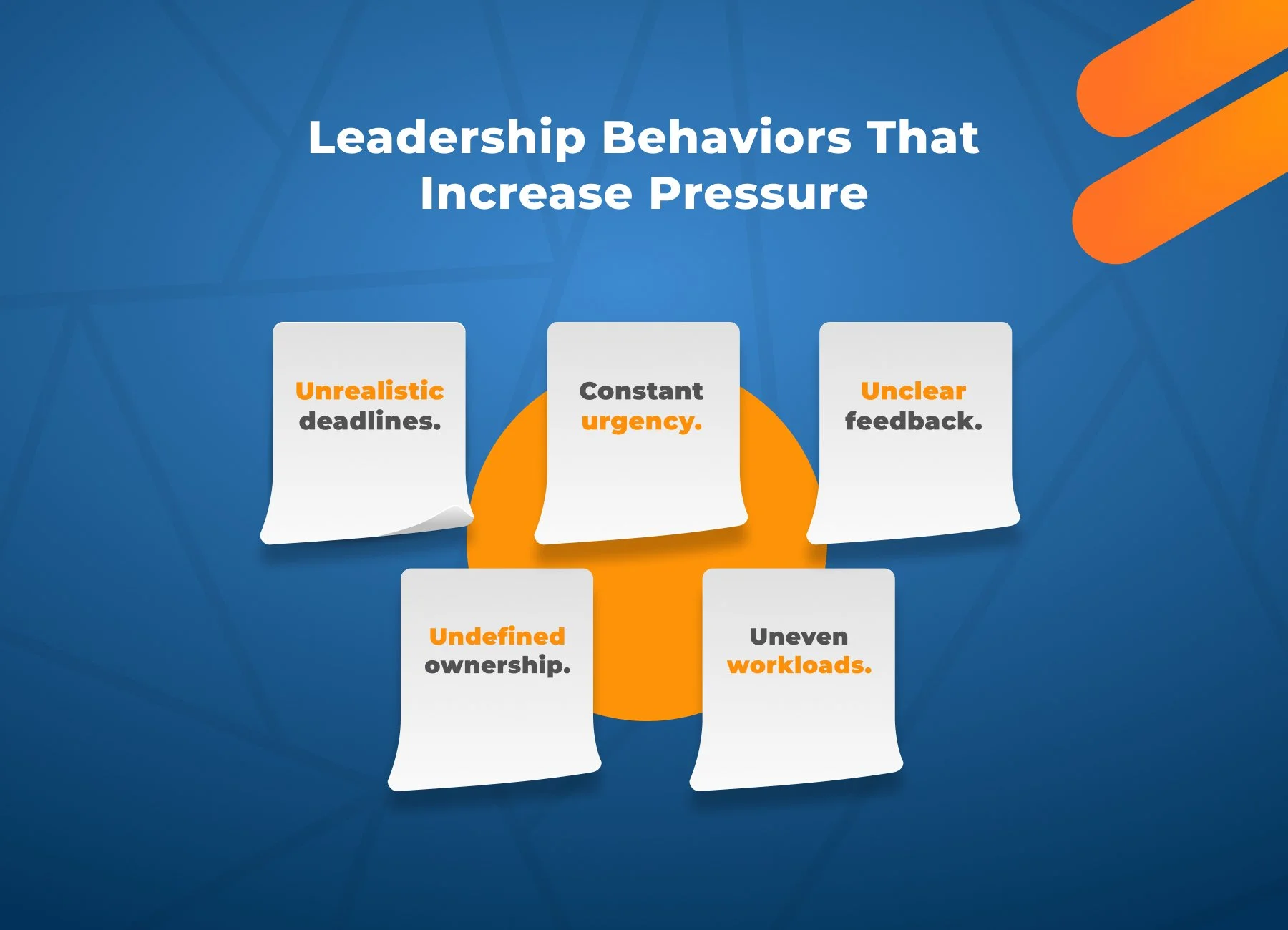
The U.S. Surgeon General’s workplace well-being framework identifies protection from harm, connection, work-life harmony, mattering at work, and opportunity for growth as essential components of workplace well-being. Those are not abstract concepts. They are directly influenced by how leaders design work and manage people.
This is also why learning how to manage remote teams effectively matters. Remote and distributed teams need even more clarity because stress signals can be easier to miss.
Burnout Signals Leaders Should Not Ignore
Burnout rarely appears all at once. It usually shows up through small changes in behavior, performance, or communication.
Leaders should pay attention when they notice:
Slower response times from normally reliable team members.
Lower participation in meetings or discussions.
Repeated deadline pressure.
Increased mistakes or rework.
Irritability or withdrawal.
Reduced initiative.
Frequent “urgent” work becoming normal.
The APA’s 2025 Work in America survey found that job insecurity has a significant impact on stress levels for many U.S. workers. While every workplace is different, the broader point is clear: employees are affected by uncertainty, and leaders play a key role in reducing it.
Burnout prevention is not about asking people to be more resilient. It is about fixing the conditions that keep pushing teams into unsustainable work patterns.
Why Better Staffing Reduces Team Pressure
Sometimes burnout is treated like a morale problem when it is actually a capacity problem.
If the same people are consistently covering too many roles, no amount of encouragement will fix the issue. Leaders need to recognize when team stress is a signal that the business has outgrown its current structure.
That is why your talent retention strategy should begin at recruitment. The people you hire, how clearly roles are defined, and how well new team members are integrated all affect stress levels later.
How Projective Staffing Helps
We help companies build remote teams with more structure, clarity, and long-term fit. For teams experiencing overload, inconsistent execution, or growing retention risk, the solution is not always more meetings or more pressure on managers. Sometimes it is adding the right support at the right time.
Strong teams are not built by asking fewer people to carry more. They are built by designing work, leadership, and staffing around sustainable performance.
Frequently Asked Questions
Why is mental health a leadership issue?
Because managers shape workload, expectations, communication, and team culture. Those factors directly affect stress, engagement, and retention.
How can managers reduce workplace stress?
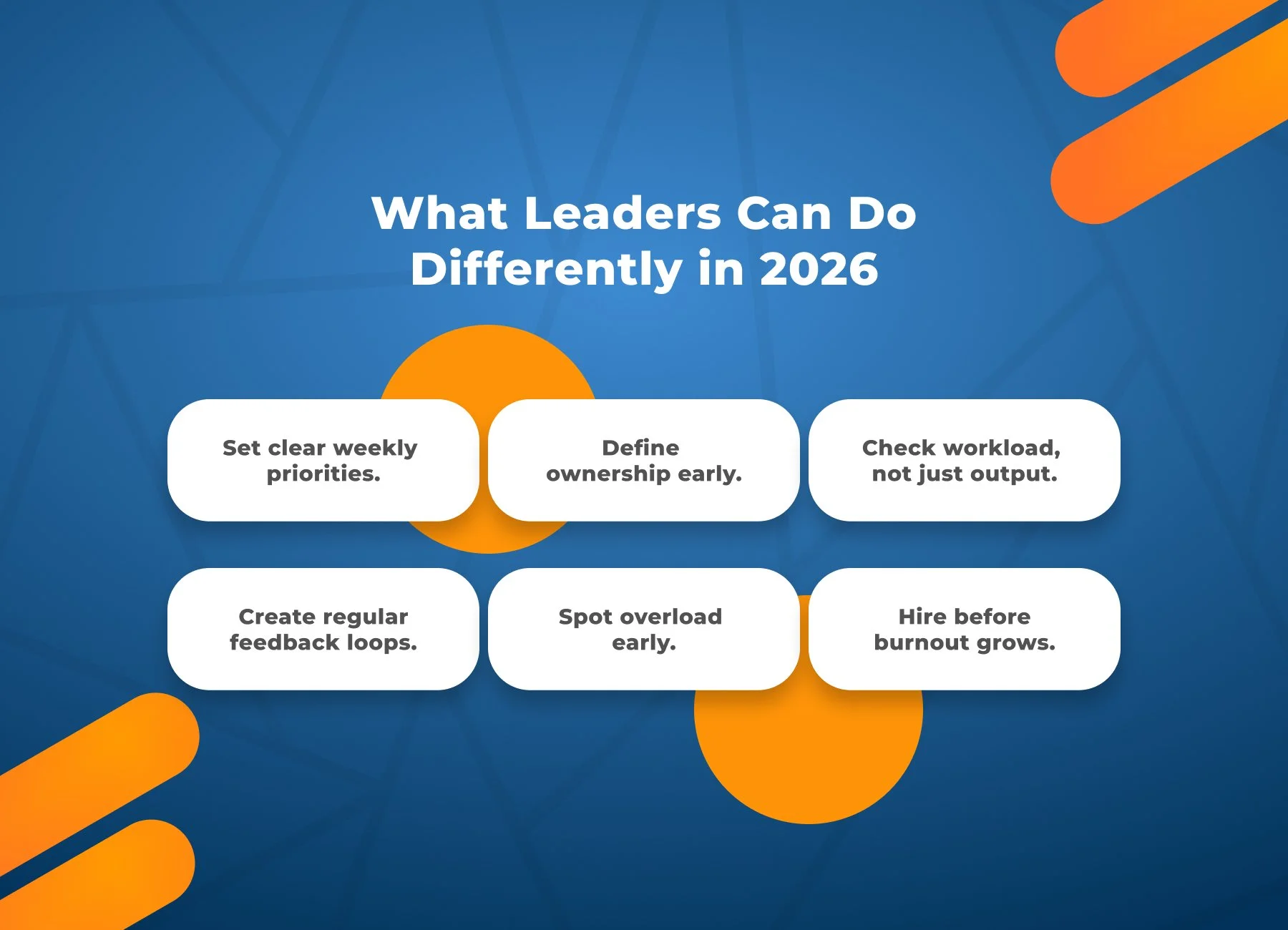
By setting clear priorities, defining ownership, communicating consistently, and addressing workload issues before they become burnout risks.
What are signs of burnout at work?
Common signs include lower engagement, slower response times, missed deadlines, increased mistakes, withdrawal, irritability, and repeated overload.
How does staffing affect mental health at work?
Understaffed teams often experience chronic pressure. Better staffing helps distribute work more realistically and reduces stress on managers and existing team members.
Build Healthier Teams With Better Structure
Mental health at work is not solved by perks alone. It requires leadership accountability, clearer systems, and teams that are staffed to handle the work in front of them.
If your team is showing signs of overload, Projective Staffing can help you add the right talent, reduce pressure, and build a more sustainable path to growth. Schedule a consultation.