
Top Skills Employers Are Looking for in 2026
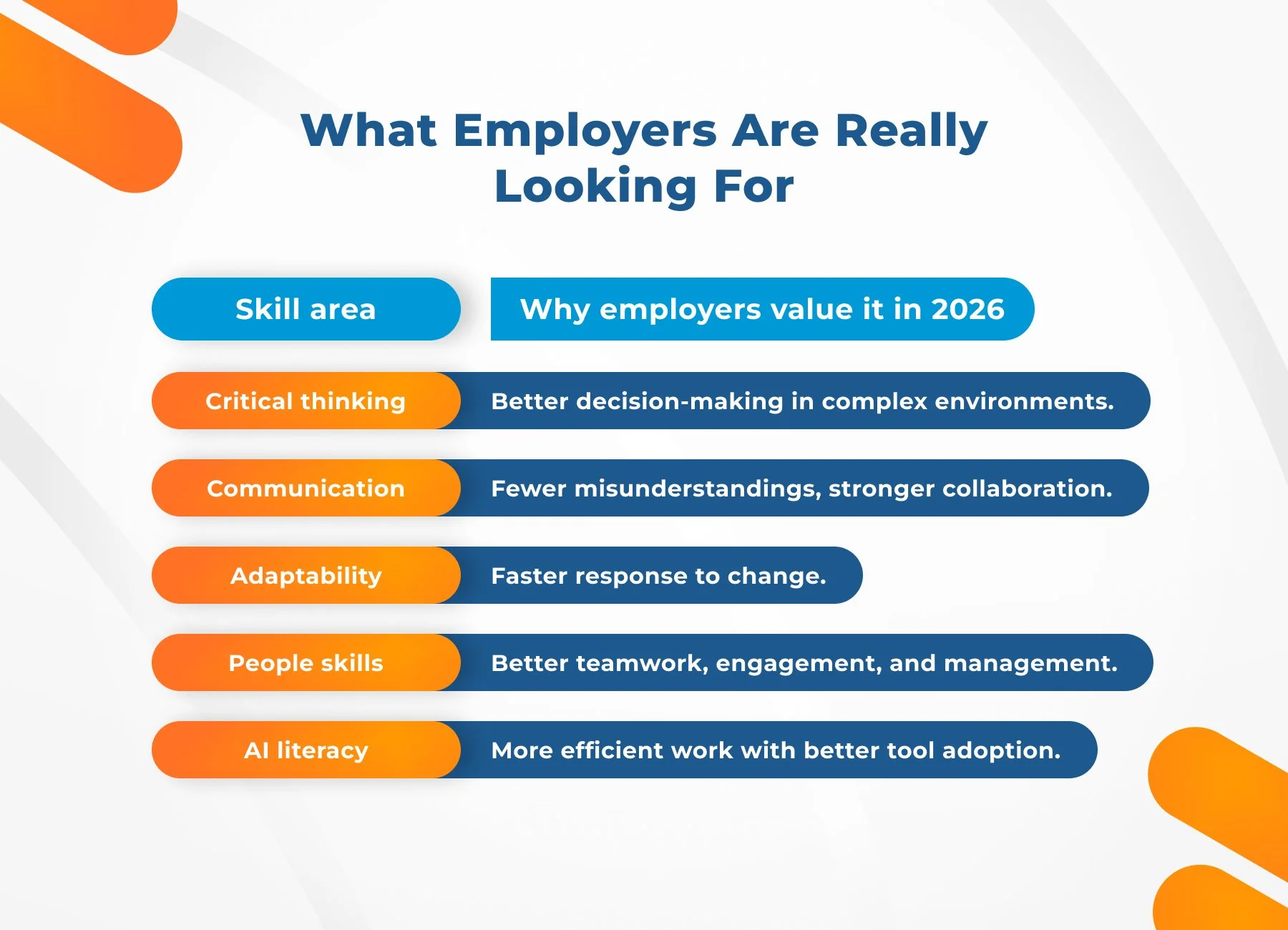
The top skills employers are looking for in 2026 reflect a workplace that is becoming more digital, more distributed, and more reliant on sound judgment. Technical fluency still matters, but it is no longer enough on its own. Employers increasingly value professionals who can communicate clearly, solve problems, adapt quickly, and work effectively alongside AI and evolving business demands. Demand is also rising for capabilities such as critical thinking, AI literacy, employee engagement, and management expertise.
Why Employers Are Prioritizing Skills Differently
The shift is not just about new tools. It is about how work is changing. AI is accelerating routine tasks, teams are working across more functions and locations, and employers need people who can navigate ambiguity without losing momentum.
For growing companies, this means hiring decisions should focus less on job titles alone and more on whether a candidate can strengthen execution, communication, and adaptability inside the business.
1. Critical Thinking Is Rising in Value
As AI takes on more routine tasks, human judgment becomes more important, not less. Coursera reports a 120% year-over-year increase in critical thinking enrollments, highlighting how strongly organizations are prioritizing this capability. Critical thinking and problem-solving are also listed among the in-demand skills employers are looking for in 2026, emphasizing the ability to apply structured thinking to real-world challenges.
2. Communication Skills Still Separate Top Performers
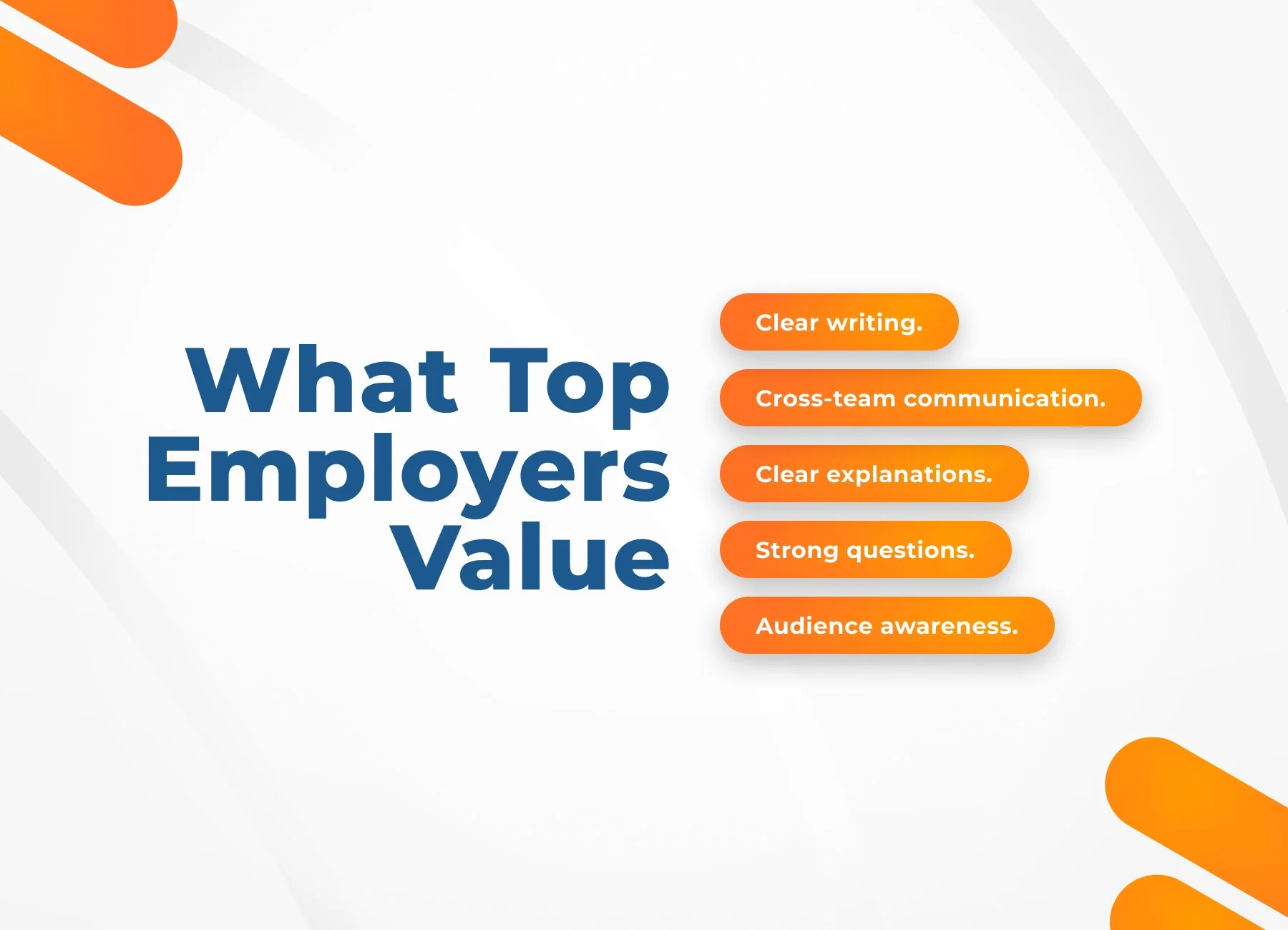
Communication is one of the top soft skills recruiters are prioritizing, and it remains one of the most consistently valuable workplace capabilities. In 2026, however, it matters in more ways than ever. Active listening and clear communication are among the most in-demand skills because they strengthen teamwork, reduce misunderstandings, and help professionals build trust across teams and functions.
3. Adaptability Matters More in Fast-Changing Environments
The skills employers are looking for in 2026 are shaped by constant change: evolving tools, shifting expectations, and more fluid ways of working. Industries are changing through technology, automation, and new work models, which is increasing demand for people who can adapt and apply their skills in real-world situations.
For hiring managers, this is often the difference between someone who can do the job today and someone who can keep growing with the role over time.
4. HR and People Skills Are Becoming Business Skills
One of the more interesting developments in 2026 is that people-management capabilities are no longer seen as relevant only to human resources teams. HR skill sets were the third-most sought-after job skill set in U.S. job postings at the end of 2025, appearing in 27.3% of postings. In practice, that means “people skills” are no longer optional soft extras. They are part of how businesses operate effectively.
5. AI Literacy Is Becoming a Baseline Skill
Coursera’s report points to a 234% year-over-year increase in generative AI enrollments among enterprise learners and says AI is augmenting and automating tasks across in-demand fields. It also stresses that AI-related learning is becoming essential across roles, not just in technical functions.
That does not mean every employee needs to be an AI specialist. It means employers increasingly value people who can:
Work confidently with AI tools.
Understand where AI helps and where it should not be trusted alone.
Use automation to improve speed without weakening quality.
Combine technical tools with judgment and communication.
How Projective Staffing Helps
Projective Staffing helps companies hire for the realities of today’s workplace, not just for the job description on paper. That means looking beyond credentials alone and evaluating the skills that actually support execution, communication, and long-term fit. For businesses that need to move quickly without compromising quality, hiring top remote talent fast can create immediate momentum while keeping standards high.
Frequently Asked Questions
What are the top skills employers are looking for in 2026?
Critical thinking, communication, adaptability, people-management skills, and AI literacy are among the most in-demand skills in 2026.
Are HR skills really in demand outside HR roles?
Yes. HR-related skills such as employee engagement and management expertise are increasingly valued across a wider range of occupations.
Is AI literacy now expected in most jobs?
Not universally, but demand is clearly rising. Now, AI-related capabilities are becoming important across functions.
Hire for the Skills That Actually Matter
The top skills employers are looking for in 2026 tell a clear story: businesses want more than qualifications. They want people who can think, communicate, adapt, and contribute in environments that are changing quickly. Projective Staffing can help you build a stronger, more future-ready team. Schedule a consultation.