
The Jobs AI Is Reshaping—And the Skills Growing With Them
AI is reshaping jobs across industries, but the story is not just about automation. It is also about the skills growing alongside it. As AI takes on more repetitive, process-heavy, and data-driven tasks, employers are placing greater value on AI literacy, adaptability, problem-solving, and collaboration. In 2026, the strongest candidates are not simply those who know how to use AI tools. They are the professionals who can combine technology with judgment, communication, and real-world execution.
AI Is Changing Tasks Before It Changes Entire Jobs
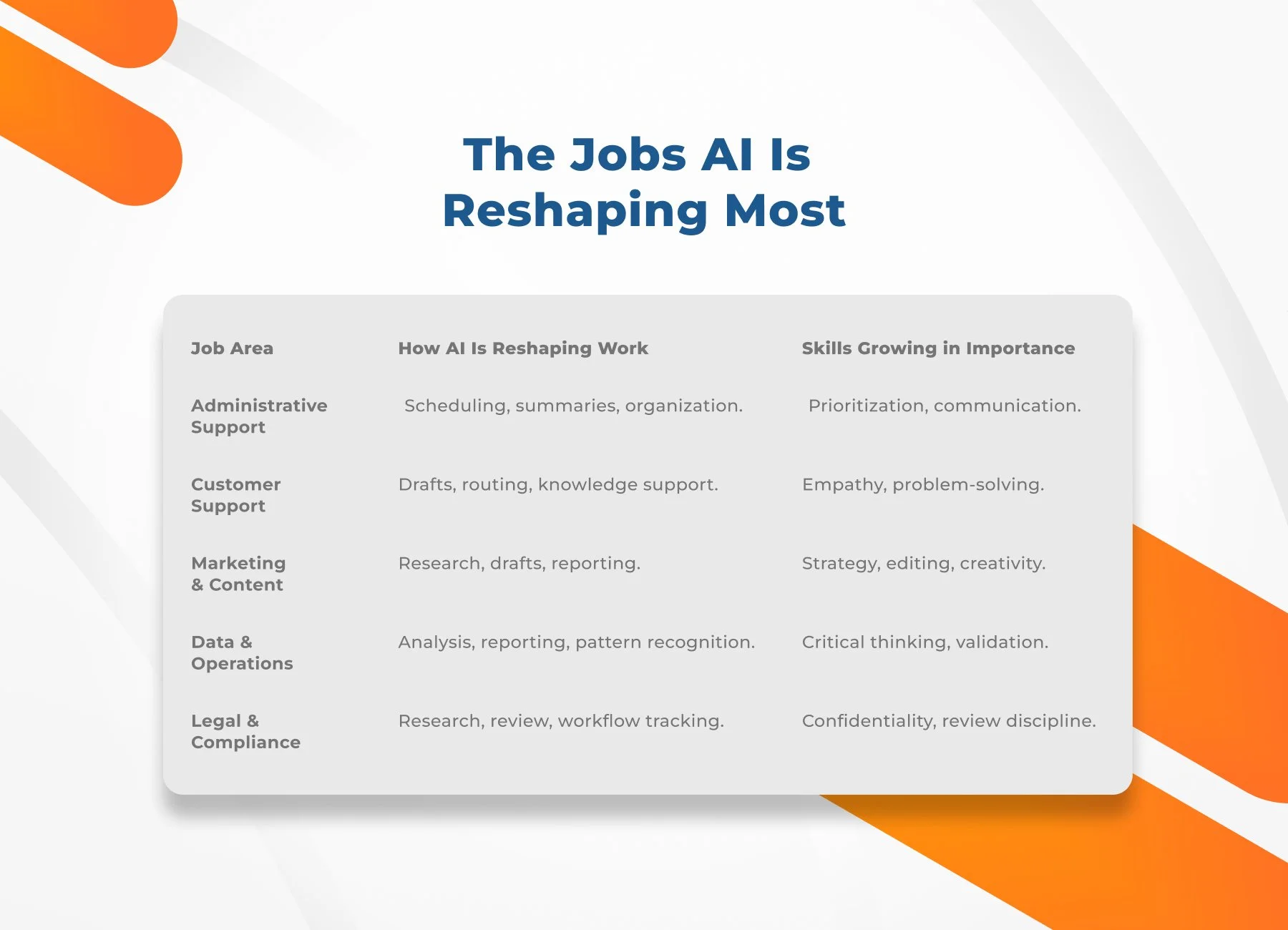
AI is not affecting every job in the same way. In many roles, it is changing specific tasks first: drafting, summarizing, organizing information, analyzing patterns, generating reports, or speeding up routine workflows. That distinction matters. A role may not disappear, but the way the work is done can change significantly.
The Future of Jobs Report found that technological change, including AI and information processing, is one of the major forces expected to transform jobs and skills through 2030. It also notes that AI and big data are among the fastest-growing skill areas.
The 4 Skills Growing Alongside AI
Skill 1: AI Literacy
AI literacy does not mean becoming a machine learning engineer. For most roles, it means understanding how to use AI tools responsibly and effectively. Professionals with AI literacy know how to:
Write useful prompts.
Verify AI-generated outputs.
Understand when human review is required.
Identify risks, errors, or bias.
Use AI to improve speed without lowering quality.
Coursera’s Job Skills Report 2026 shows a 234% year-over-year increase in generative AI enrollments among enterprise learners.
Skill 2: Adaptability
Adaptability is becoming one of the most important skills in AI-shaped workplaces because tools, workflows, and expectations are changing quickly. Employees who adapt well can:
Learn new systems without long ramp times.
Adjust when processes change.
Work through ambiguity.
Stay productive as responsibilities evolve.
Improve workflows instead of resisting change.
Adaptability should be assessed during hiring, not only developed after onboarding. If your team is hiring for fast-changing roles, it is worth revisiting the top soft skills recruiters are prioritizing in 2026.
Skill 3: Problem-Solving
AI can generate options quickly, but it does not automatically know which option is best for your business. That is where problem-solving becomes essential. Strong problem-solvers can:
Define the real issue before choosing a tool.
Compare AI output against context.
Identify weak assumptions.
Make decisions with incomplete information.
Improve processes instead of only completing tasks.
Skill 4: Collaboration
As AI changes workflows, collaboration becomes more important, not less. Teams need people who can explain decisions, align across functions, and help others understand how AI-supported work was produced.
62% of hiring managers said hard skills and soft skills are equally valuable for 2026, and one of the top soft skills is collaboration along with communication, problem solving, and critical thinking.
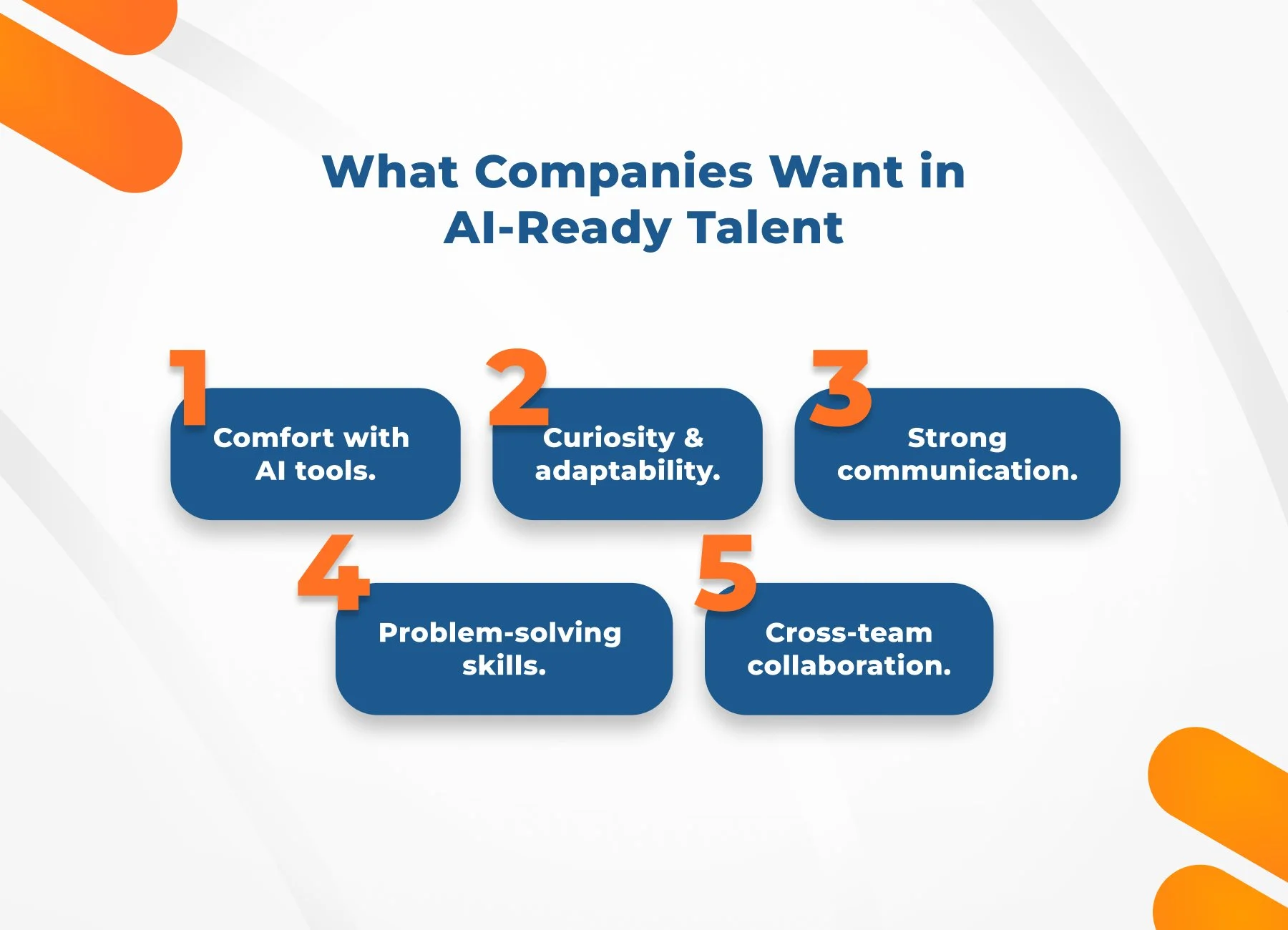
How Projective Staffing Helps
We help companies hire for the realities of modern work, where AI is changing tasks but human skills still determine performance. As roles continue to evolve and businesses adapt to new technologies, companies need talent that can grow alongside those changes. That is why long-term staffing partnerships are becoming more valuable, they help organizations build consistency, maintain alignment, and adapt more effectively as skill demands continue to shift.
Frequently Asked Questions
What jobs is AI reshaping the most?
AI is reshaping jobs with repetitive, documentation-heavy, or data-driven tasks.
What skills are growing because of AI?
AI literacy, adaptability, problem-solving, critical thinking, communication, and collaboration are becoming more valuable as AI changes workflows.
Does AI reduce the need for soft skills?
No. As AI handles more process-heavy work, human skills like judgment, communication, and collaboration become even more important.
Should employers hire for AI skills or soft skills?
Both matter. Employers should look for candidates who can use AI tools effectively while also showing judgment, adaptability, and strong communication.
Hire for the Skills AI Cannot Replace
AI is reshaping jobs, but it is not removing the need for people who can think clearly, communicate well, adapt quickly, and collaborate across teams. If your company is hiring for roles that are evolving with AI, Projective Staffing can help you identify talent with the right mix of technical readiness, soft skills, and long-term fit. Schedule a consultation.