
The Warning Signs Your Company Is Hiring Reactively
Reactive hiring happens when companies recruit only after pressure has already built up. A role becomes urgent, managers are overloaded, work starts slipping, or turnover forces a rushed replacement search. The problem is not hiring quickly. The problem is hiring without enough structure, clarity, or planning. In 2026, growing companies need to recognize the warning signs early so hiring decisions support growth instead of simply responding to stress.
Why Reactive Hiring Creates Bigger Problems
Reactive hiring often feels necessary at the moment. A team is overwhelmed, a key person leaves, or a role suddenly becomes business-critical. The instinct is to move fast and fill the gap.
But urgency can weaken decision quality. Job descriptions become vague, interviews become rushed, and hiring managers may prioritize availability over fit. Harvard Business Review has noted that companies often create inefficient hiring processes because they are afraid of making bad hires, but those same processes can become slow, bloated, and counterproductive.
The stronger approach is not to slow everything down. It is to create a hiring system that is fast because it is clear.
1. You Only Start Recruiting When Something Breaks
The clearest sign of reactive hiring is emergency recruiting. This happens when hiring begins only after a team is already struggling.
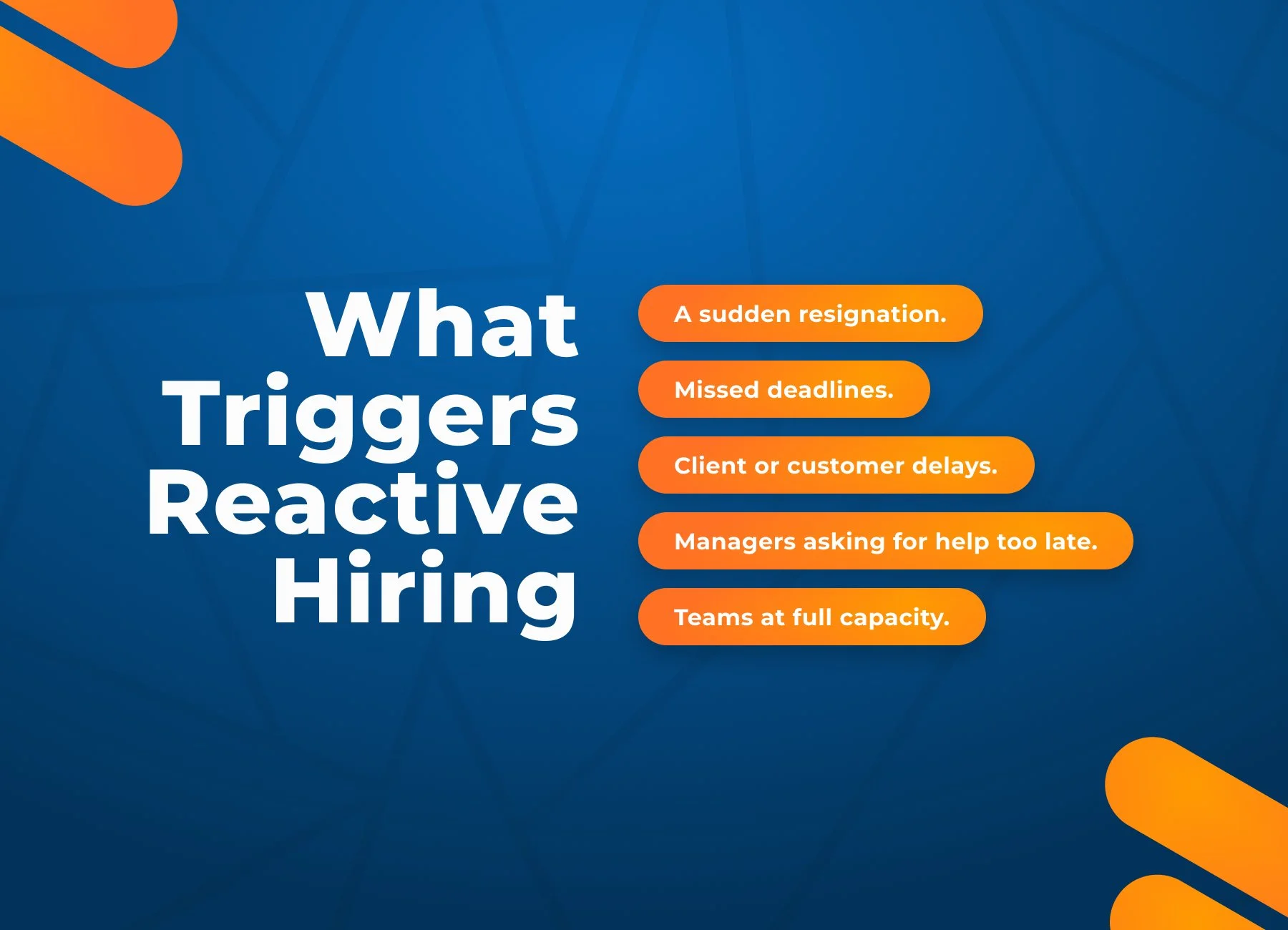
At this stage, the business is not hiring from a position of control. It is hiring to stop the pressure from getting worse. That does not mean the hire will fail, but it does mean the process needs stronger structure.
2. Managers Are Overloaded Before the Role Is Approved
Reactive hiring often starts long before the job post goes live. One of the earliest signals is manager overload.
This creates a cycle: the company needs help because managers are overloaded, but overloaded managers do not have the time to run a strong hiring process.
That is why hiring capacity matters. If managers are already at their limit, external support can help create structure and speed without placing more weight on internal teams. For companies that need to move quickly, our hiring process can reduce pressure while keeping quality standards in place.
3. Job Descriptions Are Unclear or Constantly Changing
An unclear job description is one of the biggest signs that a company is hiring reactively.
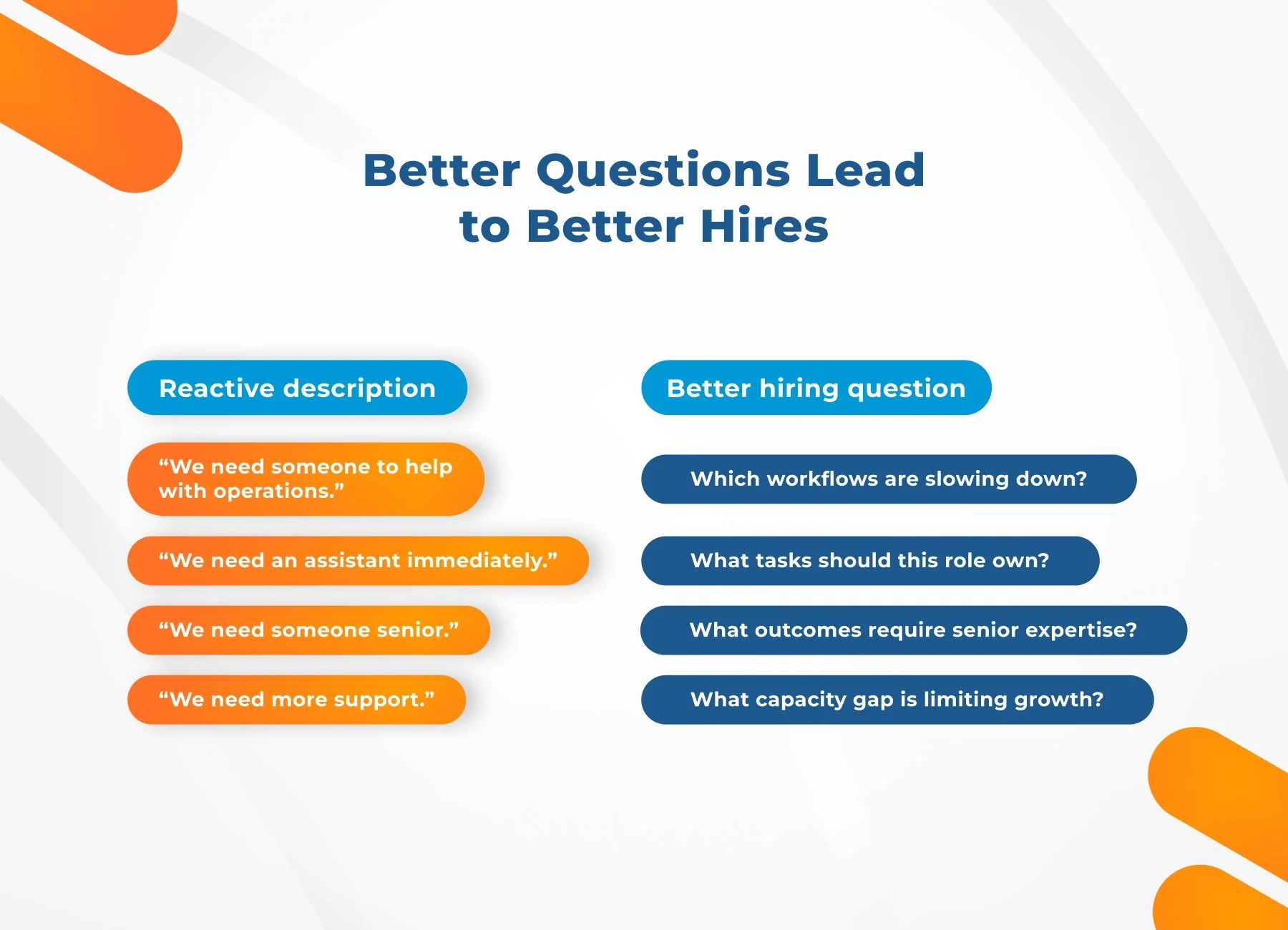
When a role is created under pressure, teams often describe the symptoms instead of the real need.
Unclear job descriptions create misalignment from the start. Candidates do not fully understand the role, interviewers evaluate different things, and the company may end up hiring for the wrong problem.
4. Hiring Approvals Take Too Long
Delayed approvals are another common sign of reactive hiring. The need is urgent, but internal decisions move slowly. The result is frustrating for both the business and the candidate.
There are several reasons candidates drop out of the hiring processes, including unclear communication, misaligned job titles, and friction in the process. When companies delay decisions, strong candidates may move on before the team is ready to act.
5. Hiring Is Driven by Turnover, Not Growth
Turnover-driven hiring is one of the most expensive forms of reactive hiring. Instead of building capacity intentionally, the company spends its hiring energy replacing people who leave.
SHRM has described the cost of a bad hire as potentially significant, including recruiting, hiring, onboarding, and replacement costs. But the deeper issue is often the cycle behind the hire. If a company is repeatedly replacing people, the problem may not be talent availability. It may be role fit, onboarding, workload, or management structure.
How to Move From Reactive Hiring to Strategic Hiring
Reactive hiring can be fixed, but not by adding more urgency. It improves when companies create a clearer system. SHRM emphasizes the value of preparing teams for future needs rather than only responding to immediate gaps. That is the core difference: reactive hiring fills openings; strategic hiring builds capacity.
How Projective Staffing Helps
We help companies move faster without hiring reactively. We support businesses that need clarity, structure, and reliable talent across both remote staffing and headhunting.
For companies looking to build more consistency over time, long-term staffing partnerships can help reduce last-minute hiring pressure and improve workforce planning.
Frequently Asked Questions
What is reactive hiring?
Reactive hiring happens when companies recruit only after a problem becomes urgent.
What are the signs of reactive hiring?
Common signs include emergency recruiting, overloaded managers, unclear job descriptions, delayed approvals, and hiring mostly to replace people who leave.
Why is reactive hiring risky?
It often leads to rushed decisions, weaker role clarity, and higher turnover risk.
How can companies avoid reactive hiring?
By planning ahead, defining roles clearly, setting decision ownership, and using staffing support before pressure becomes unmanageable.
Build a Hiring Process That Supports Growth
Reactive hiring is usually a sign that the business is growing faster than its systems. The goal is not to eliminate urgency completely. The goal is to build a hiring approach that can respond quickly without sacrificing quality. If your company is hiring under pressure contact us.