
How Remote Roles Help Healthcare Teams Scale
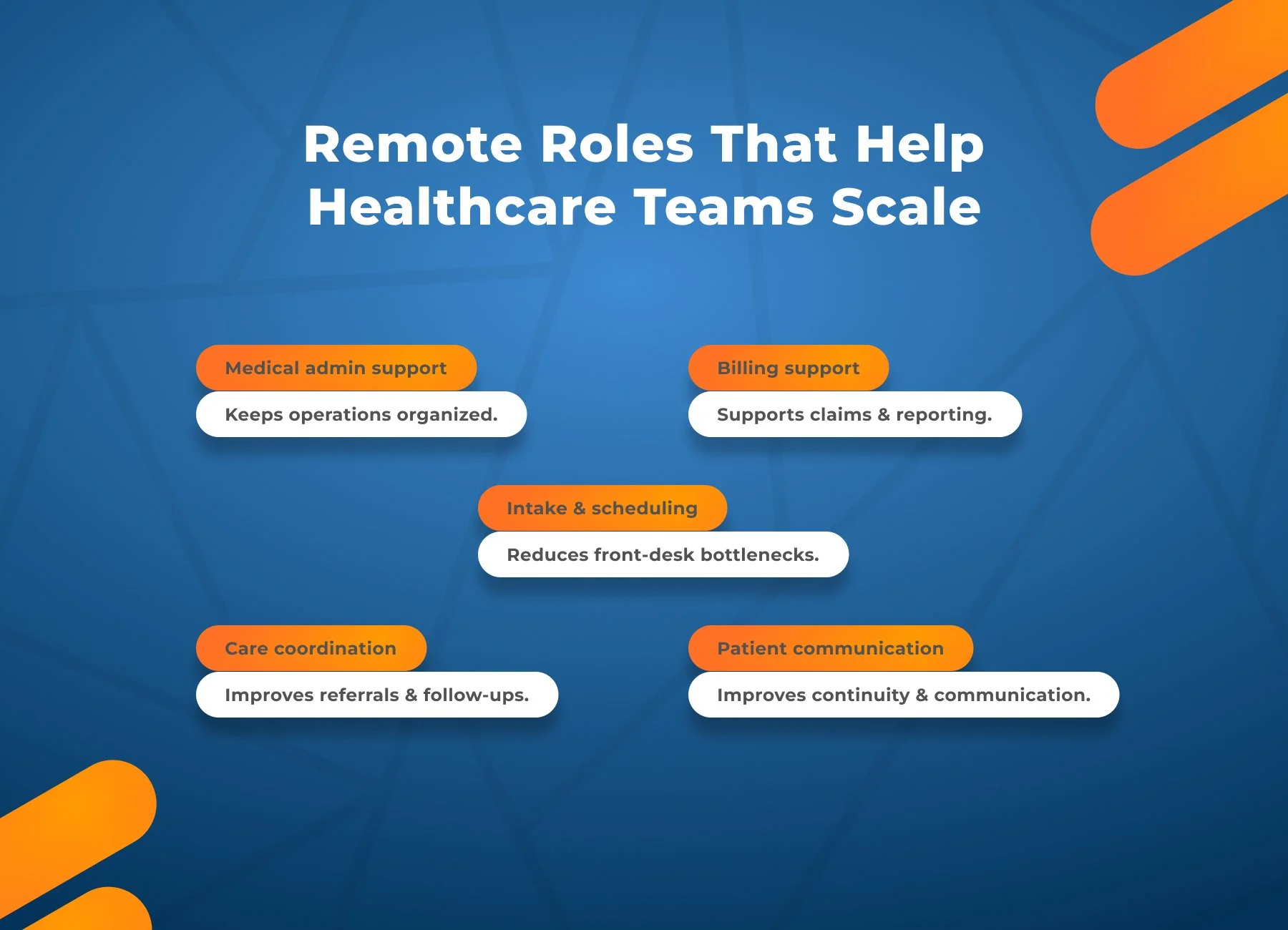
Remote support roles help healthcare teams scale by taking pressure off clinical and operational staff without lowering standards or disrupting care delivery. For medical practices, clinics, and healthcare organizations, growth often creates more administrative work before it creates more clinical capacity. Scheduling, billing, documentation, intake, patient communication, and coordination all increase as patient volume grows. When those workflows are understaffed, clinicians and managers absorb the pressure. Remote healthcare support gives teams a more flexible way to expand capacity, improve consistency, and keep patient-facing work moving.
Why Healthcare Teams Need More Operational Capacity
Healthcare growth does not only mean seeing more patients. It also means managing more appointments, more claims, more follow-ups, more documentation, and more coordination across systems.
That operational pressure is becoming harder to ignore. Medical practice leaders saw an average year-to-date operating expense increase of approximately 11.1% in 2025 compared to the same period in 2024, with staffing costs among the most frequently cited drivers. For many healthcare teams, the challenge is not whether support work matters, it is how to staff it sustainably.
Remote support roles give healthcare organizations a way to expand administrative and operational capacity without relying only on local hiring markets.
Administrative Support Reduces Pressure on Clinical Teams
When administrative workflows are understaffed, clinical staff often end up doing work that pulls them away from patient care. That might include scheduling follow-ups, tracking forms, coordinating records, or answering routine patient questions. CMS continues to emphasize administrative simplification in healthcare, with the goal of reducing burden and lowering costs through more standardized workflows.
For growing healthcare teams, the staffing lesson is clear: if the administrative layer is weak, scaling becomes harder. If it is supported well, clinical and operational teams can focus on higher-value work.
Billing Support Protects Revenue and Reduces Rework
Billing is one of the strongest use cases for remote healthcare support because it depends heavily on accuracy, process discipline, and follow-through.
HFMA describes revenue cycle management as a process that supports everything from patient financial communication to payment arrangements and access to care. In other words, billing is not just a back-office function. It affects financial performance and patient experience.
For healthcare teams trying to scale, billing support helps reduce rework, protect cash flow, and keep revenue cycle tasks from piling up on internal staff.
Coordination Roles Keep Patients and Teams Aligned
As patient volume increases, coordination becomes one of the first places where delays appear. Referrals, follow-ups, lab communication, documentation requests, and provider handoffs all require consistency.
Prior authorization remains a major administrative burden for medical group practices. That kind of complexity makes coordination support increasingly important because delays can affect both patient experience and operational flow.
Patient Communication Workflows Improve Continuity
Patient communication is one of the most important areas where remote support can make an immediate difference. When patients do not receive timely updates, reminders, or follow-ups, the burden often returns to already busy front-office or clinical staff.
The goal is not to replace clinical communication. It is to make sure non-clinical touchpoints are handled consistently, professionally, and on time.
How Projective Staffing Helps Healthcare Teams Scale
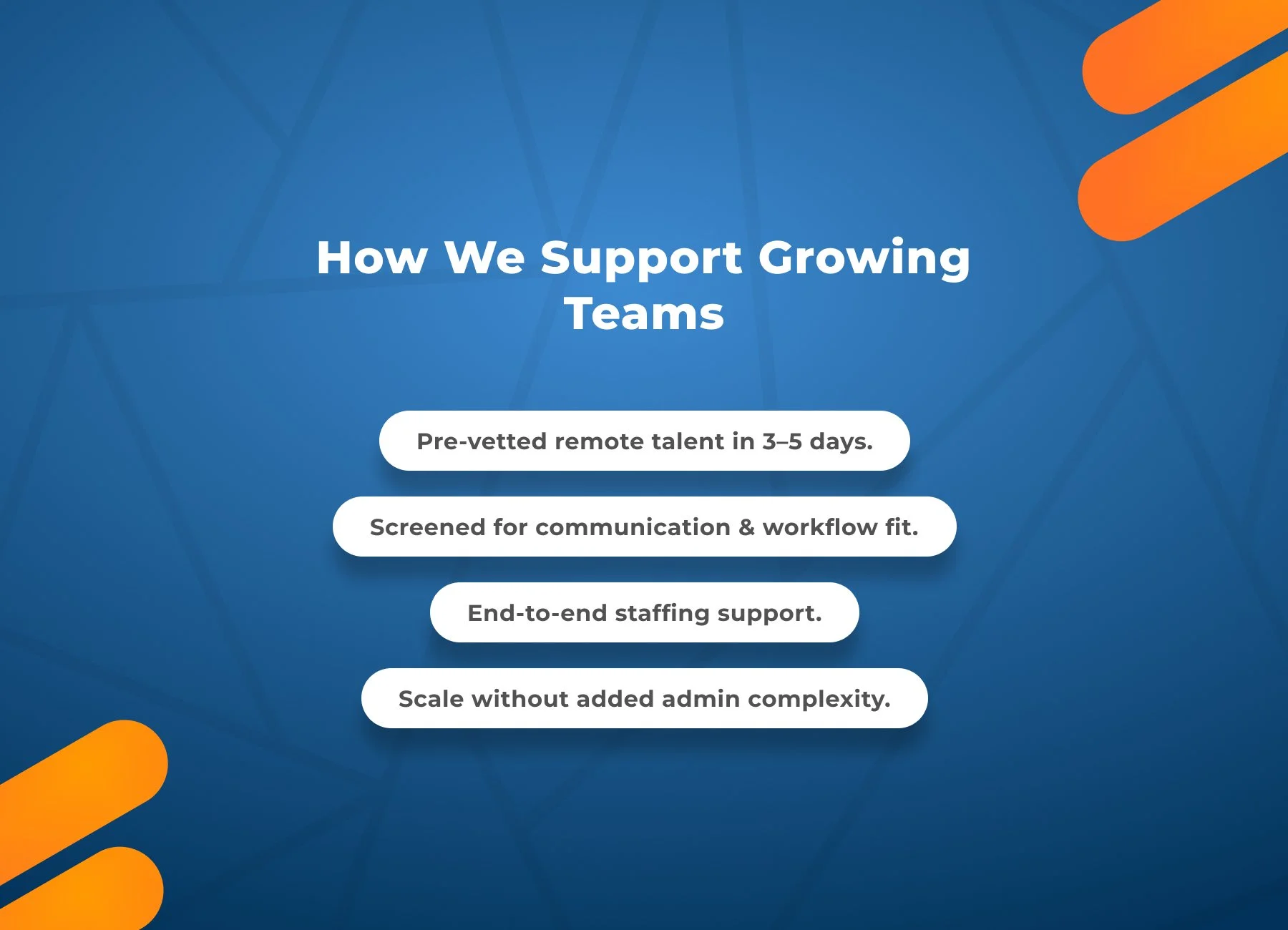
We help healthcare and medical teams build remote support capacity with more structure and less friction. We focus on remote staffing for roles that support operations, coordination, billing, and administration. That requires screening beyond resumes to evaluate communication, autonomy, workflow fit, and support-role readiness.
For healthcare organizations looking beyond one-off hiring, long-term staffing partnerships can create more consistency as support needs evolve.
Frequently Asked Questions
What healthcare roles can be supported remotely?
Medical administrative support, billing support, scheduling, patient intake, care coordination support, and patient communication workflows.
Can remote support roles help reduce clinician workload?
Yes. Remote roles can take on non-clinical administrative, coordination, and communication tasks so clinical teams can focus more of their time on patient care.
How do remote support roles help healthcare teams scale?
They add operational capacity, improve workflow consistency, reduce bottlenecks, and help teams manage patient volume without relying only on local hiring markets.
Build Healthcare Support Capacity Without Adding Complexity
Healthcare teams scale best when clinical work is protected and operational workflows are supported. Remote roles help make that possible by strengthening the administrative, billing, coordination, and communication systems behind patient care. If your healthcare team is growing and needs reliable remote support contact us today.