
The Secret to High-Performing Distributed Teams
High-performing remote teams do not succeed because everyone is online at the same time or because managers check in constantly. They succeed because work is structured clearly enough for people to move independently without losing alignment. In 2026, the secret to distributed teams is not more tools, meetings, or oversight. It is a strong operating system built around structure, trust, documentation, and ownership. When those four elements are in place, remote and distributed teams can move faster, communicate better, and scale with less friction.
Distributed Teams Need Systems, Not More Visibility
Distributed work changes how teams coordinate. When people are spread across locations, time zones, or work styles, informal alignment becomes harder to rely on. That does not mean distributed teams need more surveillance. It means they need clearer systems.
Remote teams must learn how to share work across locations, communicate effectively, and build consistent practices across geographies. These teams work best when they do not treat distance as a disadvantage, but as something that requires intentional design.
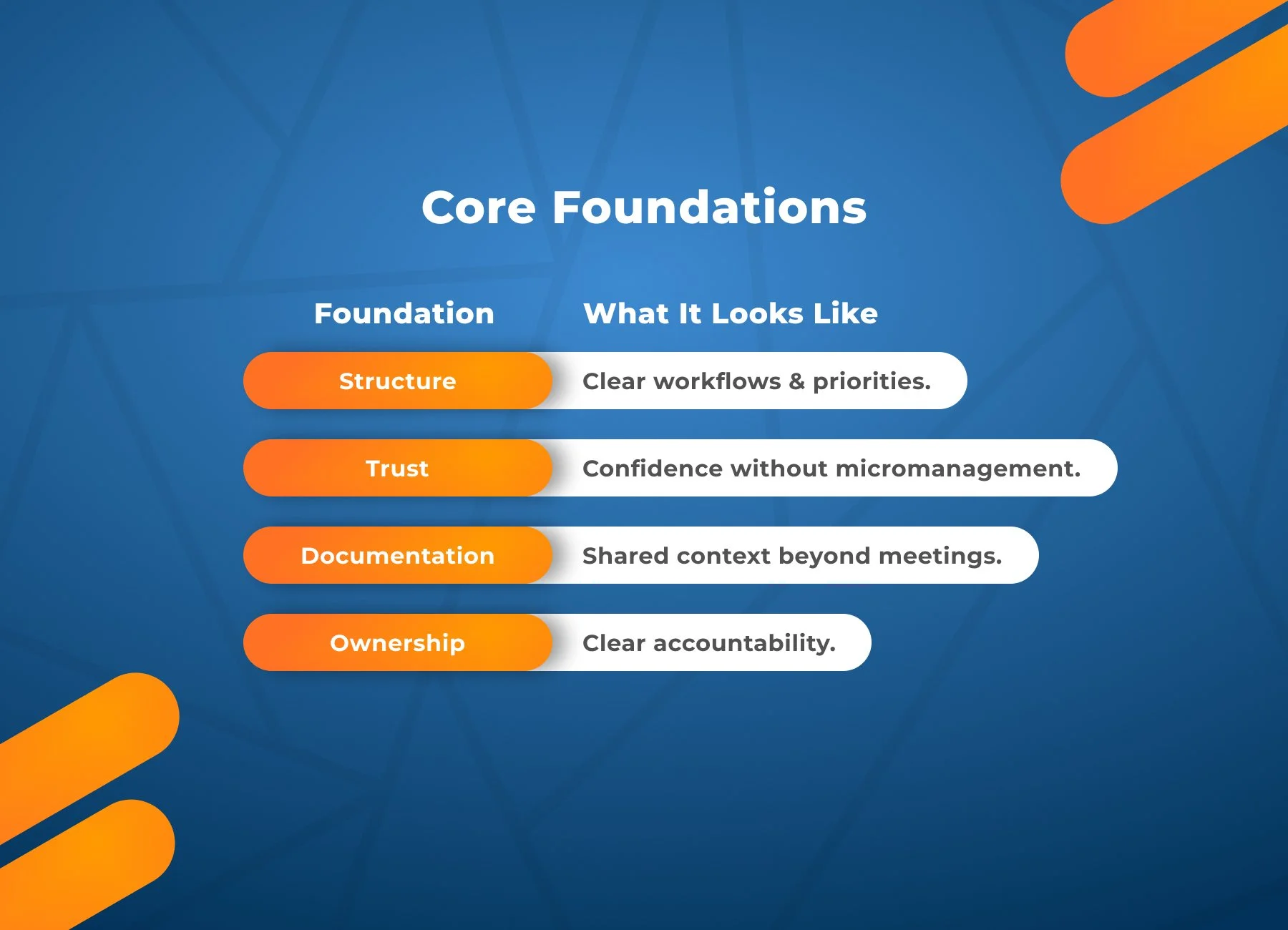
The 4 Foundations of High-Performing Distributed Teams
1. Structure: Make Work Easy to Understand
Structure is what keeps distributed teams from becoming reactive. Without it, team members waste time asking basic questions, waiting for clarification, or duplicating work.
This does not require a complex system. It requires consistency. For example, a weekly priorities document, shared project board, and clear escalation path can reduce unnecessary meetings while helping everyone understand what matters most.
This connects closely to how companies manage remote teams effectively: structure creates clarity without turning leadership into micromanagement.
2. Trust: Replace Control With Accountability
Trust is often misunderstood in distributed teams. It does not mean “assume everything is fine.” It means people have enough clarity, autonomy, and accountability to do good work without being watched constantly.
Microsoft’s Work Trend Index introduced the idea of “productivity paranoia,” where leaders struggle to trust productivity in hybrid and remote environments despite team members reporting that they are working productively. The goal is not blind trust. The goal is trusted accountability.
3. Documentation: Create Shared Context
Documentation is one of the most important habits in distributed teams because it prevents knowledge from living only in conversations.
When teams rely too heavily on meetings or chat threads, context disappears quickly. New team members struggle to catch up. Decisions get repeated. Work slows down because people need to ask the same questions again.
GitLab’s guide to asynchronous communication for remote work emphasizes the importance of moving work forward without requiring everyone to be available at the same time. That only works when documentation is strong.
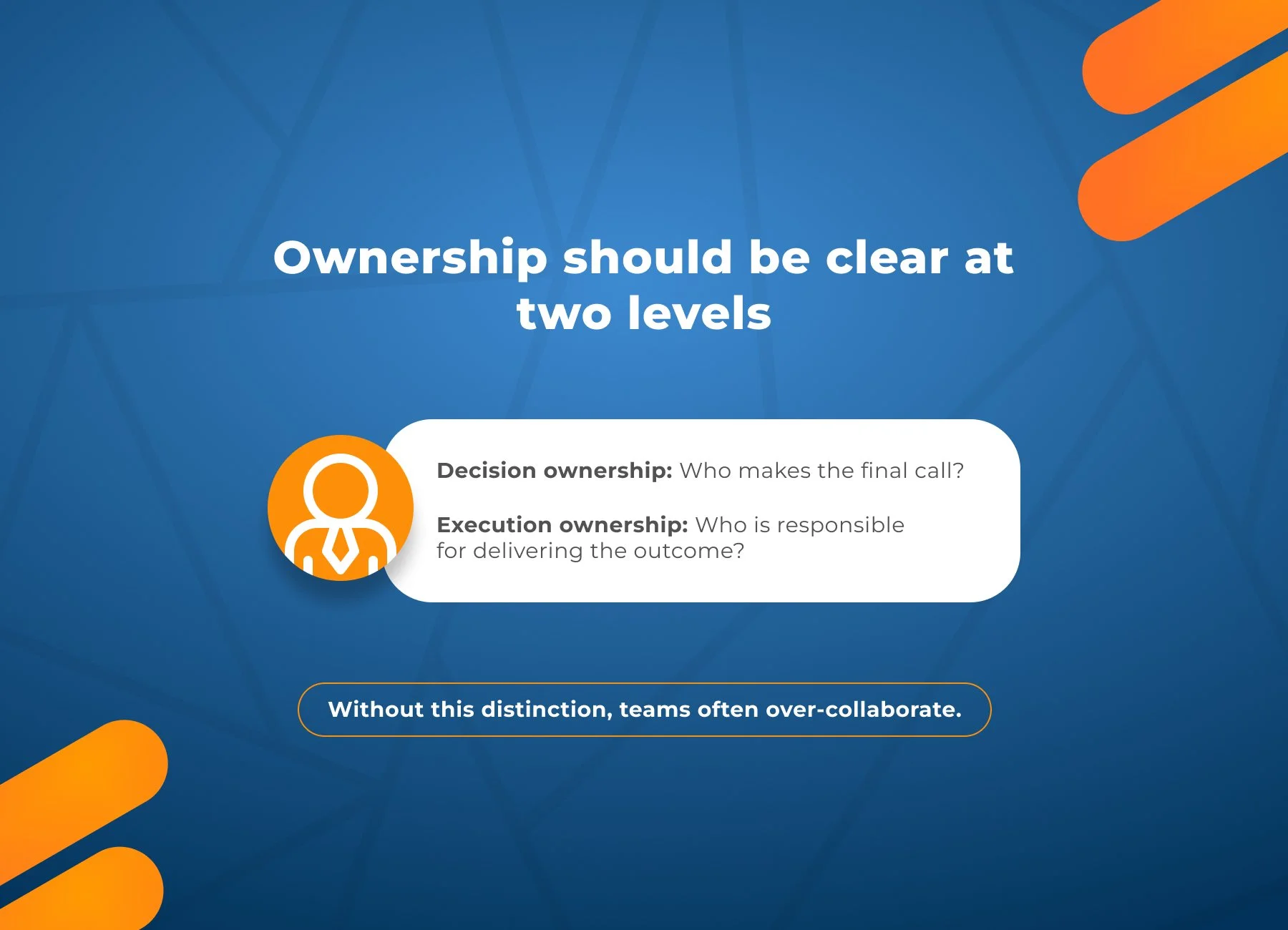
4. Ownership: Define Who Decides and Who Delivers
Distributed teams struggle when ownership is vague. If everyone is involved but no one is accountable, decisions slow down and work becomes fragmented.
High-performing distributed teams make ownership visible. They know who leads the project, who contributes, who approves, and who needs to be informed.
What Distributed Teams Get Wrong
Many distributed teams struggle because they try to recreate office habits online. More meetings replace hallway conversations. More messages replace alignment. More monitoring replaces trust. That usually creates noise, not performance.
Why This Matters for Remote Staffing
Remote staffing works best when distributed team systems are already in place, or when companies are willing to build them.
A strong remote professional can bring skill, experience, and reliability. But if priorities are unclear, handoffs are inconsistent, or ownership is vague, even good talent will struggle to perform at their highest level.
Projective Staffing helps companies add remote talent in a way that supports long-term execution, not just short-term coverage. For companies thinking beyond one-off hires, long-term staffing partnerships can help create more consistency as distributed teams grow.
Frequently Asked Questions
What makes a distributed team high-performing?
High-performing teams have clear structure, strong documentation, trust-based accountability, and defined ownership.
Do distributed teams need more meetings?
Not necessarily. Many distributed teams perform better with fewer meetings and stronger documentation, async updates, and clear decision ownership.
Why is documentation important for distributed teams?
Documentation creates shared context. It helps teams avoid repeated questions, lost decisions, and onboarding gaps.
Build a Distributed Team That Can Scale
The secret to high-performing distributed teams is not complicated, but it does require discipline. Structure, trust, documentation, and ownership create the conditions for remote professionals to do their best work.
If your company is building or expanding a distributed team, we can help you find remote talent that fits your workflows, communication style, and long-term goals. Schedule a consultation.