
The Recruiting Trust Gap in the Age of AI
Hiring has never moved faster, and it has rarely felt less trustworthy. That's the recruiting trust gap: employers are screening more applications with AI than ever before, candidates are using AI to write and polish those applications, and both sides are left wondering if what they're looking at is real. For growing companies, that gap isn't a philosophical problem. It's a practical one that shows up as wasted interviews, mismatched hires, and qualified people who never make it past a filter.
Why Trust Is Breaking Down on Both Sides
The strain is measurable. According to SHRM's reporting on hiring automation, tools meant to streamline recruiting have delivered real efficiencies, but have also produced a process many candidates and employers now find more frustrating, impersonal, and easy to game — at real cost to trust and human judgment. Average cost-per-hire and time-to-hire have both climbed over the same three-year period that generative AI use in hiring accelerated.
Adoption isn't slowing down either. Recruiting consistently ranks as one of the leading use cases for AI inside HR departments nationwide. More applications get filtered by algorithms. More resumes get shaped by the same tools. The result is a hiring process where neither side is fully confident they're seeing an accurate picture of the other.
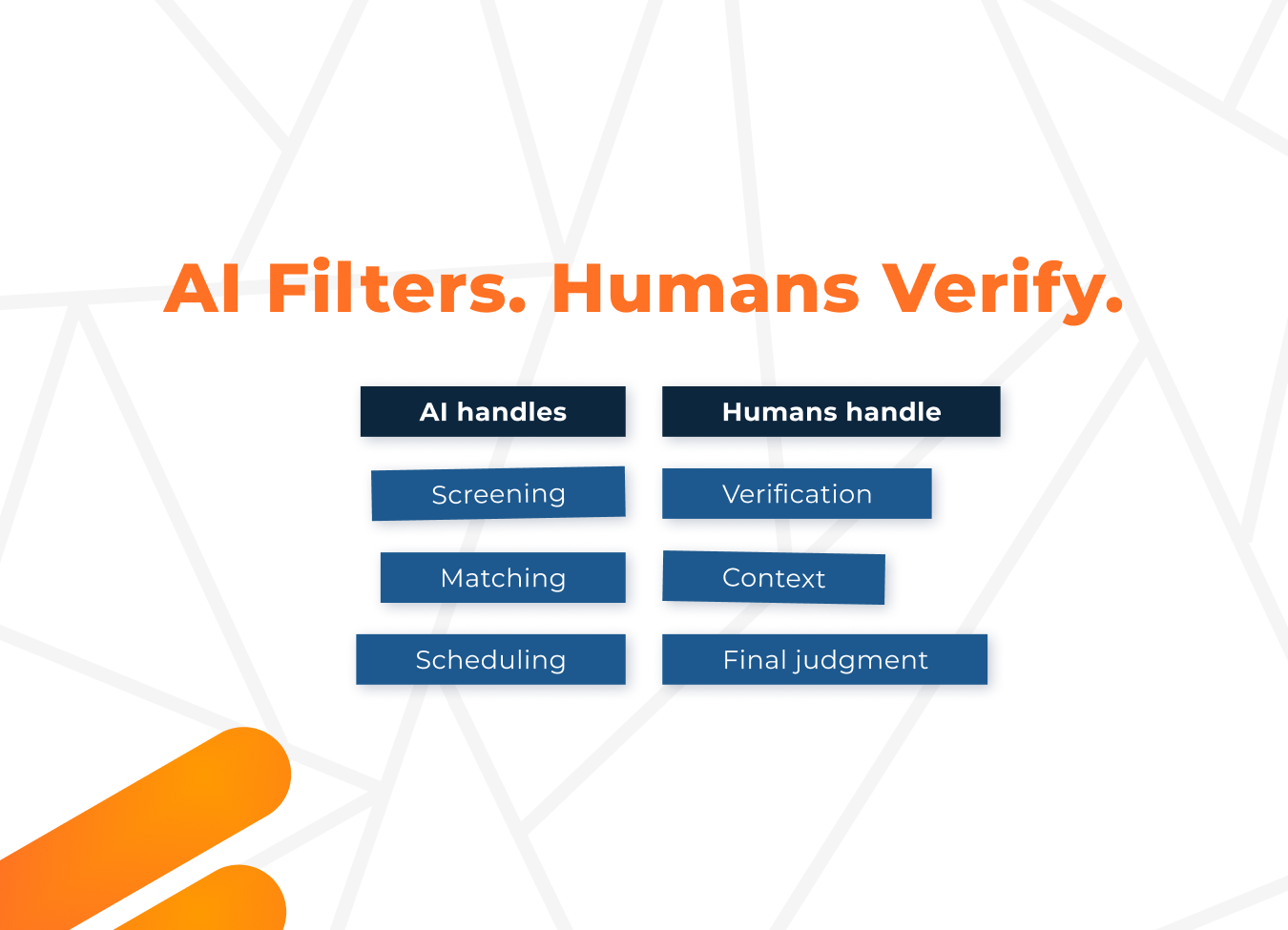
Where AI Helps vs. Where It Can't Substitute Judgment
AI is genuinely useful for narrowing a large pool, matching skills to a job description, and clearing scheduling and administrative bottlenecks. What it consistently struggles with is context: whether a nonlinear career path reflects growth or instability, whether a quiet resume hides real capability, or whether a polished application matches the person behind it.
Recent HBR research on AI and evaluation found a troubling pattern: as organizations lean more heavily on AI-generated recommendations, the human capacity for original, independent judgment can erode rather than sharpen. That finding matters most in hiring, where the cost of a wrong call is measured in months of lost productivity, not a bad recommendation. Structured human review — not automation on top of automation — is what closes that gap. Our breakdown of what a professional recruiter really brings to your hiring strategy digs into the specific judgment calls that AI still can't make on its own.
How Human-Led Vetting Closes the Gap
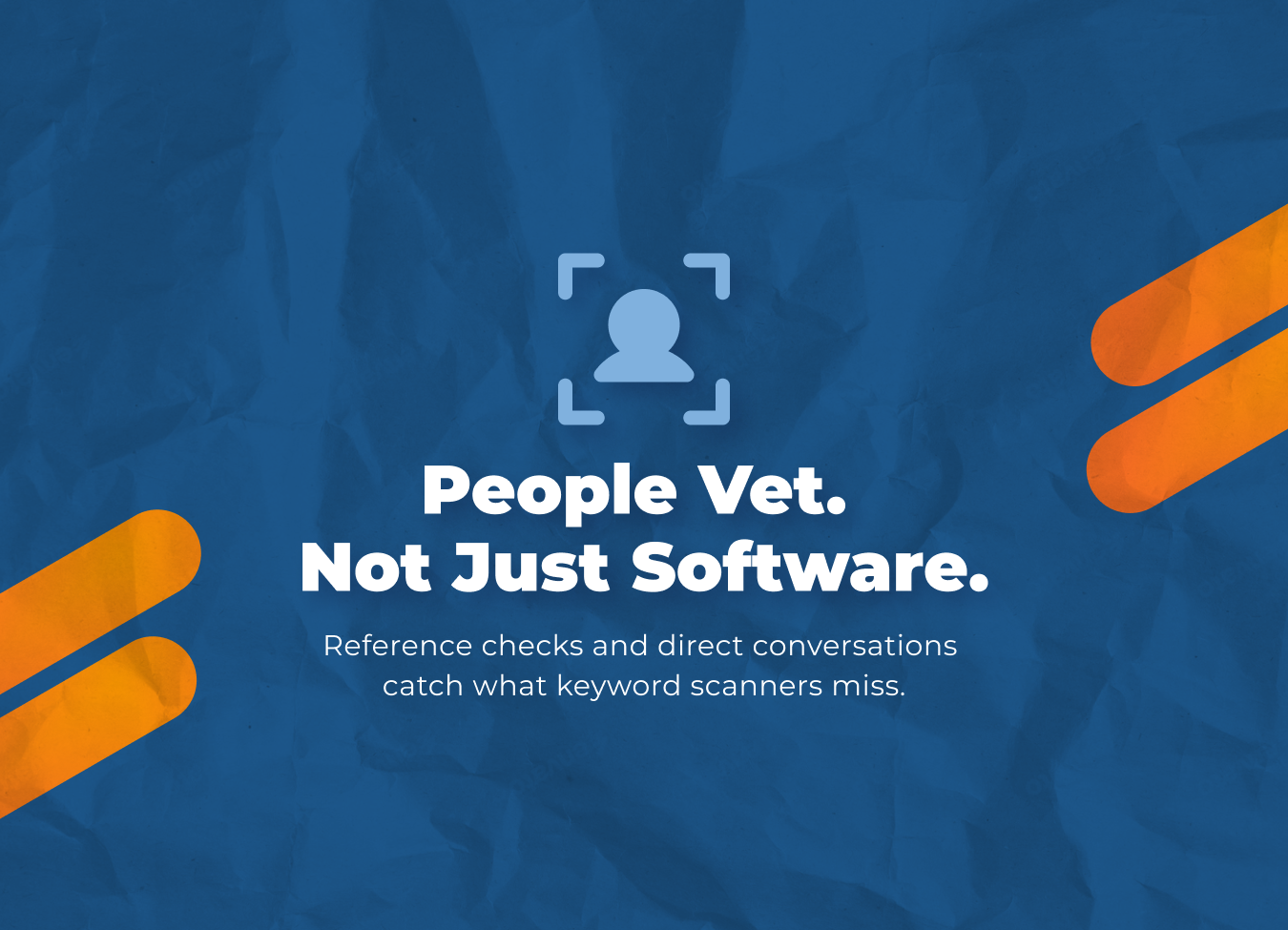
Trust gets rebuilt the same way it always has: through verification, not volume. That means confirming a candidate's experience through direct conversation and reference checks, not just scanning a document for keywords. It means recruiters who ask follow-up questions specific enough that a generic answer can't survive them.
For remote roles specifically, this is where a staffing partner earns its value. Projective Staffing sources, vets, and coordinates onboarding for remote professionals from Latin America, the Caribbean, India, and other global talent markets, with pre-vetted candidates typically ready in 3–5 days. Every candidate is evaluated by people, not filtered exclusively by software, before a client ever sees a profile. That structure matters even more now, because retention starts long before a start date. Our piece on why your talent retention strategy should begin at recruitment covers how thorough vetting upfront reduces turnover later.
Frequently Asked Questions
What is the recruiting trust gap?
It's the growing disconnect between employers and candidates caused by heavier reliance on AI in hiring — employers aren't sure applications are authentic, and candidates aren't sure they're being fairly evaluated.
Can AI screening tools replace human judgment in hiring?
No. AI is effective at narrowing large applicant pools and matching skills to requirements, but assessing fit, context, and authenticity still requires human evaluation.
How does Projective Staffing verify remote candidates?
Projective's team sources, vets, and coordinates onboarding through direct human review, including reference verification, before presenting pre-vetted candidates to clients.
Build Trust Into the Hiring Process
A faster hiring process only helps if you can trust what's on the other side of it. Projective Staffing combines global reach with human-led vetting, so every candidate you meet has already been verified by people who know what to look for. Schedule a consultation.