
Smarter Hiring in Q2: How Growing Companies Align Roles With Scale
A strong hiring strategy for growing companies in 2026 isn’t about hiring faster, it’s about hiring in the right order, with the right model, for the right outcomes. Q2 is where growth plans meet execution pressure: demand increases, bottlenecks surface, and leadership bandwidth gets thin. This guide shows how growing teams align roles with scale by hiring ahead of demand, separating operational capacity from strategic leverage, and choosing between headhunting and remote staffing based on what each role truly requires.
Why Q2 Hiring Requires More Strategy
In Q2, you can feel the cost of missing roles more clearly. Projects stall. Customer response times slip. Leaders get pulled into work that shouldn’t need their time.
At the same time, the talent market is evolving in ways that reward companies that plan. 2026 hiring trends points to a sharper focus on skills, role fit, and capability, not just job titles. That matters because growth-stage hiring is rarely about “adding headcount.” It’s about unlocking throughput.
Step 1: Hire Ahead of Demand
Hiring ahead of demand doesn’t mean hiring blindly. It means using leading indicators to spot what will break first.
A disciplined workforce planning approach helps you connect business goals to capacity needs. SHRM’s guidance on practicing discipline in workforce planning reinforces the idea that planning beats reaction, especially when growth is volatile.
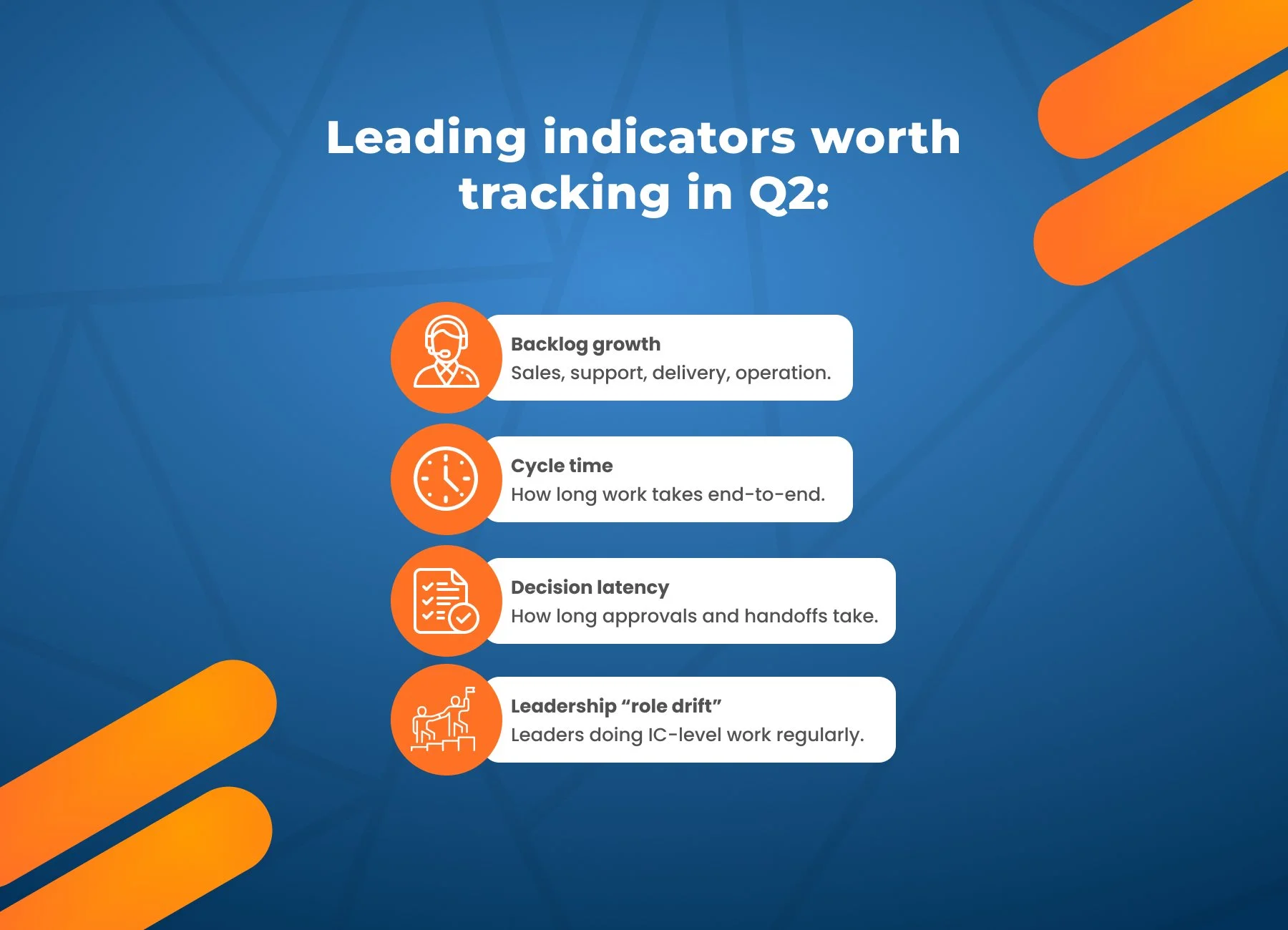
Example: If your sales pipeline is increasing but proposals are slowing, your next hire might not be another sales role, it may be a sales ops or enablement hire that increases throughput.
Step 2: Separate Operational Roles From Strategic Hires
Most scaling problems happen when companies treat all roles as equal. They’re not.
These hires reduce friction, protect focus time, and keep workflows moving:
Scheduling, coordination, and admin support.
Customer support and support ops.
Finance ops, invoicing, reporting.
Project coordination and documentation.
Why it matters: These roles often remove bottlenecks faster than adding another senior “strategic” hire.
Talent acquisition trends reinforce what many leaders already recognize: as roles become more specialized, fit and alignment matter more than volume hiring.
Step 3: Choose the Hiring Model That Matches the Role
This is where scaling teams often lose weeks: using the wrong hiring model for the job.
Forces like AI and cost pressure are reshaping talent acquisition priorities, pushing organizations to be more intentional about how they source and build capability.
When headhunting tends to fit best
Headhunting is a strong option when the role requires:
High precision and domain depth.
Long-term ownership (you fully employ and manage the hire).
Deep integration with leadership, clients, or sensitive workflows.
When remote staffing tends to fit best
Remote staffing is a strong option when the role requires:
Operational support (onboarding coordination, payroll, and ongoing administration).
Scalability without building complex internal infrastructure.
Reliable execution for support and operational functions.
Step 4: Build a Q2 Hiring Plan You Can Actually Execute
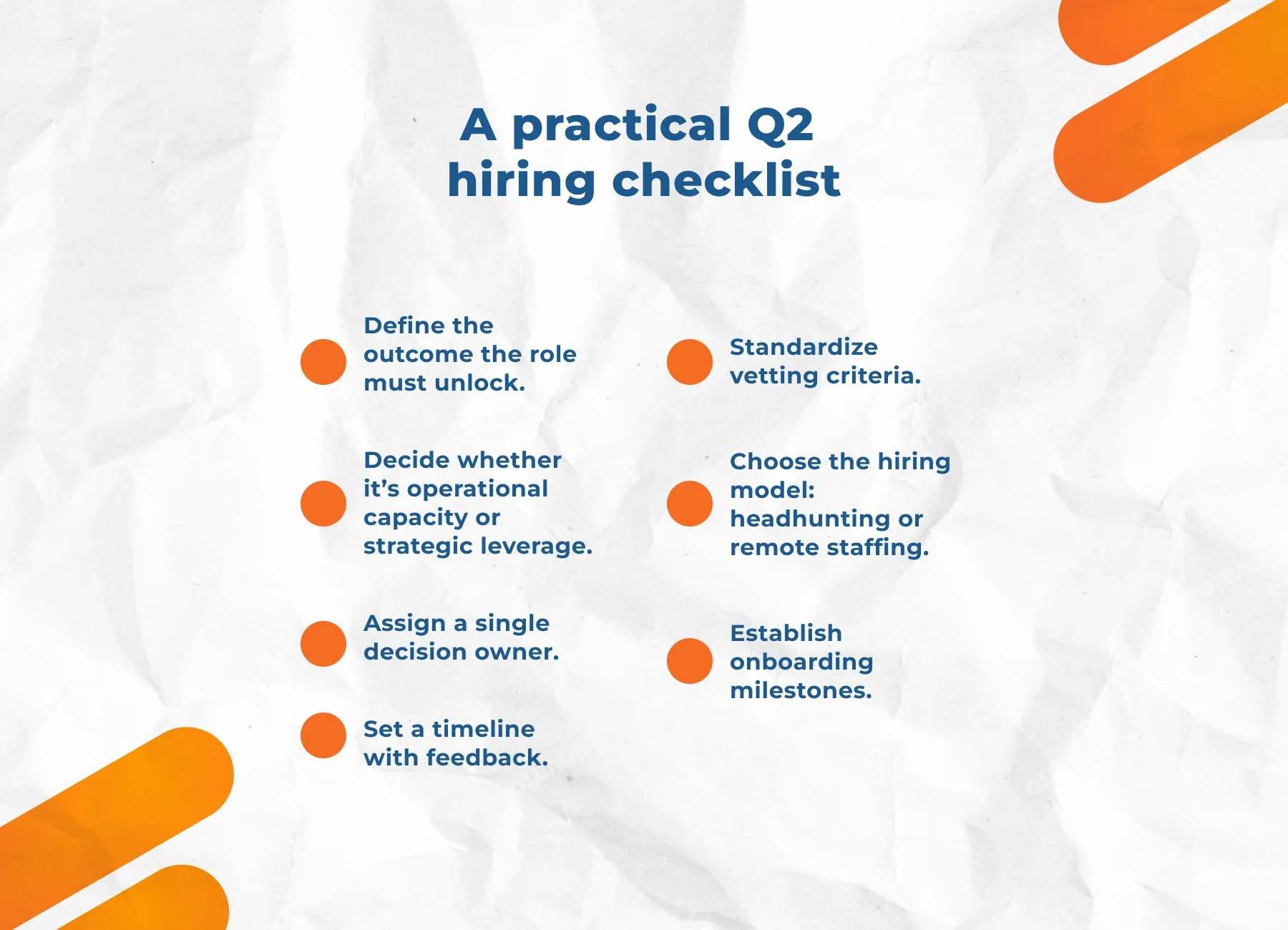
A scalable hiring strategy is one your team can run consistently. Use a 90-day plan that is simple enough to follow and specific enough to drive decisions.
How Projective Staffing Supports Hiring Strategies That Scale
Projective Staffing supports growing teams with two distinct services, so the hiring model matches the role, not a one-size approach.
Headhunting (onsite or remote):
Targeted, role-specific recruiting.
Deep vetting for experience and alignment.
Support through the hiring decision.
Remote staffing (end-to-end):
Pre-vetted professionals delivered in 3–5 days.
Support through sourcing, vetting, onboarding coordination, and payment.
Ongoing administrative support so teams can scale without extra operational drag.
Because both services are available in one partner, companies can build a hiring strategy that flexes by role type, without reinventing the process every time priorities shift.
Frequently Asked Questions
How do growing companies decide what roles to hire first?
Start with bottlenecks: where delivery slows, decisions stall, or leaders are pulled into work below their focus level. Prioritize roles that unlock throughput in the next 90 days.
What’s the difference between operational and strategic roles?
Operational roles stabilize execution and remove friction. Strategic roles change capability, differentiation, or risk posture.
When should a company use headhunting vs remote staffing?
Use headhunting when the role requires precision and long-term ownership. Use remote staffing when speed, scalability, and end-to-end support are the priority.
A Q2 Hiring Strategy That Builds Momentum
Smarter hiring in Q2 comes down to alignment: hiring ahead of demand, separating operational capacity from strategic leverage, and choosing the model that fits the role. When teams do that well, hiring becomes a growth multiplier, not a constant drain on leadership time.
If you’re mapping your Q2 hiring plan and deciding whether a role needs precision headhunting or end-to-end remote staffing support, we can help you choose the right path. Schedule a free consultation today.