
Spring Cleaning Your Hiring Process: 5 Signs It’s Slowing Your Growth
An inefficient hiring process doesn’t just delay recruitment—it slows revenue, strains teams, and quietly limits growth. If roles stay open too long, candidates drop out mid-process, or decisions feel heavier than they should, the issue may not be talent availability. It may be structure. As companies head into Q2, spring is the right time to reassess how hiring actually works inside the organization. This guide outlines five signs your hiring process is slowing growth, and what to adjust before it costs you momentum.
Why Hiring Efficiency Matters More in 2026
Teams today operate in fast-moving, distributed environments. When hiring stalls, execution stalls with it. Delayed decisions lead to missed opportunities, overworked teams, and reactive hiring under pressure—a pattern that contributes to candidate drop-off in competitive markets.
An efficient hiring process doesn’t mean cutting corners. It means aligning structure, ownership, and speed so the right roles are filled at the right time.
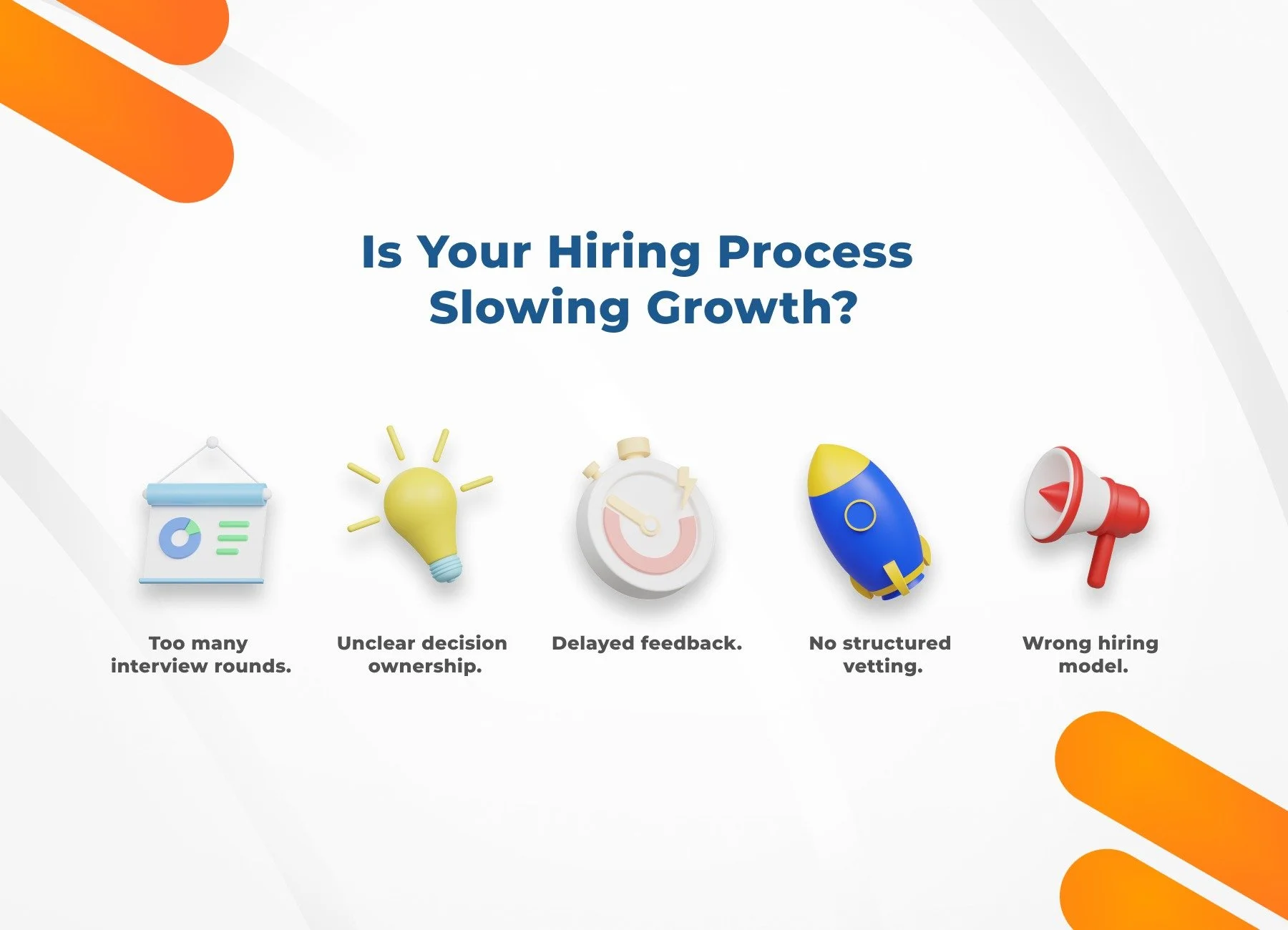
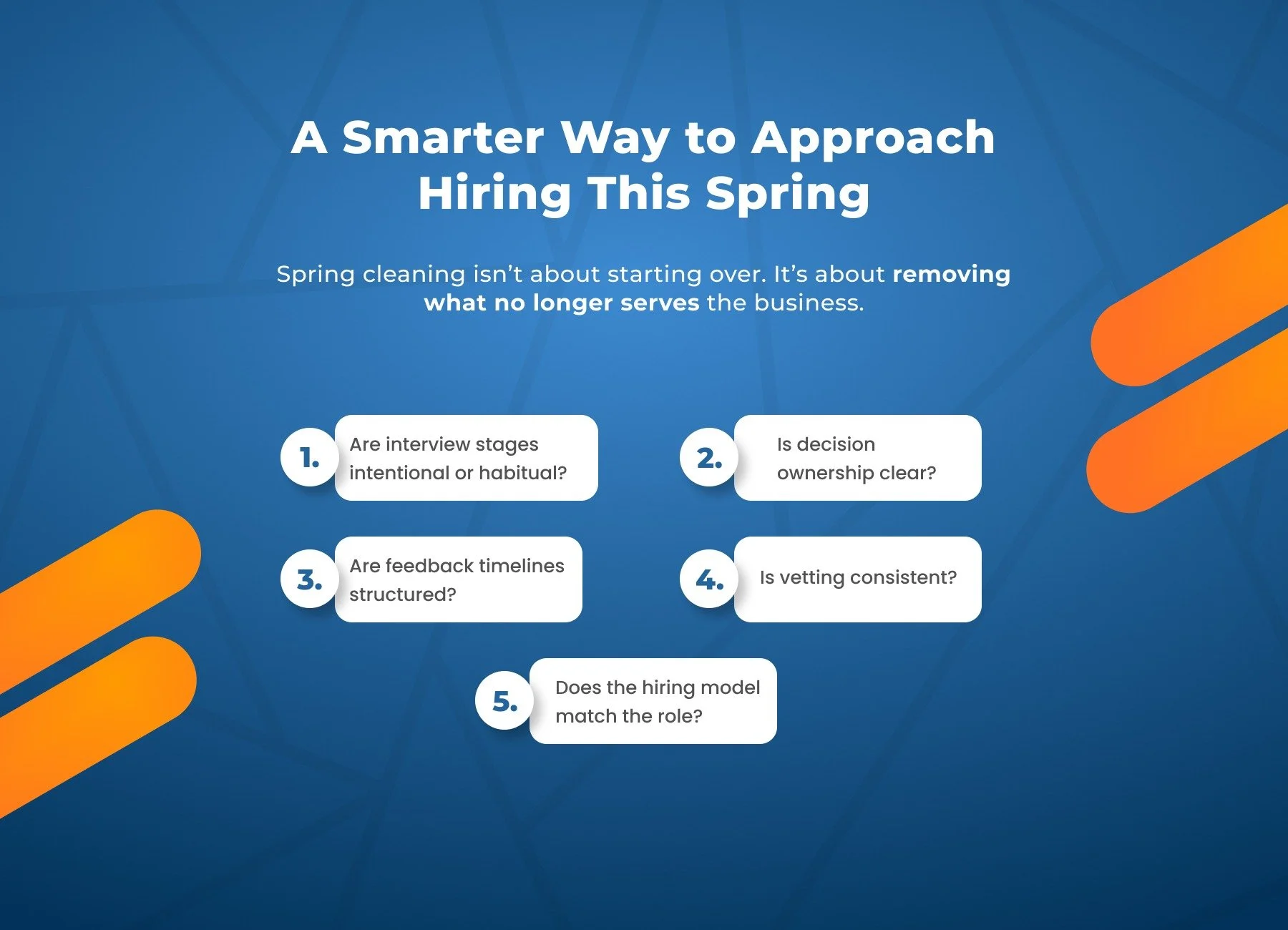
If your process feels heavier than it should, here are five signs worth examining.
1. Too Many Interview Rounds
Multiple perspectives can improve hiring decisions. But when candidates go through four, five, or six rounds, often repeating similar conversations, the process becomes inefficient.
Excessive interview stages often signal:
Unclear role expectations.
Lack of decision ownership.
Low internal alignment.
A streamlined interview structure with defined evaluation criteria produces better outcomes than a lengthy, repetitive process.
2. Unclear Decision Ownership
If no one clearly owns the final hiring decision, momentum suffers. Consensus-driven hiring can work, but only when roles and authority are clearly defined.
Signs of ownership confusion include:
Last-minute vetoes.
Endless internal debates.
Delayed offer approvals.
Defined decision ownership shortens timelines and reduces friction without sacrificing quality.
3. Delayed Feedback Loops
In competitive markets, time is leverage. Waiting a week to provide interview feedback or schedule next steps sends the wrong signal to top candidates.
Delays often stem from:
Overloaded hiring managers.
Manual coordination.
Lack of structured timelines.
Reducing feedback delays requires intentional cadence. This is one reason many companies choose to hire top remote talent quickly, especially for operational roles where speed matters.
4. No Structured Vetting Criteria
Hiring “by instinct” may feel efficient, but it often produces inconsistent results. Without structured evaluation criteria, interviews become subjective and comparison becomes difficult.
Common signs of unstructured vetting include:
No scorecards.
Overreliance on resumes.
Shifting evaluation standards between candidates.
Understanding the value professional recruiters bring beyond resumes can help organizations strengthen vetting standards and make more confident decisions.
5. The Hiring Model Doesn’t Match the Role
Not every role requires the same hiring approach. Yet many companies apply one model across all positions.
Examples of mismatch include:
Using a full recruiting search for short-term operational roles.
Attempting DIY hiring for senior or specialized positions.
Expecting internal HR teams to manage international payroll complexity.
Frequently Asked Questions
What makes a hiring process inefficient?
An inefficient hiring process is typically marked by unclear ownership, excessive interview rounds, delayed feedback, and inconsistent evaluation standards.
How many interview rounds are too many?
While it depends on role complexity, most positions can be evaluated effectively in two to three structured stages.
How can companies reduce hiring delays?
Clarifying decision authority, setting feedback deadlines, and aligning the hiring model with the role are the fastest improvements.
Should companies use external support to streamline hiring?
External partners can add structure, speed, and expertise, particularly when internal capacity is limited or roles require specialized sourcing.
Clean Processes Drive Growth
An inefficient hiring process doesn’t just create inconvenience, it restricts scale. The companies growing confidently in 2026 are those that treat hiring as a strategic function, not an administrative task, often by building long-term staffing partnerships that support sustainable growth.
Whether a role requires targeted headhunting or end-to-end remote staffing support, clarity in structure makes the difference.
If your hiring process feels heavier than it should, it may be time to simplify it. Projective Staffing helps organizations refine their approach, so hiring becomes a growth driver, not a bottleneck.