
Remote Teams Don’t Fail—Leadership Models Do
If you’re searching for how to manage remote teams effectively, the answer isn’t more meetings or stricter oversight. It’s leadership design. In 2026, remote teams thrive when expectations are clear, ownership is defined, performance is measurable, and onboarding is structured from day one. When those elements are missing, geography gets blamed for problems that are actually operational. This guide outlines the leadership principles that consistently separate high-performing remote teams from those that struggle.
The Remote Debate Is the Wrong Debate
Remote work is no longer experimental. It is structural. What has changed is how companies manage distributed teams.
Leaders are increasingly focused on clarity, rhythm, and defined operating models, not location alone. The conversation has shifted from “Should we allow remote work?” to “How do we design work intentionally?”
Teams succeed when leaders prioritize people and purpose. When remote teams underperform, it is rarely because people are at home. It is usually because systems were never built to support distributed execution.
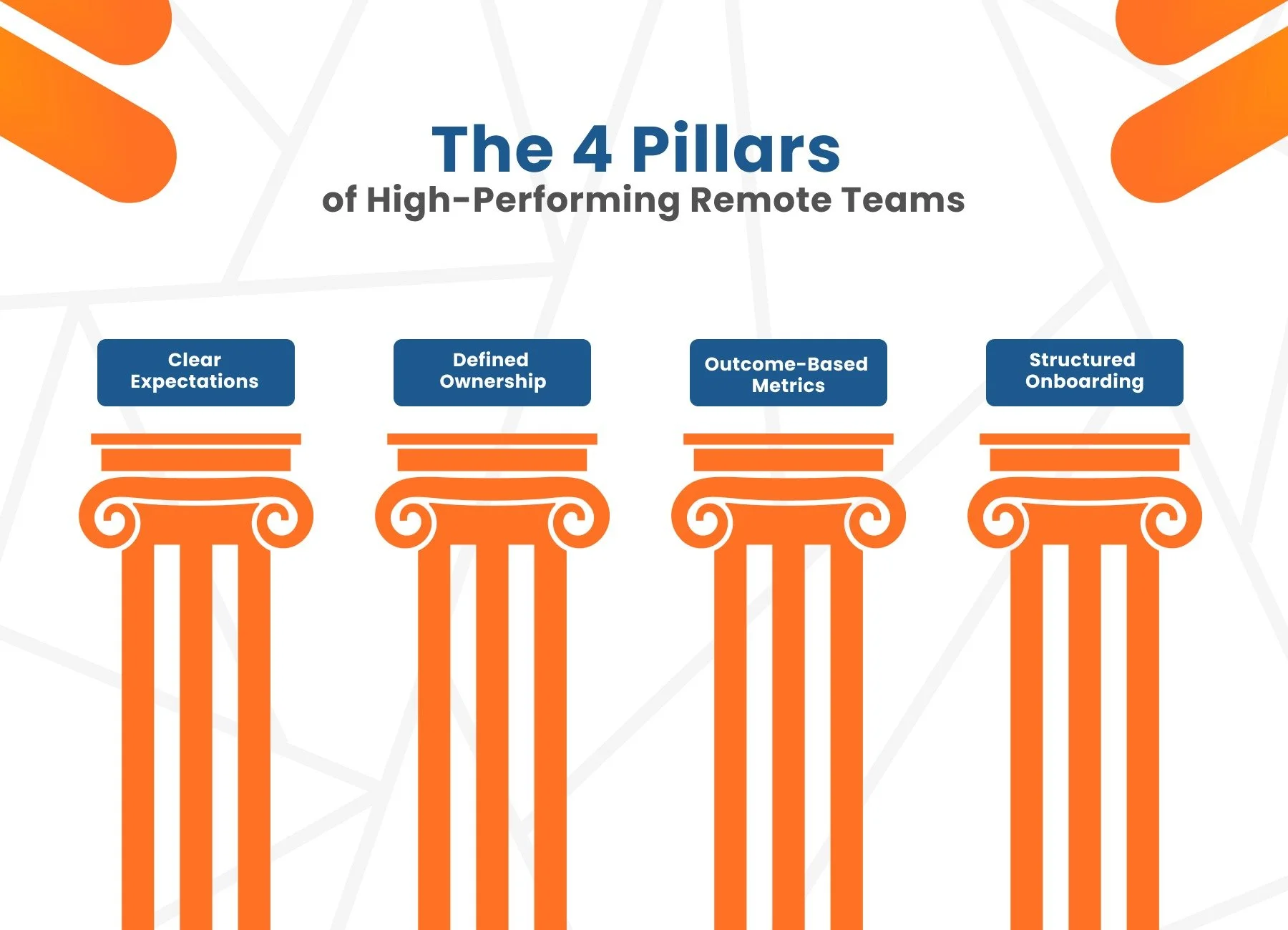
Pillar 1: Clear Expectations Drive Remote Performance
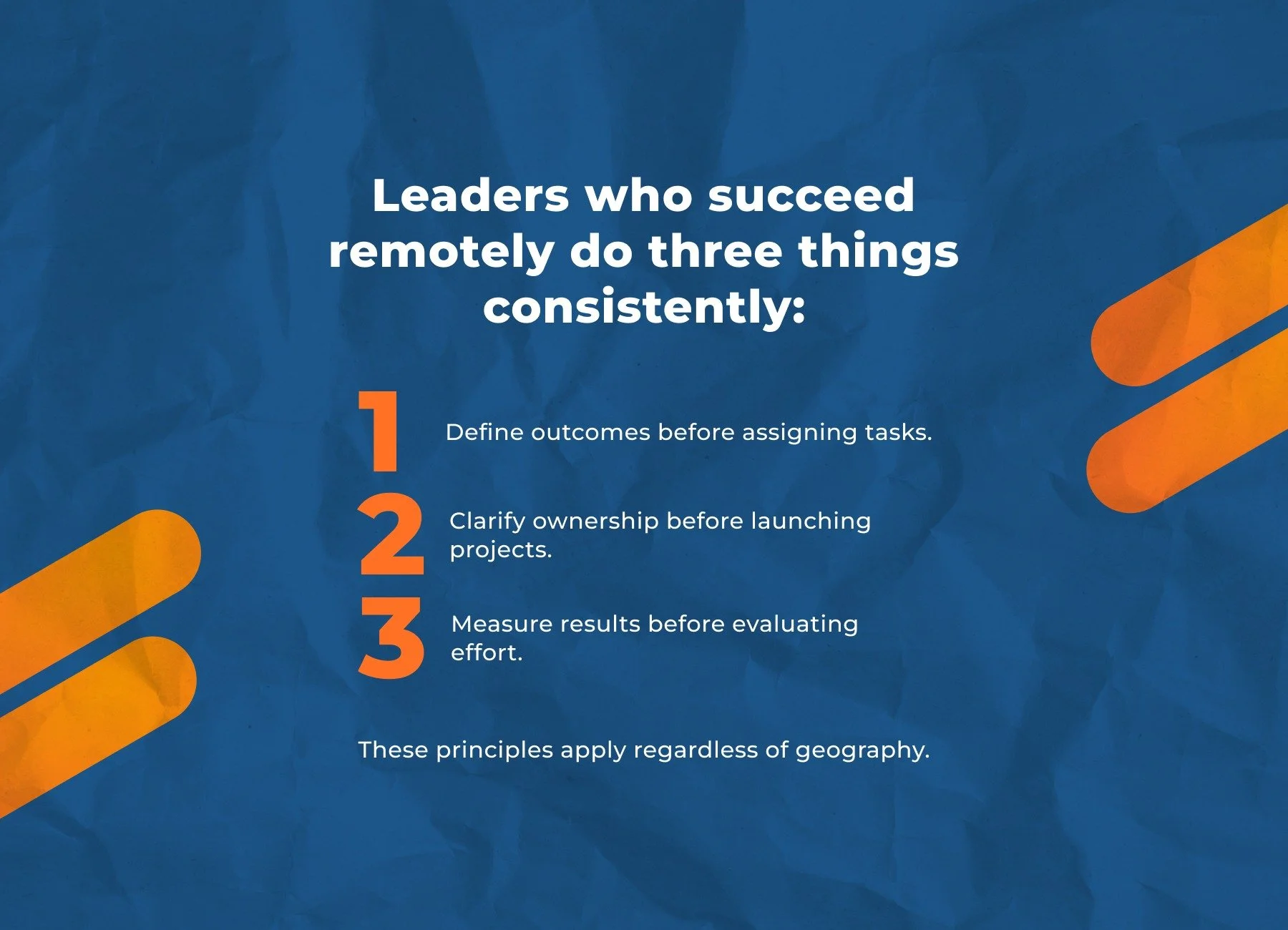
Ambiguity is amplified in remote environments. Without hallway conversations or informal check-ins, unclear expectations quickly turn into missed deliverables.
High-performing remote teams define:
Weekly and monthly outcomes.
Ownership for deliverables.
Communication norms.
Decision-making timelines.
Clarity of expectations is one of the strongest drivers of engagement and performance. When team members know what success looks like, autonomy becomes an asset rather than a risk.
Managing remote teams effectively starts with documented expectations—not assumptions.
Pillar 2: Defined Ownership Prevents Bottlenecks
Remote teams do not fail because they lack oversight. They fail when decision rights are unclear.
In distributed teams, leaders must define:
Who owns final decisions.
Where accountability sits.
When collaboration is required.
When independent execution is expected.
Without this structure, teams default to meetings. Meetings create the illusion of alignment, but often delay progress.
Clear ownership reduces friction and increases velocity, especially across time zones.
Pillar 3: Performance Metrics Must Measure Outcomes
One of the biggest mistakes in remote management is tracking activity instead of results.
Effective remote leadership focuses on:
Output-based KPIs.
Measurable project milestones.
Transparent reporting systems.
Regular cadence reviews.
HR leaders are increasingly recognizing that development and performance clarity matter more than monitoring presence. Research on the strategic decision to build or buy talent highlights how talent choices directly shape long-term competitiveness.
When metrics are clear and visible, leaders no longer need to manage through constant check-ins. Trust increases because progress is measurable.
Pillar 4: Structured Remote Onboarding Sets the Tone
Remote onboarding is not an email and a login. It is a structured integration plan.
Strong remote onboarding includes:
30-60-90 day performance milestones.
Documented workflows.
Defined communication channels.
Early feedback checkpoints.
Without structure, new team members spend their first months guessing priorities and navigating ambiguity. When onboarding is deliberate, remote professionals integrate faster and contribute sooner.
Remote Teams Reflect Leadership Systems
Remote environments magnify strengths and weaknesses in leadership design. If expectations are vague onsite, they become confusing remotely. If accountability is weak in-office, it dissolves in distributed teams.
Managing remote teams effectively is not about control. It is about operational clarity.
Frequently Asked Questions
What makes remote teams successful?
Clear expectations, defined ownership, measurable outcomes, and structured onboarding consistently predict remote team success.
How do you measure remote team performance?
Focus on output-based KPIs, milestone completion, and transparent reporting rather than hours worked.
Do remote teams require more management?
No. They require clearer systems. When structure is defined, management often becomes lighter, not heavier.
Is onboarding more important for remote teams?
Yes. Remote onboarding must be structured intentionally to replace informal learning that occurs naturally onsite.
Strong Leadership Makes Remote Teams Thrive
Remote work is not the variable that determines success. Leadership models are.
Companies that treat remote management as an operational discipline, rather than a cultural experiment, build teams that execute consistently across locations.
If your organization is scaling remote talent and wants to ensure leadership systems support performance from day one, Projective Staffing partners with companies to build remote teams designed for clarity, accountability, and long-term impact. Schedule a free consultation today.