
Remote Talent Engagement in 2026: How to Keep Distributed Teams Connected and Committed
Remote employee engagement is not about keeping people busy or creating more virtual interaction. It is about helping distributed teams stay connected, committed, and clear on what matters. In 2026, that matters more than ever because remote and hybrid work are now established parts of how many companies operate, making engagement a long-term business priority rather than a temporary concern. It also matters for employee well-being, 71% of remote workers say remote work helps them better balance their work and personal life.
Why Remote Engagement Matters More Now
When teams are distributed, disengagement can be harder to see. In an office, leaders may notice changes in energy, collaboration, or morale more quickly. In remote environments, those signals are easier to miss until they start affecting performance, communication, or retention.
That is why engagement has become a business issue, not just a culture issue. Remote teams can be highly engaged when their environment supports focus, autonomy, and better work-life balance.
What Remote Employee Engagement Actually Looks Like
Remote engagement is often misunderstood. It is not constant availability, forced social interaction, or more meetings. In practice, engaged remote teams usually have a few things in common:
They know what is expected of them.
They feel their work is visible and valued.
They are included in communication and decision-making.
They receive recognition consistently.
They understand how their work contributes to larger goals.
They have enough structure to stay aligned without being overmanaged.
Teams stay engaged when people understand their role, feel connected to outcomes, and are supported by clear rhythms.
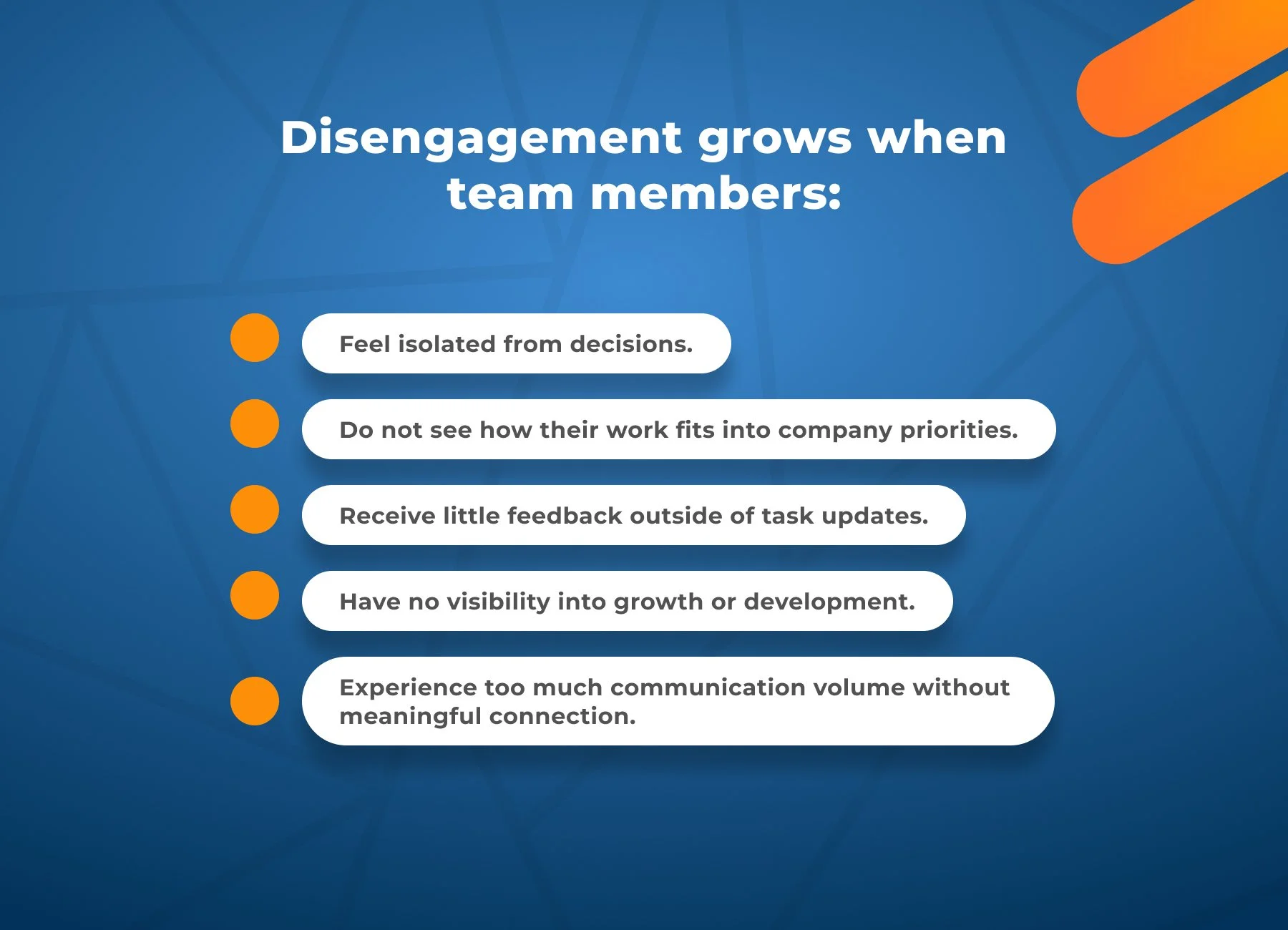
Why Remote Teams Become Disengaged
Remote disengagement usually comes from structure gaps, not from remote work itself. The most common causes include unclear expectations, weak onboarding, limited recognition, and inconsistent manager communication. Communication breakdowns, maintaining company culture, and productivity measurement are recurring challenges in remote environments.
How Companies Can Improve Remote Engagement
The strongest companies do not solve engagement with perks. They solve it with consistency.
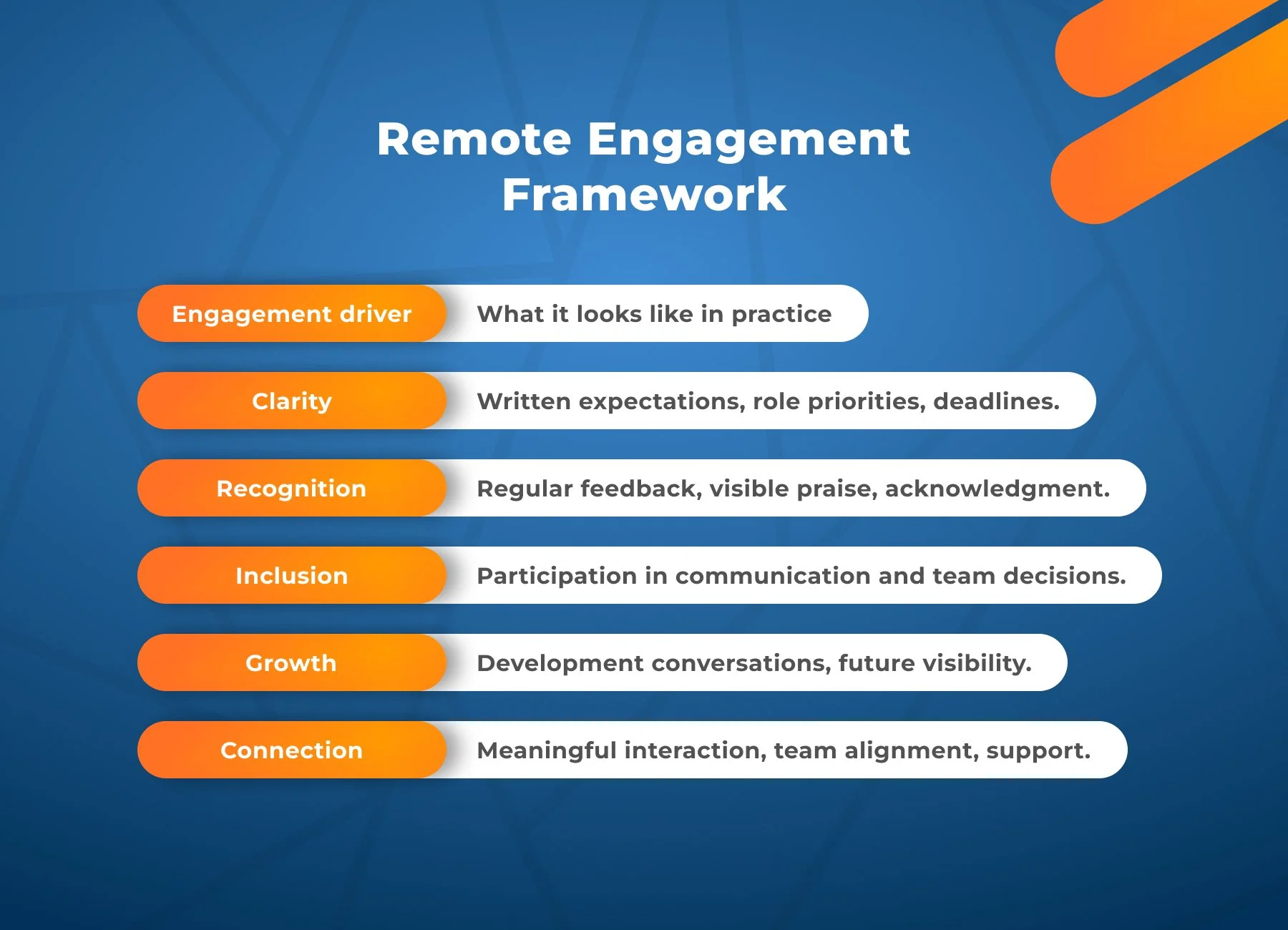
A more effective remote engagement model usually includes:
Communication rhythms that do not create overload.
Regular recognition, not just corrective feedback.
Visible goals and progress tracking.
Clear ownership and decision paths.
Stronger onboarding and early integration.
Managers who understand that engagement is part of their role.
Remote teams are more likely to stay engaged when managers create structure without adding unnecessary friction.
Why Engagement Starts Before the Hire
Remote engagement is easier to sustain when hiring and onboarding are done well from the beginning. Someone who is technically capable but poorly matched to a remote role can become disengaged quickly if communication style, autonomy, or workflow fit were never assessed early enough.
That is why engagement should not be treated as something that begins after onboarding. It often starts in the hiring process itself. Companies that think this way are more likely to prioritize role fit, communication readiness, and long-term alignment.
And once the hire is made, onboarding becomes one of the strongest engagement levers a company has. This is exactly why the role of onboarding in long-term remote productivity is so important in distributed teams.
How Projective Staffing Helps
We help companies build remote teams that are more likely to stay engaged over time because the process does not stop at finding available talent. We support organizations with remote staffing that includes sourcing, vetting, onboarding coordination, and payment, while also screening for communication fit, autonomy, and workflow readiness.
That matters because engagement is easier to maintain when the right people are placed into the right structure from the start.
Frequently Asked Questions
What is remote employee engagement?
It’s the level of connection, commitment, and clarity team members feel while working in a distributed environment.
Why do remote professionals become disengaged?
The most common reasons are unclear expectations, weak onboarding, poor communication, low recognition, and isolation from team decisions.
Can remote talent be as engaged as in-office talent?
Yes, remote workers can be highly engaged when they have the right support, autonomy, and communication structure.
What role does onboarding play in remote engagement?
A strong onboarding process helps remote hires feel clear, connected, and productive earlier, which makes long-term engagement easier to sustain.
Build a More Engaged Remote Team
If remote engagement is becoming harder to maintain, the issue may not be remote work itself. It may be how the team is structured, supported, and hired. Projective Staffing helps companies build remote teams with stronger alignment, smoother onboarding, and the right fit for long-term engagement.
If your team is growing and you want remote professionals who can contribute with clarity and commitment, we help you build that foundation. Schedule a consultation.