
How to Monitor a Remote Workforce Without Micromanaging
Monitoring a remote workforce should not feel like surveillance. If your team feels watched, distrusted, or measured by activity instead of outcomes, the system is working against performance, not for it. The goal is not to track every click. It is to understand progress, spot blockers early, and help people do strong work consistently. In 2026, the most effective remote teams are usually managed through clarity, visibility, and trust, not constant oversight. Research highlighted by Harvard Business Review shows that some monitoring approaches can improve openness, collaboration, and innovation, while others push employees to disengage and hold back ideas.
Why Micromanagement Backfires in Remote Teams
The biggest mistake leaders make when they try to monitor remote work is confusing visibility with control. More check-ins, more status requests, and more activity tracking may create the feeling of oversight, but they often reduce autonomy and increase friction.
That is especially important in distributed teams, where trust and structure matter more than proximity. If a remote team is struggling, the problem is usually not that people are out of sight. It is that expectations, ownership, and reporting rhythms were never designed clearly enough in the first place. That is why the principle behind Remote Teams Don’t Fail—Leadership Models Do matters so much when designing any monitoring system.
What to Track Instead of “Presence”
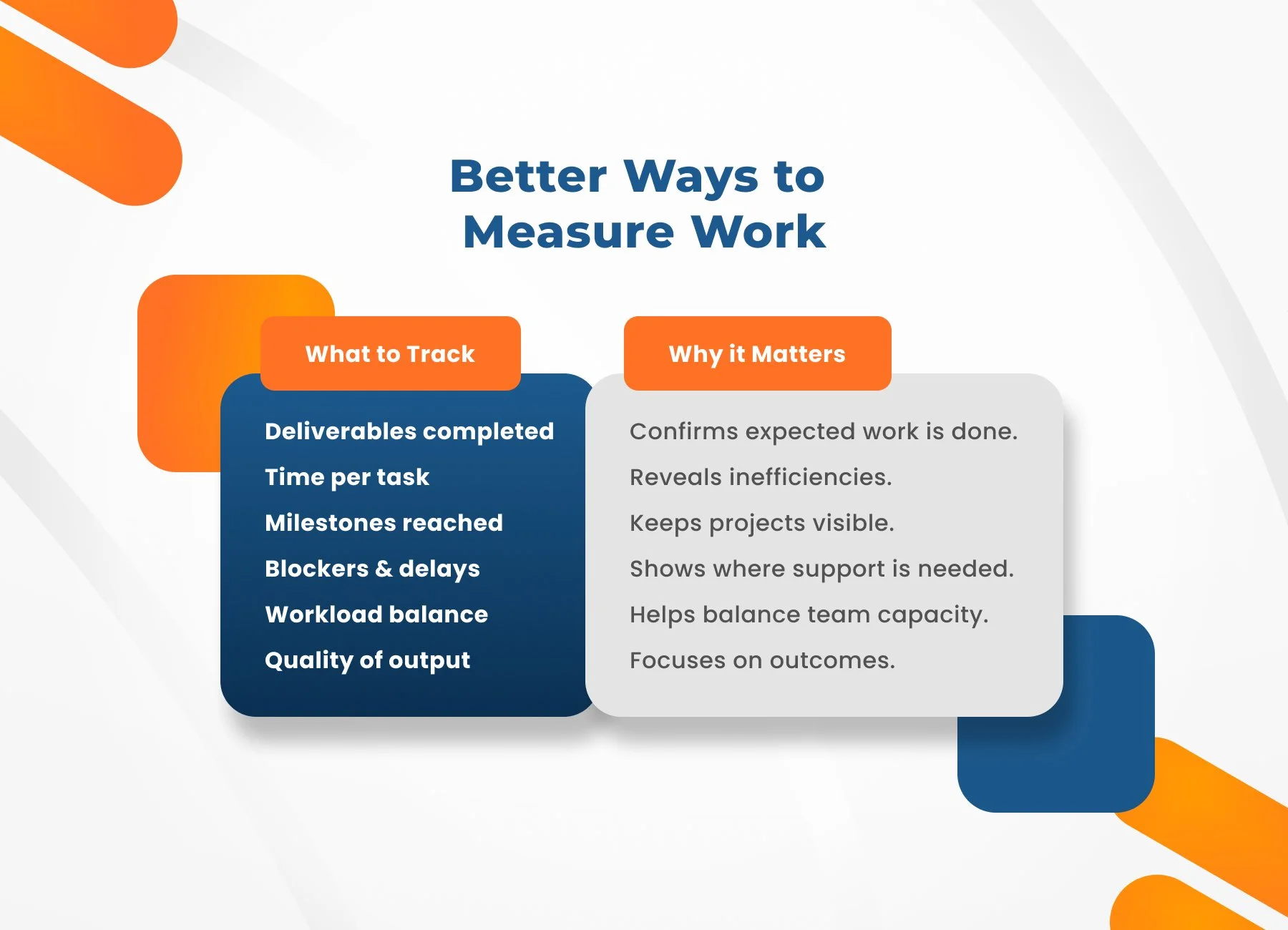
A better approach is to track work in ways that support performance and reduce ambiguity. That means measuring progress, not just activity.
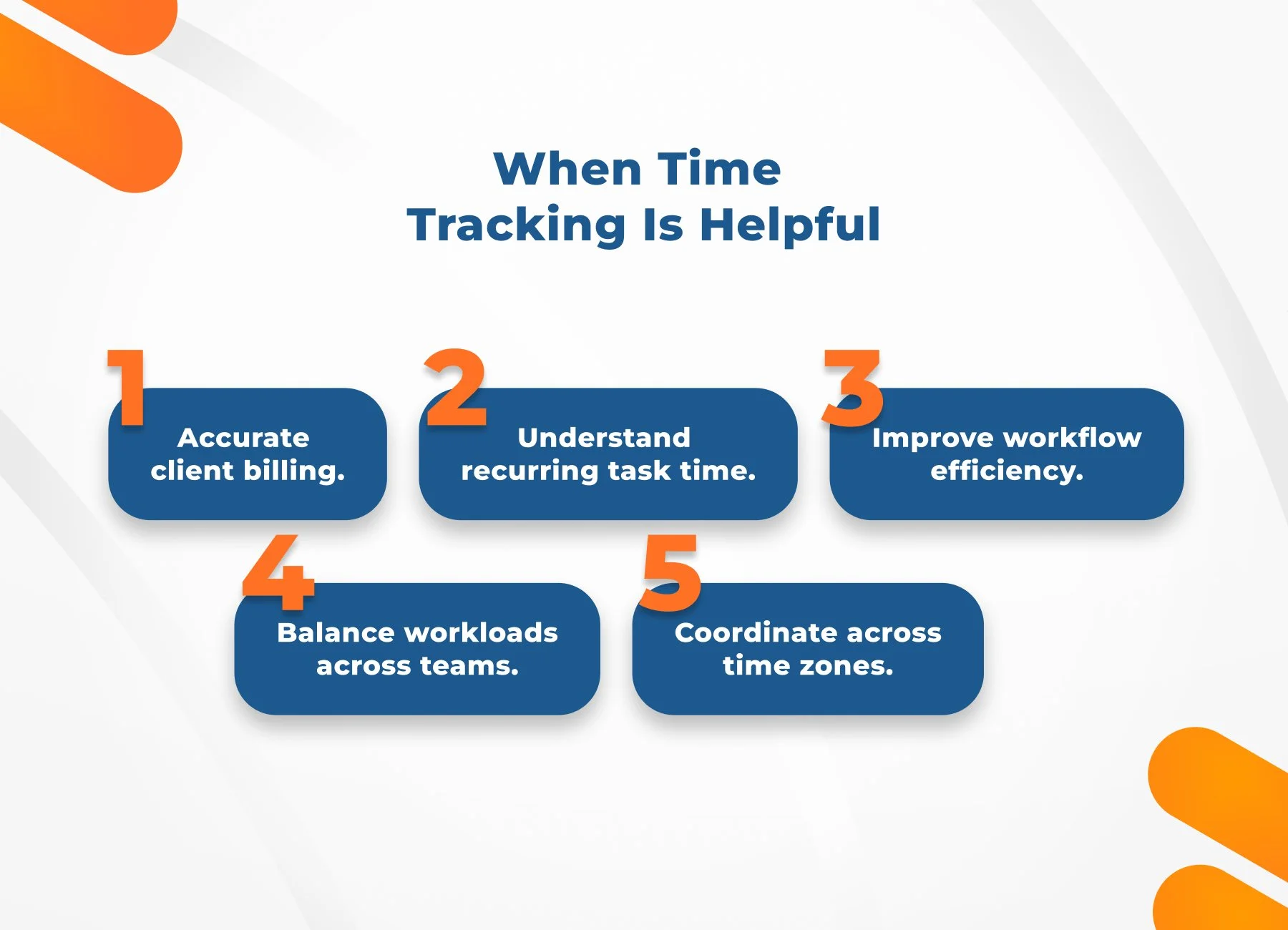
Tracking hours, task progress, and productivity patterns can help identify bottlenecks and improve efficiency. Combined with clear goal-setting, regular check-ins, and project management tools, these systems create better visibility than relying on guesswork alone.
A Better Way to Keep Tabs on Remote Work
If you want to monitor a remote workforce without creating distrust, the system needs to answer a few simple questions:
What is each person responsible for this week?
What should be finished by the next checkpoint?
What is on track, delayed, or blocked?
Where is support needed?
How long are key tasks or workflows actually taking?
Those questions create a much healthier management rhythm than “Are they online?” or “How active were they today?”
In practice, that usually looks like:
Weekly priorities set in writing.
Visible project milestones.
Short async updates on progress and blockers.
Time tracking only where it improves planning or client delivery.
Regular review of workload and completion patterns.
That approach makes performance easier to see without making people feel monitored for the sake of monitoring.
Track Progress, Not People
This is the mindset shift that matters most.
When managers monitor people, the focus tends to drift toward behavior: online status, keyboard activity, response speed, and time at a desk. When managers monitor progress, the focus stays on outcomes: work completed, quality delivered, blockers resolved, and priorities moved forward.
That distinction affects engagement. A team that feels trusted is usually more willing to communicate early, ask better questions, and surface risks before they turn into missed deadlines. A team that feels watched will often optimize for appearances instead of results.
Why Hiring and Onboarding Matter Here Too
Monitoring gets easier when the right people are hired into the right structure. Remote professionals who are clear communicators, comfortable with autonomy, and aligned with the team’s workflow usually need less oversight and produce cleaner visibility naturally.
These are the same patterns highlighted in What High-Performing Remote Teams Have in Common: strong remote performance is built on clarity, alignment, and role fit—not tighter control.
Frequently Asked Questions
How should you monitor remote workers?
The most effective way is to track progress, deadlines, blockers, and workload.
Is time tracking a good idea for remote teams?
It can be, if it helps improve planning, billing, or workflow efficiency. It becomes a problem when it is used as a substitute for trust.
What is the best way to keep tabs on a remote workforce?
Use clear goals, regular but lightweight check-ins, and shared visibility into progress.
Better Monitoring Starts With Better Systems
Projective Staffing helps companies build remote teams with the structure, accountability, and support needed to perform at a high level. If you’re scaling a distributed team and want systems that improve visibility without creating friction, we’re here to help. Schedule a consultation.