
Internal mobility vs. external hiring isn't a question of loyalty or ambition. It's a question of fit between the gap and the people available to close it. Promote or reassign from within when the skills, readiness, and runway already exist. Search externally when the capability isn't in the building, or the team needs it faster than it can grow it. Most companies default to one path out of habit, and the habit is usually where the mistake starts.
What Internal Moves Do Well
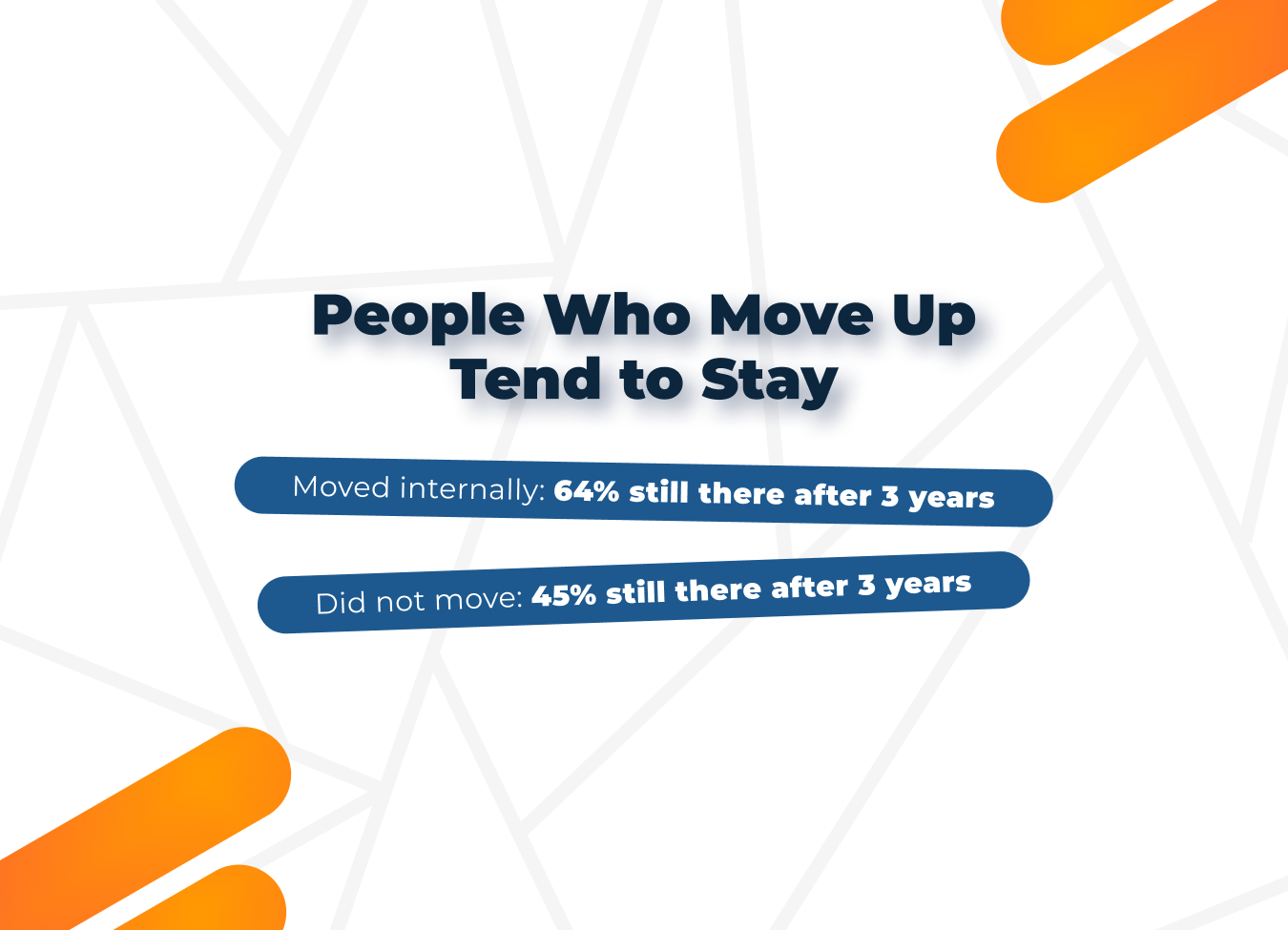
The retention case is strong. LinkedIn's Global Talent Trends data found that employees who had moved internally, through a promotion or a lateral change, had a 64% chance of still being with the company after three years, compared with 45% for those who hadn't moved.
Ramp-up favors internal candidates too. A widely cited Wharton study of external hiring versus internal mobility found that external hires received significantly lower performance evaluations during their first two years than employees promoted into similar jobs, and they exited at higher rates, despite being paid substantially more. The research drew on personnel records from a single investment bank, so it's a strong signal rather than a universal rule.
Where Internal Moves Fall Short
Promoting from within is not automatically the safer choice. SHRM's reporting on weighing internal and external hires notes that organizations usually look outside because they need specific skills that aren't available internally. When that's the case, a promotion becomes a stretch the person has to make on the job, and the team absorbs the learning curve.
Lean teams face two further risks. The first is mistaking the easy choice for the right one: the dependable person moves up because they're available, not because the role fits. The second is the vacancy left behind. Moving your strongest contributor solves one gap and opens another, often in a seat that was already carrying real work.
Four Questions That Decide It
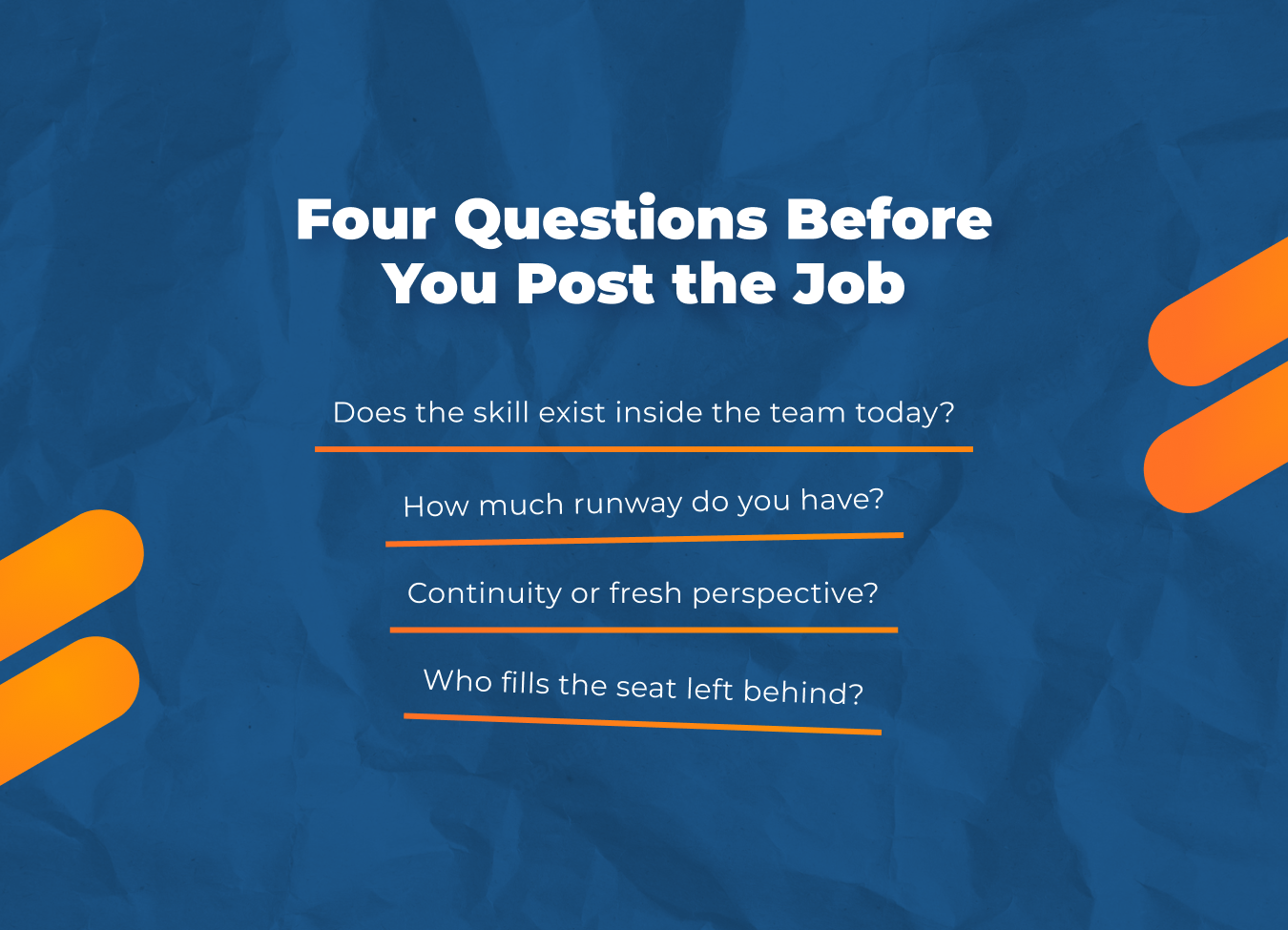
This sits one level below the question of whether to develop, hire, or borrow capability, which we cover in our guide to the build, buy, or borrow talent framework. Once a specific seat is open, four questions usually settle it:
Does the skill exist inside the team today? If a candidate is within a few months of ready, lean internal. If the gap is a year or more of development, lean external.
How much runway do you have? Short runways favor proven capability, wherever it comes from. Longer ones leave room to develop someone.
Does the role need continuity or a fresh perspective? Roles tied to institutional knowledge favor internal candidates. Roles meant to change how the team works often favor an outsider.
What happens to the seat left behind? If an internal move creates a vacancy you can't cover, the decision isn't really internal or external. It's both.
Don't Skip the Backfill
Every internal move creates a second hiring decision. The promoted person's old seat still needs a long-term owner, and filling it under pressure is how teams end up with a rushed hire.
This is where a recruiting partner fits naturally. For specialized, leadership, or permanent roles, Projective Staffing's headhunting service recruits qualified candidates for onsite or remote positions, and the client hires them directly. For support and operations work, pre-vetted remote professionals can be presented in 3–5 days and built into the team for the long term.
When Going External Is the Right Call
Outside hiring earns its place when the capability doesn't exist internally or the team needs a different perspective. External hires often arrive with more education and experience, which helps explain the higher pay. The tradeoff is a weaker read on how they'll perform, which makes structured vetting essential.
The strongest candidates also aren't always applying, as we explain in our piece on understanding passive candidates. Once someone is hired, a deliberate plan gives them a faster start, and our guide to remote onboarding from job offer to day one shows what that looks like.
Frequently Asked Questions
Is it better to promote from within or hire externally?
Neither is better in every case. Promote internally when the skills and readiness exist, and hire externally when the capability is missing or the team needs a new perspective.
What are the risks of promoting from within?
The main risks are moving someone into a role they aren't ready for, choosing the easy option over the right fit, and leaving a vacancy in the seat they vacate.
Why do external hires often take longer to perform at full capacity?
They're still learning how the company works. Wharton research found lower performance reviews for external hires in their first two years.
How can a staffing partner help with internal moves?
By filling the backfill seat with a vetted, long-term hire, through headhunting or remote staffing, so a promotion doesn't leave a gap behind it.
Fill the Role the Work Actually Needs
Whether you're promoting from within or searching outside, the decision is only as strong as the support behind it. Projective Staffing helps growing companies fill the seat that opens up with vetted, long-term talent, through headhunting for direct hires and remote professionals who join the team for the long haul. Get in touch to talk through your next move.