
5 Best Practices to Build a High‑Performing Legal Team in 2026
Today’s in‑house legal team must do more than manage risk. Legal departments are being asked to scale, align with business strategy, deliver value, and adapt to evolving work models. For HR, People Ops, and business leaders building or expanding legal teams, especially remotely or globally, the stakes are high. Here are seven best practices grounded in current research that will set your legal team up for success in 2026.
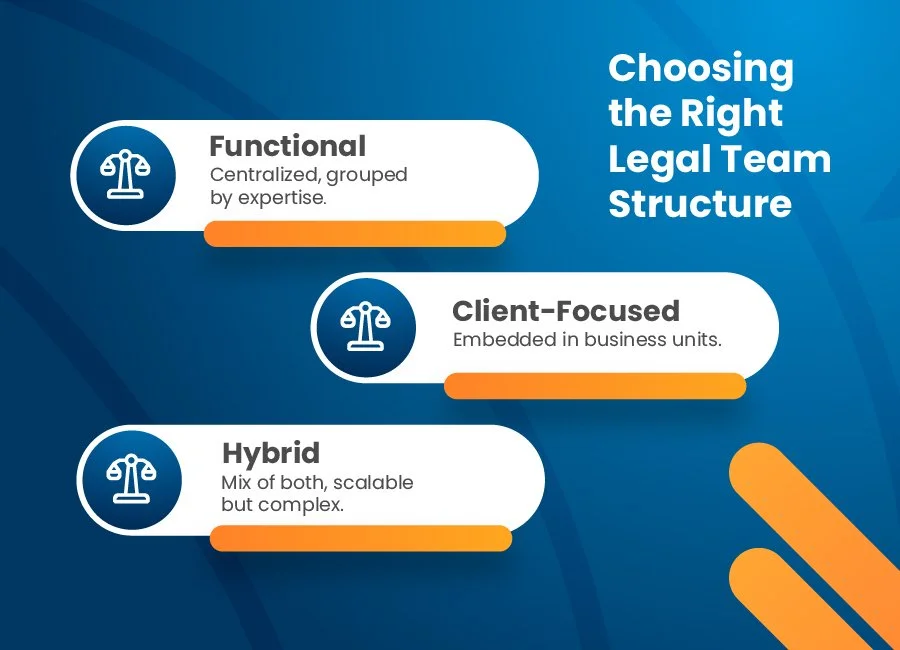
1. Define the Right Structure for Your Legal Department
Legal departments typically follow one of three structural models:
Functional: Lawyers are grouped by expertise, like IP, contracts, or litigation, creating a centralized team known for consistent, efficient service.
Client-Focused: Legal professionals embed directly into business units or regions, building strong relationships and deeper operational insight.
Hybrid: Combines both models for flexibility and scalability, though it requires tighter coordination to succeed.
Best practice
Choose a structure aligned with your business size, strategic priorities, geographic spread, and talent mix, and revisit it annually as things change.
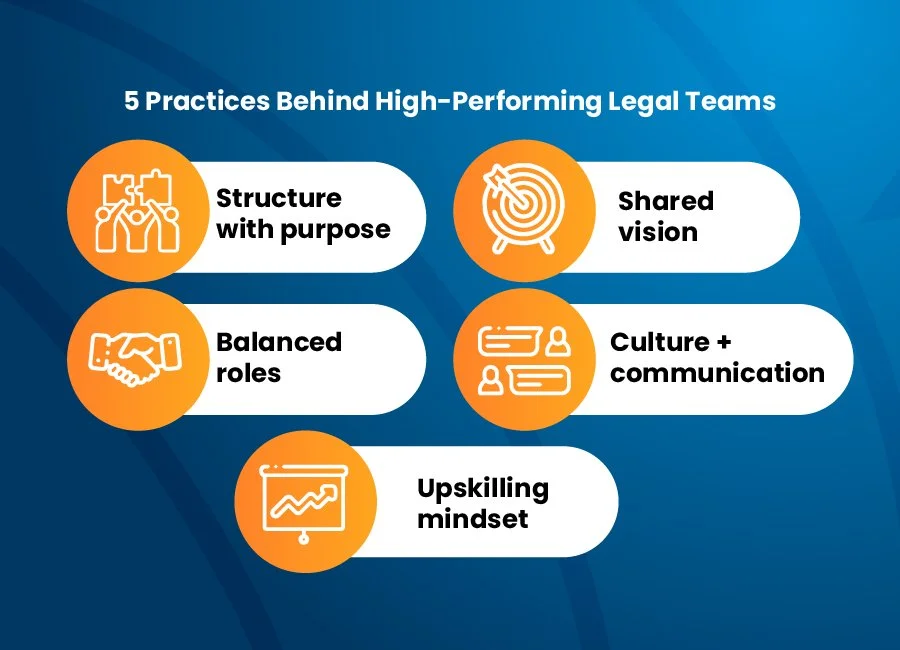
2. Establish a Shared Vision, Culture & Mission
High-performing legal teams operate with a shared sense of purpose. Every member needs to understand the team’s goals and what success means. When objectives are clear and collective, teams naturally stay aligned and move forward with focus and cohesion.
Best practice
Invest time in clarifying your legal team’s mission, embedding values, and building a culture of trust, communication, and development.
3. Invest in Leadership, Roles & Talent Mix
Leadership in the legal function is changing. High‑performing teams emphasise one‑on‑one engagement, diverse talent and role clarity. Building strong connections with colleagues is key to creating and sustaining a high-performing team.
Best practice
Define clear roles (generalist vs specialist), promote leadership development, and build a talent mix that covers legal, operational and strategic skills.
4. Promote Communication, Engagement & Well‑being
A team that communicates well and feels valued performs better. High‑performing legal teams emphasise open communication, trust and career pathing. A healthy legal culture starts with leadership modeling transparency and emotional intelligence, and embedding retention into your recruitment process can help sustain this culture over the long term.
Best practice
Facilitate regular check‑ins, build cross‑functional relationships, support mental health and make sure remote or distributed team members feel included.
5. Continuous Learning, Upskilling & Agility
Legal teams must constantly adapt to regulatory changes, new technologies, and evolving risk environments. That means hiring for curiosity and resilience, not just credentials. These are the traits of high‑performing remote teams, and they’re just as valuable in legal environments, especially when legal teams are increasingly expected to act as strategic business partners.
Best practice
Prioritise skills‑based hiring, cross‑training, agile role definitions and learning programs. The best legal departments anticipate change rather than just react.
Why Companies Partner with Projective Staffing to Build Legal Teams
Building a legal team isn’t just about filling roles, it’s about finding the right people who can navigate risk, support growth, and align with your business model. At Projective Staffing, we specialize in helping companies scale remote and global legal teams that are cost-effective, compliant, and team-fit from day one.
We’re more than a staffing firm, we’re a strategic partner in building the legal function you need for 2026 and beyond.
FAQ: Common Questions for Legal Team & HR Leaders
How should I structure my legal team for scale?
Start with your business needs (services, geographies, complexity) and choose a model, functional, client‑focused or hybrid, that supports those needs.
What skills matter most when hiring legal professionals in 2026?
Beyond legal expertise: clear role definitions, business acumen, technology comfort, communication, and adaptability.
How do you build and sustain legal team culture?
By aligning mission, values, regular communication, career development and making sure remote or distributed team members feel included and supported.
Build a Legal Team Ready for 2026
The legal department of the future will be agile, digitally fluent, integrated with business strategy and grounded in strong culture. If you’re looking to scale your legal team, onsite or remotely, focusing on structure, talent, culture and technology will set you apart.
Let us help you expand your legal team globally, align operations and build a function that delivers more than compliance. Schedule a free consultation.