
Hiring before the new year comes down to arithmetic. The median nonexecutive search takes 39 days to fill, and most employed candidates need to give notice before they start. Count back from the first week of January and the search has to open in mid-November. Open it in January instead, and the seat is typically empty until late winter.
The Arithmetic of a January Start
SHRM's 2026 recruiting benchmarking, based on data from more than 4,600 organizations, puts the median time to fill a nonexecutive role at 39 calendar days, counted from opening the requisition to an accepted offer.
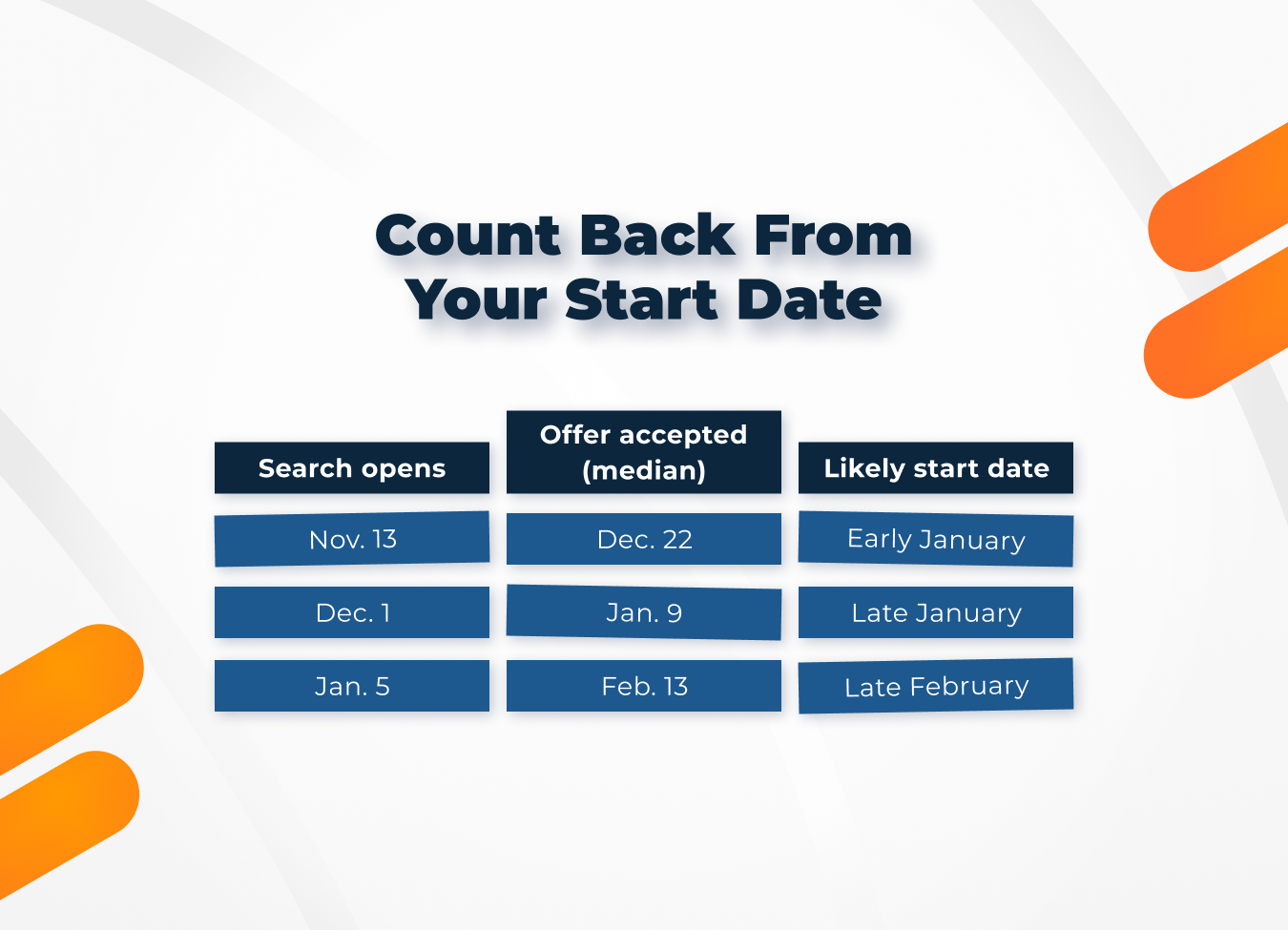
A median means half of searches run longer, and specialized roles often do. A January kickoff doesn't just delay the start by a few weeks. It can push a seat's first productive month into Q2 planning.
What the January Surge Does and Doesn't Mean
January is not closed for hiring, and the surge in candidate activity is real.Job searches were up to 31% higher in January 2026 than in early December 2025, a pattern it describes as annual: workers pause during the holidays, then return in force. Job postings, by contrast, showed little movement.
22% more applications started in January than in a typical month, while employers were slower to post new openings. Its conclusion was that employers should prepare their openings at the end of the year so they're ready when the surge arrives.
That's the practical point. The surge rewards companies that are already prepared, with the role defined, interviewers aligned, and a process in motion. It doesn't reward a company that starts scoping a job on January 5.
What to Do in November and December
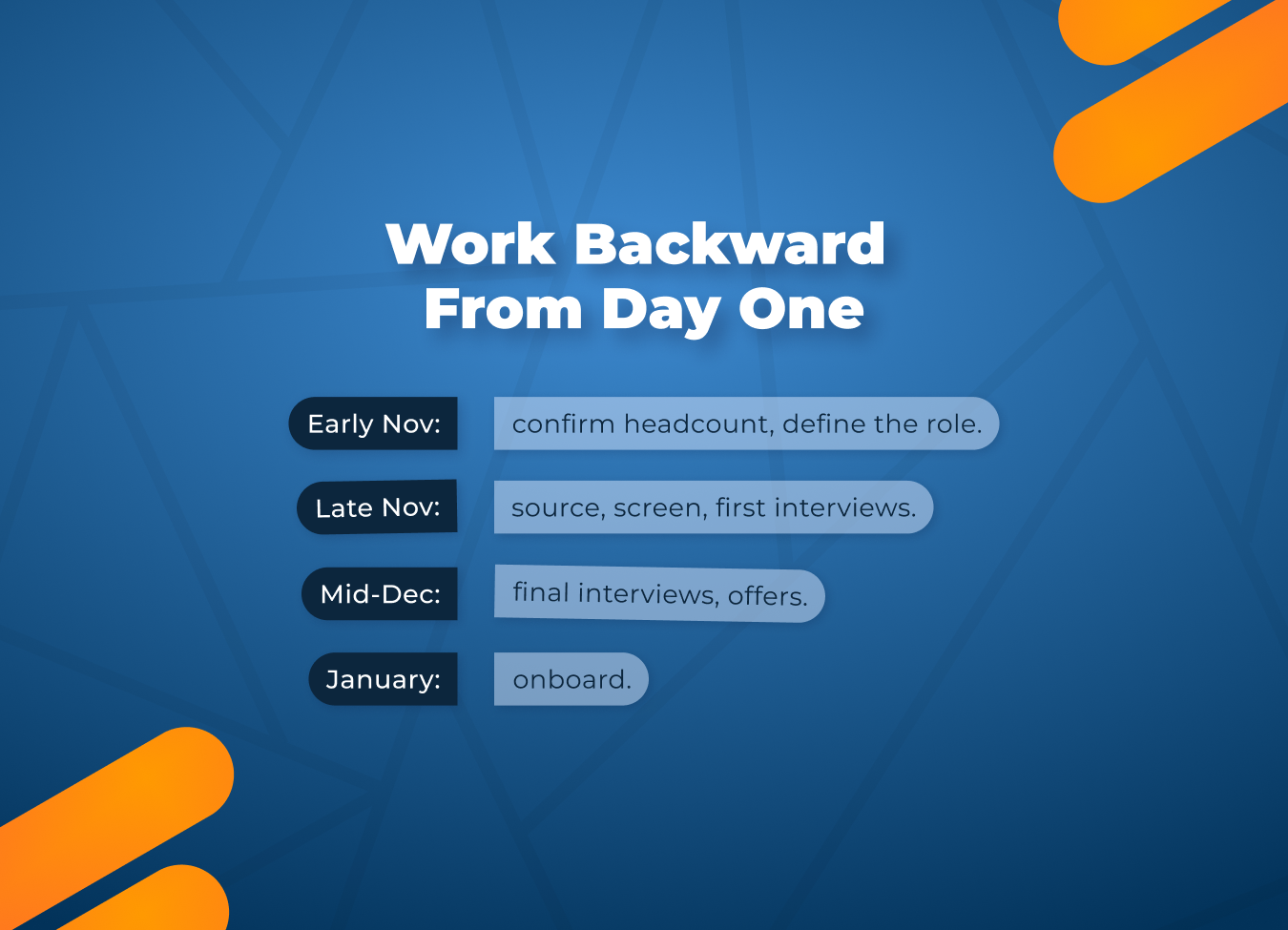
Work backward from the start date you want:
Early to mid-November: Confirm headcount and define what the role should accomplish in its first year. For companies deciding which seats to add first, our playbook on how startups can scale with remote teams is a useful companion.
Late November to early December: Source and screen candidates, and hold first interviews before holiday schedules thin out.
Mid-December: Complete final interviews, extend offers, and confirm start dates.
January: Onboard, with the first weeks already planned. Our piece on the role of onboarding in long-term remote productivity covers what a strong start looks like.
Account for Holiday Friction
The holidays slow some steps, so build in buffer. Block interview time with decision-makers in advance, and decide who can approve an offer while leaders are traveling. The work that doesn't depend on candidate volume, like scoping the role, sourcing, and screening, can be done in November while calendars are still full.
Where Remote Staffing and Headhunting Fit
Different roles need different lead times. Projective Staffing supports the full remote staffing process, including sourcing, vetting, onboarding coordination, payment, and ongoing support, and can deliver pre-vetted remote professionals in 3–5 days. That keeps a January start realistic even if the search begins in December, and these are long-term additions to the team.
Leadership, specialized, and permanent roles tend to need the earliest start. Projective's headhunting service recruits for onsite and remote positions, and the client hires the candidate directly.
Frequently Asked Questions
When should I start hiring for a January start date?
Mid-November is a reasonable target for a typical nonexecutive role, based on a 39-day median time to fill and a two-week notice period. Specialized roles may need more time.
Is it a bad idea to hire during the holidays?
Not necessarily. Schedules are tighter, so plan buffer, but scoping, sourcing, and screening can be completed before the holiday slowdown.
Does a January search still work?
Yes. Candidate activity rises in January, but a search that opens then typically produces a start date in late winter.
How can remote staffing help with year-end timelines?
Pre-vetted remote professionals can be presented in 3–5 days, so a December search can still support a January start.
Start the Year With the Right People in Seat
A new year is easier to plan when the key seats are already filled. Projective Staffing helps growing companies hire for the long term, through pre-vetted remote professionals and direct-hire headhunting. Get in touch to map your timeline before the calendar tightens.