
Remote hiring gives growing companies access to talent they can't reach locally, and Latin America is one of the strongest places to find it. Remote work maturity decides how much value a company gets from that access. It's how reliably a company runs when its people aren't in the same room: processes are written down, communication follows clear norms, and managers lead by outcomes. This nine-statement self-assessment shows where you stand before you commit to 2027 remote hiring.
Why Remote Hiring Is Worth Getting Ready For
For US companies, Latin America adds practical advantages. Much of the region works in time zones that overlap heavily with US business hours, so real-time collaboration stays easy. Many candidates are also bilingual, which suits client-facing and support roles. See our guide to hiring top bilingual remote talent.
Most of the remote professionals Projective Staffing works with are based in Latin America, and the strategic benefits of hiring in Latin America go beyond cost. The assessment below helps you capture them.
How to Score Yourself
For each statement, give 2 points for "yes, consistently," 1 for "partly," and 0 for "no." The test only helps if the answers are honest.
Part 1: Documentation
Distributed work depends on writing things down. GitLab's all-remote guide puts written knowledge ahead of verbal explanations and written processes ahead of on-the-job training, because a colleague in another location can't simply walk over and ask.
Recurring processes are written down and findable without asking a specific person.
Important decisions are recorded with the reasoning behind them.
A new hire could complete a first-week task using written material alone.
Part 2: Communication Norms
Norms replace assumptions. Atlassian's guidance on team communication norms notes that distributed teams feel communication friction more sharply when they work across time zones, and it recommends agreeing on expectations for availability and working hours.
Expected response times are defined by channel, such as chat, email, and urgent requests.
Meetings have a stated purpose and a written outcome, so absent colleagues can catch up.
Working hours and overlap windows are defined, so no one is expected to be always on.
Overlap is a strength of hiring in Latin America, where schedules line up closely with US hours, so norms can focus on response times and handoffs rather than bridging a large gap.
Part 3: Management Habits
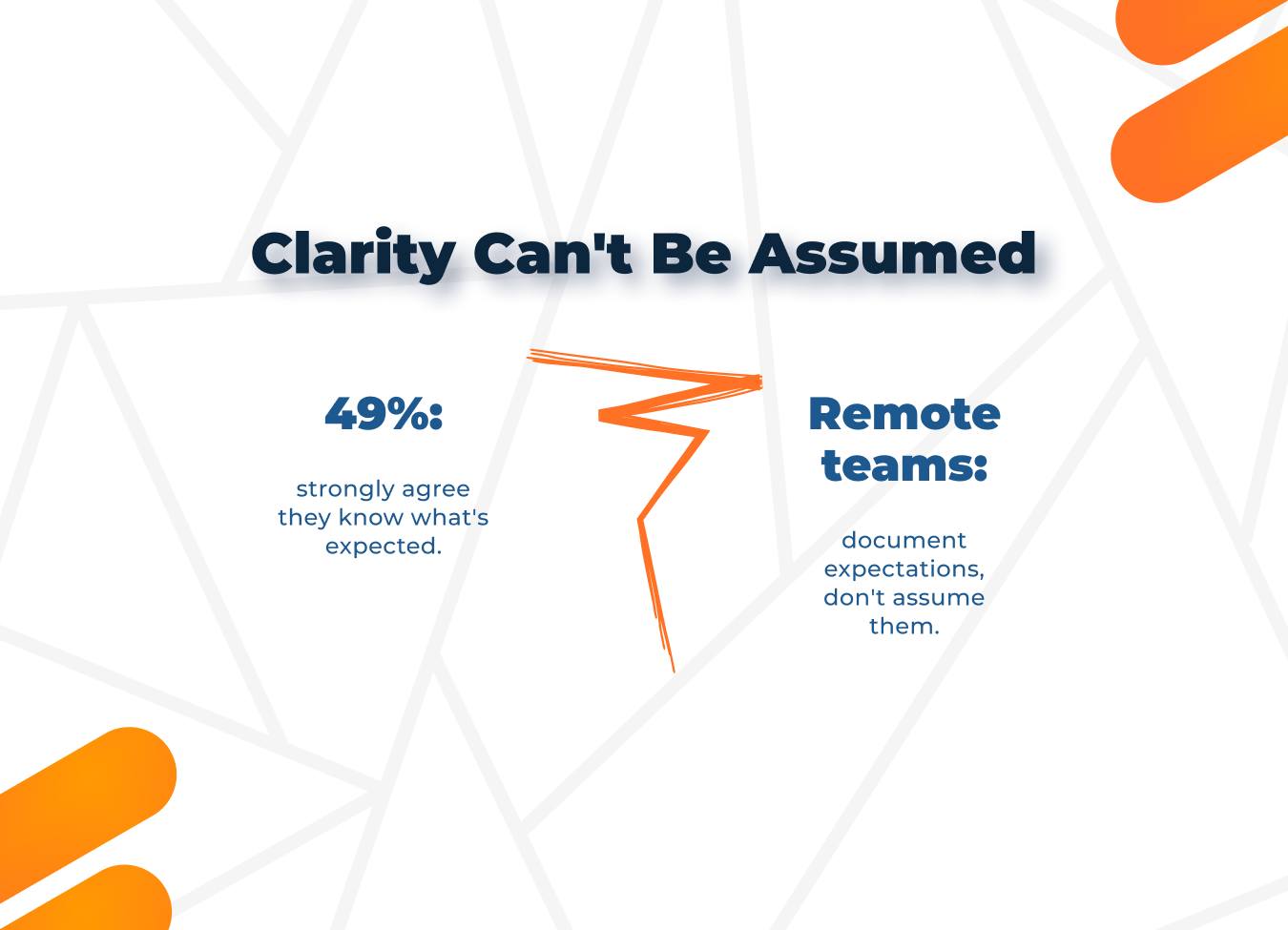
Gallup's research on hybrid and remote teams points to management effectiveness and clear expectations as central to strong performance, and finds that clarity of expectations has declined faster for hybrid and remote employees. The baseline is thin: in the first half of 2026, only 49% of employees strongly agreed they know what is expected of them.
Every role has defined outcomes, measured by results rather than hours online.
Managers hold one-on-ones on a regular, fixed cadence.
Feedback and recognition reach remote team members as reliably as onsite ones.
What Your Score Means
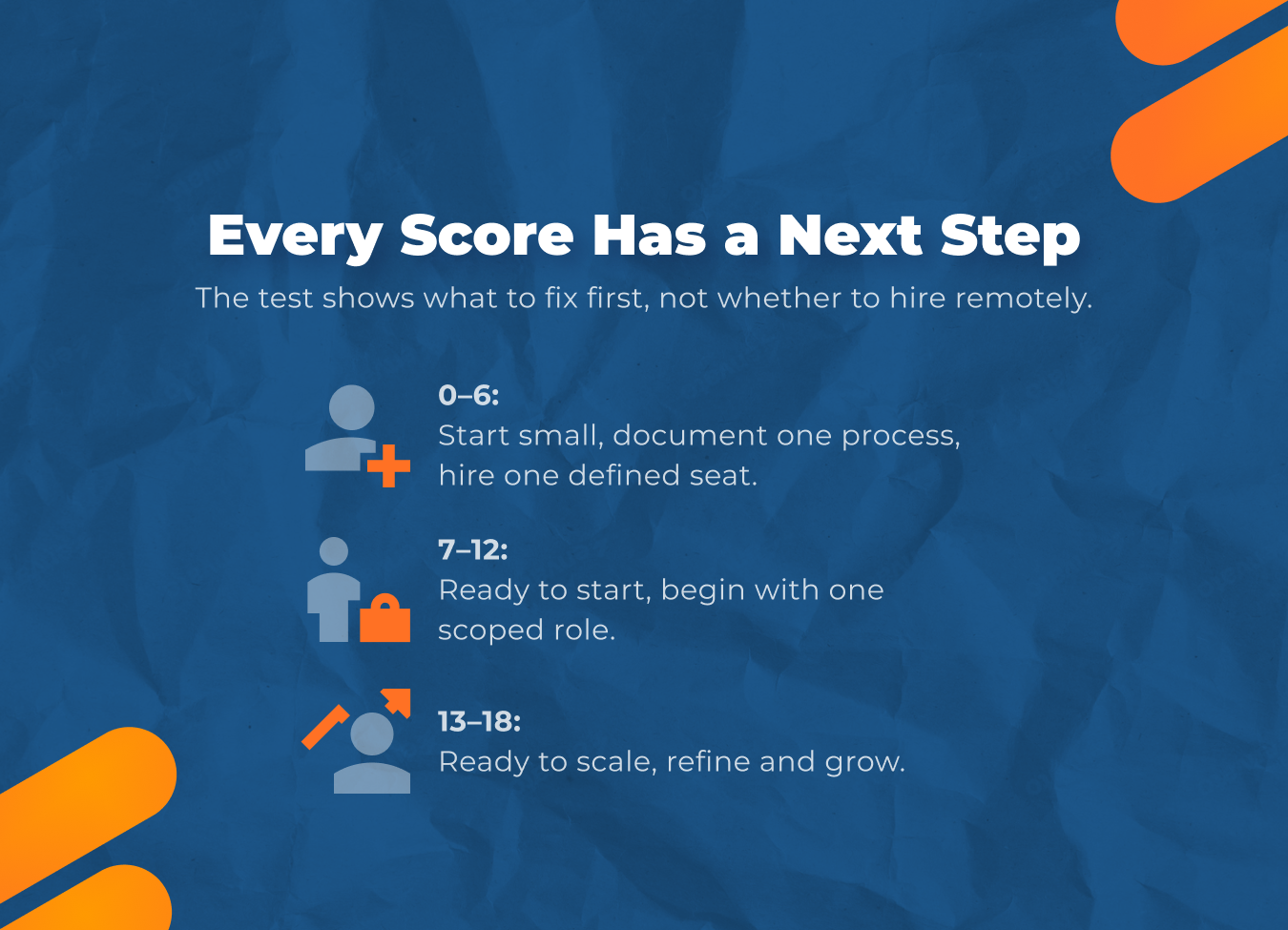
0–6: Start small and build the foundation. Pick one process and write it down well. A single, well-defined remote seat is a good way to begin.
7–12: You're ready to start. Begin with one clearly scoped role and strengthen your lowest-scoring section as that person ramps up.
13–18: Ready to scale. Your habits can support a global team. Reviewing what high-performing remote teams have in common can help you refine them.
These bands are a practical guide, not a formal benchmark. A low score isn't a reason to avoid remote hiring. It shows what to fix first.
Where Projective Staffing Fits
Remote staffing is Projective's core service, and it's built to make readiness easier. We support the full process, including sourcing, vetting, onboarding coordination, payment, and ongoing support, and can deliver pre-vetted remote professionals in 3–5 days. Your team keeps direction of the work while Projective handles the logistics, so you can build capacity quickly.
When a seat calls for a leadership, specialized, or permanent direct hire, Projective's headhunting service recruits for onsite and remote positions, and you hire the candidate directly.
Frequently Asked Questions
What is remote work maturity?
It's how reliably a company operates when people aren't in the same place, based on documented processes, clear norms, and outcome-based management.
Do we need to be fully remote to hire globally?
No. Hybrid and onsite companies can add remote roles. What matters is whether that seat's work is documented and managed by outcomes.
Why hire remote talent from Latin America?
Time zones that overlap heavily with US hours keep collaboration real-time, and many candidates are bilingual.
How does Projective Staffing help with global hiring?
Projective sources and vets remote professionals, coordinates onboarding, handles payment, and provides ongoing support, with pre-vetted candidates available in 3–5 days.
Build a Remote Team That Can Scale With Clarity
The strongest global teams are built on habits and the right people. Projective Staffing helps growing companies add pre-vetted remote professionals who fit the way their teams work. Get in touch to talk through your 2027 plans.