
The Remote Team Alignment Checklist for Growing Companies
The remote team checklist is not just a management tool. It is a way for growing companies to keep people focused, accountable, and connected as work becomes more distributed. Remote teams lose alignment when priorities are unclear, communication is inconsistent, ownership is vague, or documentation lives in too many places. The solution is not more meetings. It is a repeatable system that helps every team member understand what matters, who owns what, how decisions are made, and where work stands.
Why Remote Team Alignment Gets Harder as Companies Grow
Remote alignment is easier when a company is small. Everyone knows the priorities, decisions happen quickly, and team members can get context directly from leadership.
As the company grows, that changes.
More people means more projects, more handoffs, more tools, and more opportunities for information to get lost. Gallup’s State of the Global Workplace 2026 found that global employee engagement fell to 20% in 2025, with manager engagement also declining. For growing remote teams, that is a reminder that alignment cannot depend only on manager effort. It needs systems.
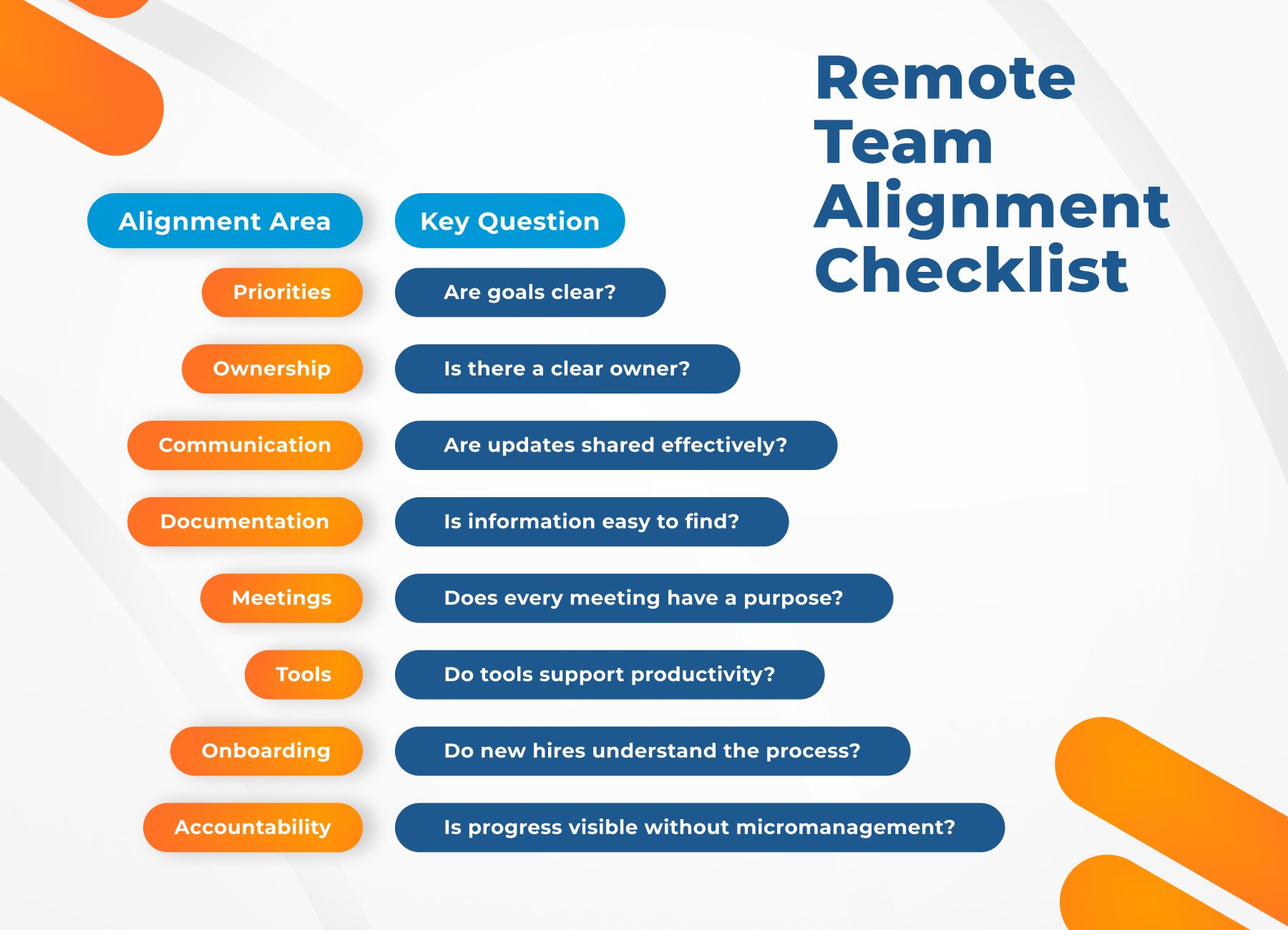
The Remote Team Alignment Checklist
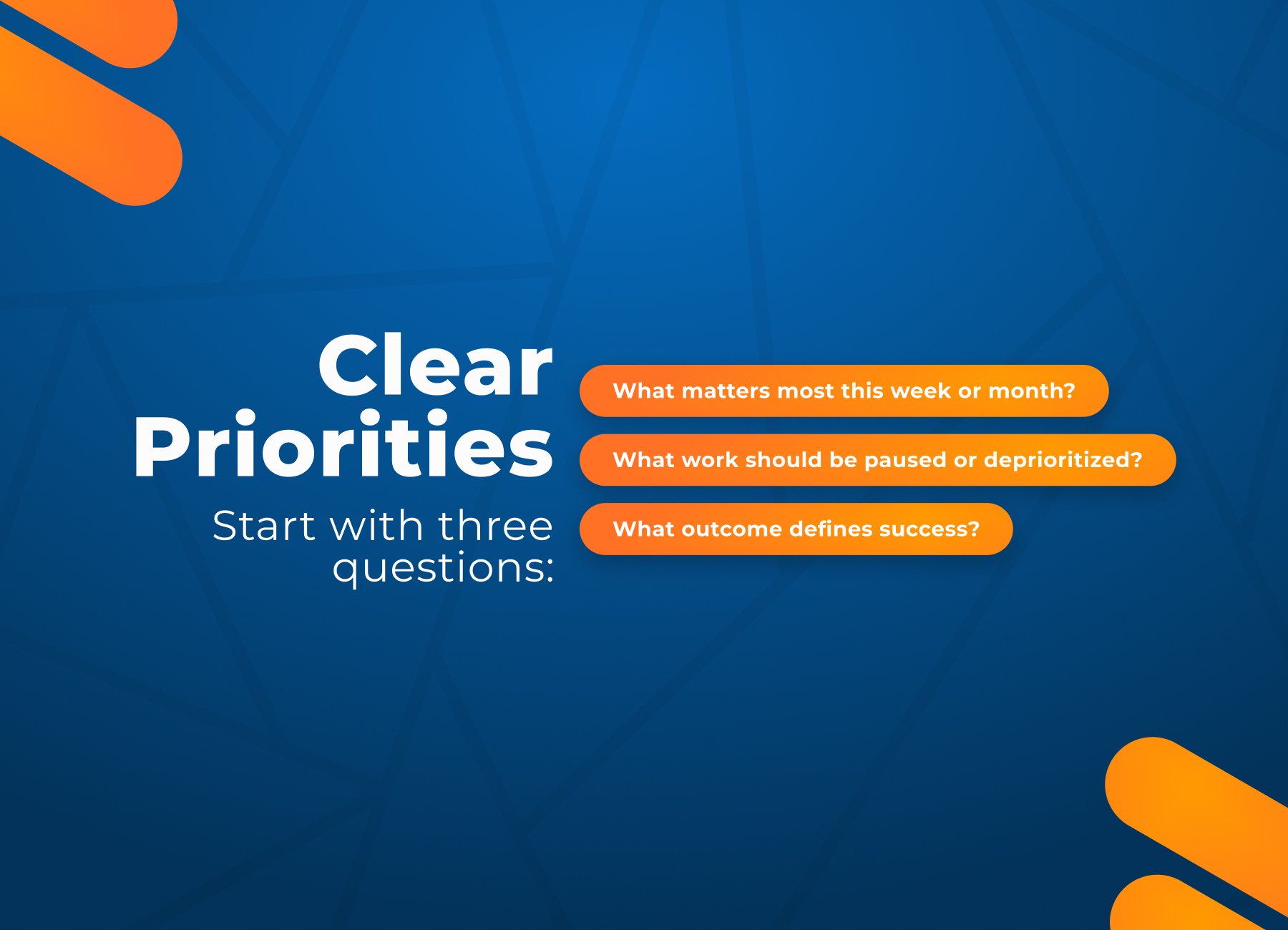
1. Clarify the Team’s Top Priorities
Remote teams drift when everything feels equally important. Growing companies need a simple rhythm for defining and repeating priorities.
This gives remote professionals the context they need to make better decisions without waiting for constant direction. It also helps managers avoid turning every task into an urgent request.
For more structure, connect this habit to how to manage remote teams effectively.
2. Assign Clear Ownership
Alignment breaks down when too many people are involved but no one is responsible.
Every project should have one clear owner. That does not mean one person does all the work. It means one person is accountable for progress, updates, and next steps.
3. Set Communication Rules
Remote teams do not need constant communication. They need intentional communication.
Atlassian’s guide to asynchronous communication for distributed teams recommends working agreements that clarify how teams use sync and async communication, which channels they use, and what response expectations look like. This keeps communication from becoming either too quiet or too noisy.
4. Build a Single Source of Truth
Documentation is one of the strongest alignment tools in a remote team. If important decisions only live in meetings, private chats, or someone’s memory, alignment will fade quickly.
This is especially important as teams add new people. Strong documentation helps new remote professionals understand how work happens without relying only on informal guidance.
5. Reduce Unnecessary Meetings
Meetings are useful when they support decisions, collaboration, or problem-solving. They become a problem when they replace documentation or exist only to create visibility.
Microsoft’s Work Trend Index tracks how work is changing across collaboration, productivity, and leadership. One clear takeaway for remote teams is that work systems need to evolve as teams become more digital and distributed.
6. Make Progress Visible Without Micromanaging
Remote alignment should not depend on surveillance. Managers do not need to watch people work. They need to understand whether work is moving.
This supports accountability without creating pressure to appear constantly online.
For a practical productivity layer, link this habit to productivity tips for remote teams.
7. Review Your Tools
Remote teams often add tools as they grow, but more tools do not automatically create better alignment. In many cases, they create scattered information. Flexible work performs better when companies are intentional about practices, culture, and operating norms. Tools should support those systems, not replace them.
How Projective Staffing Helps Remote Teams Stay Aligned
Projective Staffing helps growing companies build remote teams with professionals who can work inside structured, distributed environments.
Through remote staffing, we support sourcing, vetting, onboarding coordination, and payment. We focus on pre-vetted remote professionals who can communicate clearly, work independently, follow workflows, and take ownership of outcomes.
Frequently Asked Questions
What is remote team alignment?
Remote team alignment means everyone understands the priorities, responsibilities, communication norms, decisions, and expected outcomes.
Why do remote teams lose alignment?
Remote teams lose alignment when priorities are unclear, ownership is vague, documentation is weak, or communication happens across too many channels.
How often should remote teams review alignment?
Growing companies should review alignment weekly at the team level and monthly at the leadership level.
Do remote teams need more meetings to stay aligned?
Not always. Many remote teams need fewer meetings and stronger documentation, clearer ownership, and better async communication.
Build a Remote Team That Can Scale With Clarity
If your company is growing and needs remote professionals who can work with structure, independence, and accountability, Projective Staffing can help you build a team that stays aligned as it scales. Schedule a consultation.