
How AI Is Changing the Way Companies Evaluate Candidates
AI candidate evaluation is changing how companies screen resumes, assess skills, compare applicants, and predict role fit. Instead of relying only on resumes and interviews, hiring teams are using AI to identify patterns, summarize candidate information, and support faster decisions. But AI does not remove the need for human judgment. The strongest hiring strategies use AI to improve speed and consistency while keeping people responsible for context, fairness, communication, and final decision-making.
AI Is Moving Candidate Evaluation Beyond the Resume
Traditional hiring often starts with a resume review. Recruiters look at job titles, years of experience, education, and keywords that appear to match the role.
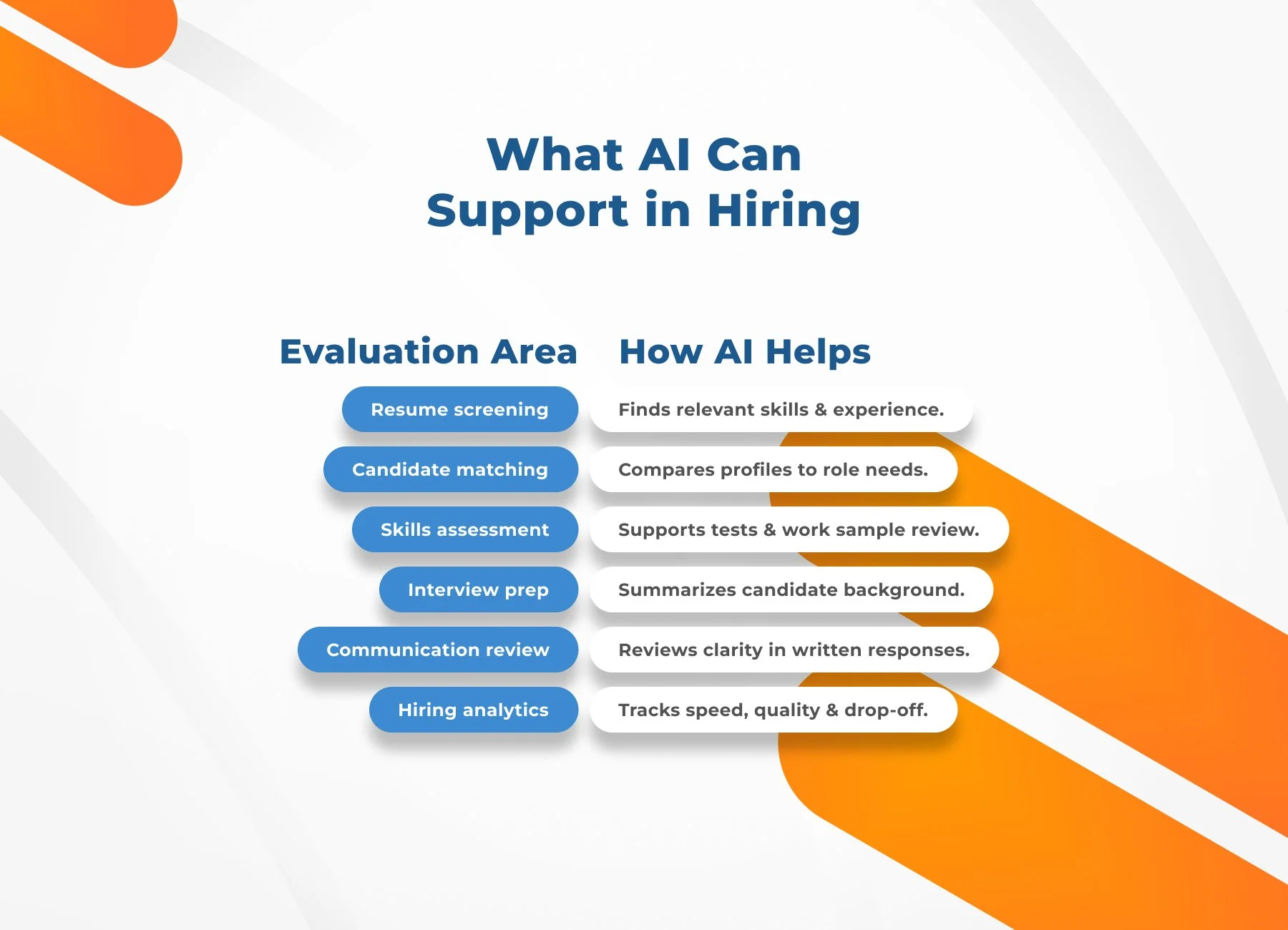
AI is changing that process by helping companies analyze candidate profiles more quickly and identify skills that may not be obvious at first glance. SHRM’s 2025 research found that recruiting is the HR area where organizations report using AI most, with common uses including writing job descriptions, screening resumes, automating candidate searches, and communicating with applicants.
That shift matters because resumes rarely tell the full story. A candidate may have the right skills but an unconventional background. Another may look strong on paper but lack the communication or ownership needed for a remote role.
This is why companies are increasingly focused on hiring beyond resumes. AI can support that shift, but only when hiring teams define what success actually looks like.
Skills-Based Hiring Is Becoming More Important
AI is also accelerating skills-based hiring. Instead of filtering candidates mainly by degree, previous employer, or title, companies can evaluate whether someone has the capabilities required for the role.
LinkedIn’s 2025 Future of Recruiting report found that 93% of talent acquisition professionals believe accurately assessing candidate skills is crucial for improving quality of hire. The same report notes that AI can help analyze resumes, support skills assessments, and improve matching between candidates and roles.
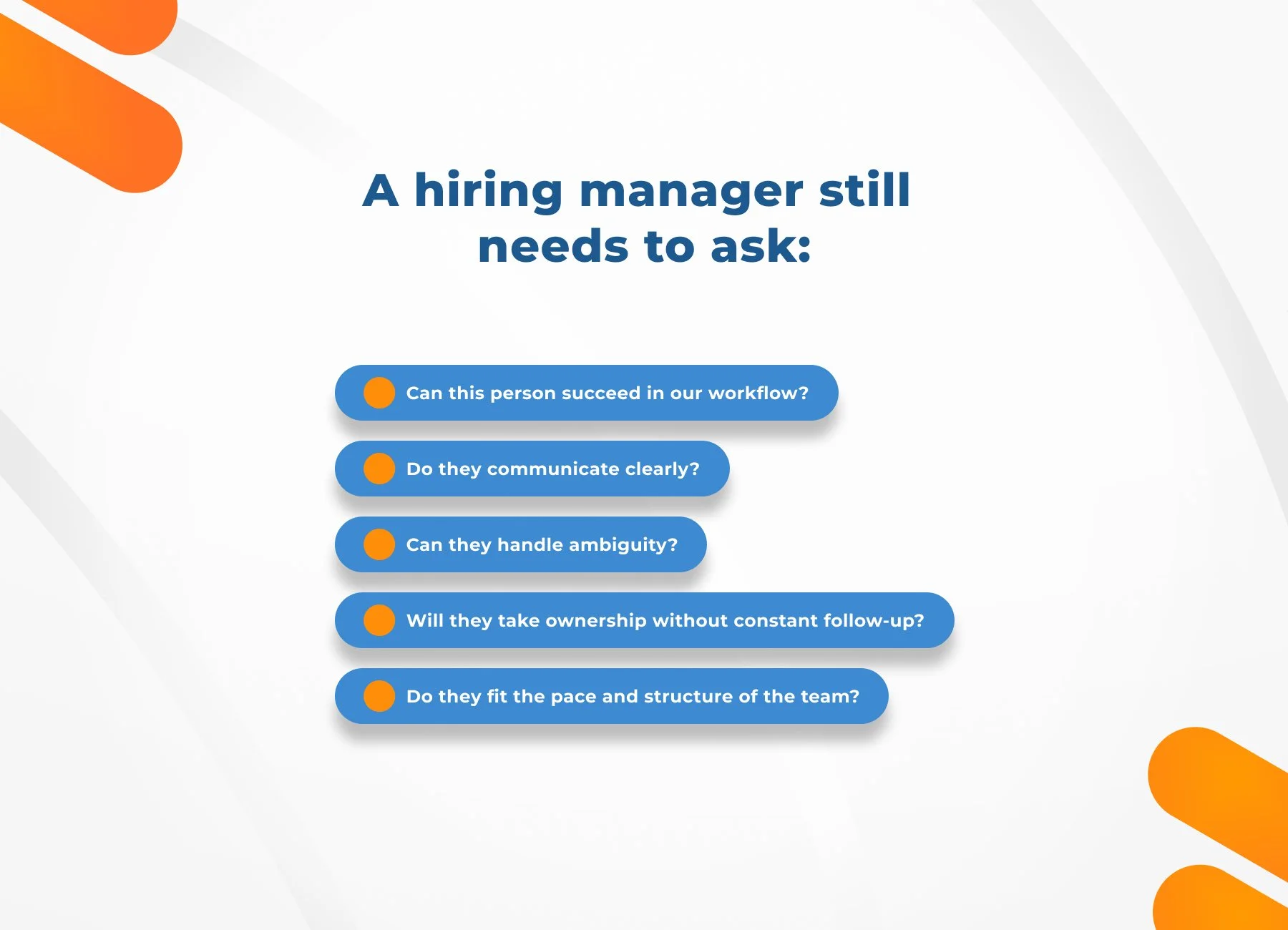
For remote teams, this is especially useful. A strong remote professional needs more than technical experience. They also need communication discipline, independence, adaptability, and the ability to work without constant supervision.
That is why soft skills matter more as AI becomes part of hiring. AI can help identify possible matches, but people still need to evaluate how candidates think, communicate, and collaborate.
AI Can Improve Speed, But It Can Also Create Risk
One of the biggest benefits of AI candidate evaluation is speed. Hiring teams can review more applications, summarize candidate information faster, and reduce repetitive screening work.
That can be valuable when companies are trying to fill roles quickly. It can also help recruiters spend more time on higher-value work, such as candidate conversations, role alignment, and hiring manager calibration.
However, speed should not replace care. The EEOC has made clear that federal employment discrimination laws apply when AI and other technologies are used in recruiting, screening, and hiring. The agency also notes that even neutral tools may create legal concerns if they have an unjustifiable disparate impact on protected groups.
AI Is Changing the Recruiter’s Role
AI does not make recruiters less important. It changes where recruiters create the most value.
Instead of spending most of their time on manual screening, recruiters can focus more on role clarity, candidate fit, interview quality, and hiring strategy. They can also help companies avoid over-relying on surface-level signals.
How Projective Staffing Helps
We help companies evaluate candidates with both speed and human judgment. We support businesses through remote staffing and headhunting, depending on the role, timeline, and hiring model they need.
In both models, the goal is not just to find available talent. It is to help companies evaluate whether a candidate can succeed in the actual role, team, and working environment.
Frequently Asked Questions
How is AI used in candidate evaluation?
AI is used to screen resumes, identify skills, match candidates to roles, summarize candidate information, and support hiring analytics.
Can AI replace recruiters?
No. AI can reduce repetitive work, but recruiters are still needed for judgment, relationship-building, role alignment, and final candidate evaluation.
Is AI candidate evaluation risky?
It can be if companies rely on it without oversight. Employers should use clear criteria, review outcomes, and ensure hiring decisions remain fair and job-related.
What skills should companies still evaluate manually?
Communication, judgment, ownership, adaptability, collaboration, and role-specific problem-solving should still be assessed by people.
Build a Smarter Candidate Evaluation Process
If your company wants to evaluate candidates faster without losing quality, Projective Staffing can help you find remote professionals and direct-hire candidates who match the role, the workflow, and the team. Schedule a consultation.